Looking for the perfect diamond engagement ring? You’ll need to know about the 4Cs of diamond quality, metal characteristics, setting styles and more.
Follow these 10 tips for buying an engagement ring to make a smart purchase:
- Know the 4Cs
- Know diamond shapes and cut styles
- Look at diamonds under different lighting
- Pick a metal for the band
- Choose the setting
- Consider side stones
- Know styles, motifs and trends
- Measure ring size
- Pick a reputable jeweler
- Insist on a diamond grading report

The diamonds in this image show Poor, Good and Excellent cut grade from left to right. Photo: Kevin Schumacher/ GIA
1. Know the 4Cs
The first tip for buying a diamond engagement ring is to know the 4Cs: Color, Clarity, Cut and Carat Weight. Created by GIA, the 4Cs are the global standard for assessing the quality of diamonds and allow you to compare one diamond to another.
In brief, the 4Cs are:
- Color: Color is graded on a D-to-Z scale, with D meaning that a diamond is completely colorless and Z meaning that a diamond has light yellow or brown color. In this color range, diamonds with less color are rarer and more highly sought-after.
- Clarity: Diamond clarity refers to the absence of internal features, called inclusions, and surface irregularities, called blemishes. Clarity is graded on a scale from Flawless to Included.
- Cut: The quality of a diamond’s cut determines how well it interacts with light. A diamond’s proportions, symmetry and polish determine its brightness (or brilliance), scintillation (or sparkle) and fire (flashes of color).
- Carat Weight: Diamond carat weight determines a diamond’s apparent size. Generally speaking, the greater the carat weight, the rarer and more valuable the diamond, if the other Cs are comparable.
Once you understand what the 4Cs mean, the next step is to ask yourself “Which C is the most important to me?” Prioritizing the 4Cs will help you quickly eliminate some diamonds from your search and hone in on the diamond that’s right for you. It will also help you work with your budget, knowing which C you are willing to spend more on and which you are willing to compromise on.

These fancy diamond shapes include, from left to right: cushion cut, square emerald cut (aka Asscher cut), emerald cut, radiant cut, oval cut, marquise cut and pear cut. Photo: Robert Weldon/GIA
2. Know diamond shapes and cut styles
Before you start shopping for an engagement ring, you should understand the difference between a diamond’s shape and its cutting style. Shape describes a diamond’s outline when viewed face up. The most popular diamond shape is round. But there are other shapes—known as fancy shapes—which include the marquise, pear, oval, rectangle, square and heart.
*Tip: Round brilliant diamonds tend to cost the most of all the shapes and cut styles. Choosing a fancy shape can be a good way to save money and choose a unique center stone.
Cutting style refers to how a diamond’s facets are arranged. The brilliant cut is popular due to how it maximizes a diamond’s brightness. This cut style can be seen on a range of shapes, from round to oval to square (princess cut) to marquise. The most popular shape and cut combination by far is the round brilliant cut, which has 57 or 58 facets.
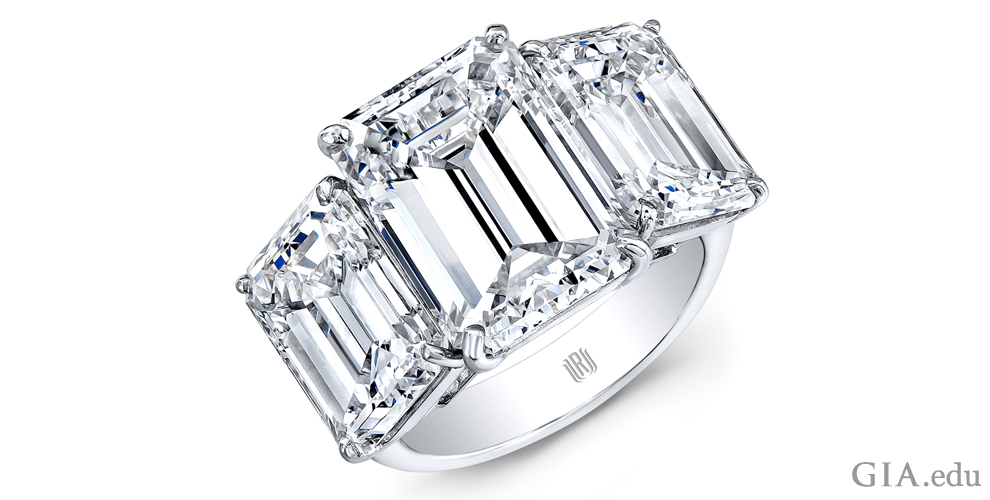
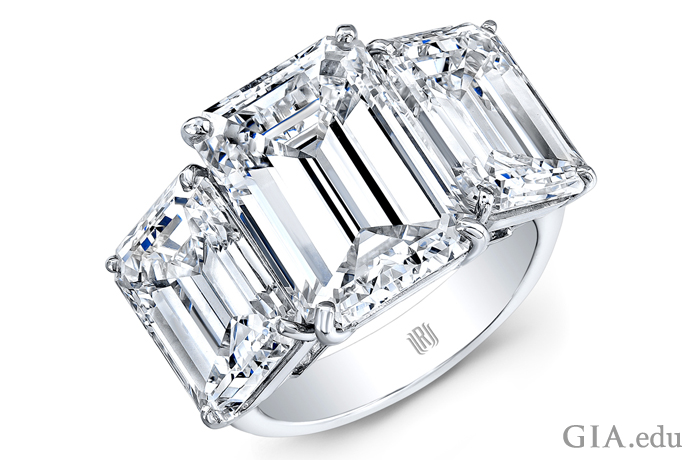
The step cut is another popular cutting style. Steps cuts have long, sleek lines, which gives them an elegant, sophisticated gleam. A popular step cut is the emerald cut—a square or rectangular shape with by concentric rows of parallel facets and beveled corners. In contrast, a radiant cut diamond also has a square or rectangular shape but is cut in the brilliant style.
*Tip: Step cuts tend to show their color and clarity more, while brilliant cuts are better at hiding color and inclusions. If you are purchasing a step cut, considering going up in color and clarity.

Emerald cut diamonds are known for their elegant, gleaming hall-of-mirrors effect rather than brilliance. Courtesy: Alrosa
3. Look at diamonds under different lighting
Daylight, fluorescent light, spot lighting – a diamond looks very different under various lighting conditions. Many jewelers use white spotlighting, which brings out a diamond’s brilliance and fire and will make most diamonds look dazzling. Most day-to-day situations do not consist of such dramatic lighting, however. Be sure to see how your diamond performs under average lighting conditions, such as outdoors in light or shadow or under the diffused, fluorescent light of an office workplace or the warm, diffused lighting common in most homes.
Note that fluorescent lighting brings out a diamond’s brightness, while incandescent lighting brings out a diamond’s fire.

Mixed fluorescent and incandescent lighting is ideal for showing both a diamond’s brilliance and fire. Courtesy: Alrosa
4. Pick a metal for the band
Popular jewelry metals include yellow gold, rose gold, white gold and platinum. Gold and platinum have different characteristics. Their colors can also change the appearance of a piece of jewelry and set off the color of a ring’s gemstones differently.
Metal Types:
Yellow gold is a classic. It has been used in jewelry for thousands of years. It enchants because of its color, rarity and luster (the appearance of a material’s surface in reflected light). Pure gold is soft, so it is typically alloyed with other metals. Karat is the term used to state gold’s fineness, which is based on 24 parts. Gold that is 75% pure—18K gold—is 18 parts gold and six parts of other metals to create an alloy. The most popular fineness in the U.S.—14K gold—is 14 parts gold and 10 parts of other metals.
*Tip: Metals with a higher amount of gold will have richer color, be heavier, softer (slightly more prone to dents and scratches) and more costly.
Rose gold has been a popular choice for many years. It was often used in engagement rings during the Retro era (1935 to the 1950s). It is usually made by alloying gold with copper and silver, which is what gives it its warm, pinkish tone. Companies closely guard their special blends.

Moval Collection by Rahaminov Diamonds. Ring in 18K rose gold with a total of 5.31 carats of diamonds.
White gold is made by alloying pure gold with white metals such as nickel or palladium among others. It is a beautiful and durable choice for engagement rings. White gold is usually plated with rhodium, a platinum group metal, to give it a whiter finish. This can wear away over time. White gold jewelry typically requires replating, or the slightly yellowish color of the white gold underneath may start to show through. This is easy and relatively inexpensive to do, however; simply ask your local jeweler for this service.

Platinum is a slightly grayish white metal that is extremely durable and corrosion resistant. Because platinum is soft in its pure state, it is typically alloyed with other platinum group metals such as iridium or ruthenium. Courtesy: Rahaminov
According to the U.S. Federal Trade Commission, only jewelry containing at least 95% platinum (5% alloys) can be marked “Platinum;” other platinum alloys are marked according to the Federal Trade Commission Guidelines. Platinum is generally more expensive than gold, but it is also hypoallergenic and more durable.
How Metal Color Affects Gemstone Color
White gold and platinum are good choices for diamonds graded in the colorless to near-colorless ranges–D through J on the GIA color scale—as they highlight the diamond’s colorlessness.
The color of the metal reflects throughout the diamond. Setting a colorless diamond in yellow prongs can cause it to look more yellowish in appearance. Gold and rose gold settings tend to benefit diamonds with lower color grades or colored diamonds or colored stones as they can help enhance the color of the gemstones. If you have a diamond with a distinctively yellow or brownish tint, a white gold or platinum setting might conversely emphasize the color of the stone due to contrast.
If you love the color of yellow gold or rose gold, use white gold or platinum prongs or bezels to set the diamonds and pair with yellow gold or rose gold bands. This way, the diamonds will appear more colorless while you get the style that you want.

The diamonds in this ring are set in platinum to showcase their colorlessness. Rose gold bands are woven throughout for contrast. Courtesy: Sylvie Collection
5. Choose the setting
In jewelry, diamonds are held in place by settings. The setting has two jobs: to hold the diamond in place and to protect it from damage. Different settings offer different degrees of protection.
Here are two popular types of settings:
- Prong: A diamond is held in place with four to six prongs (narrow metal supports). The prongs can be rounded on top for a classic look or sharp (claw prongs) for an edgy, modern appearance. Six prongs can give a round brilliant diamond a more rounded look; it also holds the diamond securely. Four prongs can give a round diamond a slightly more square look, and they cover up slightly less of a diamond’s area. There are many variations to the prong setting and it can be used in a number of rings styles, such as solitaire, three-stone and more.

The six-prong setting in this solitaire engagement ring provides extra security for the diamond. Courtesy: JK & Co Jewelers
- Bezel: The bezel setting is one of the most protective styles. For this style, a thin metal strip is pushed or hammered all around the diamond to hold it in place. This means that the diamond cannot be viewed from the side, but it also means that there are no prongs that can snag on gloves (helpful for nurses) and that any corners are well-protected. It is an excellent choice for diamonds with sharp points that are more likely to chip, such as princess cut and marquise cut diamonds.

This ring has a bezel set princess cut diamond, surrounded by a diamond halo with latticework and millgraining.
6. Consider side stones
Side stones are a dazzling way to dress up an engagement ring and make it look bigger. Popular choices include making the ring a three-stone ring, adding a halo, including channel, pavé or bead set diamonds along the shank of the ring, and adding colored gems or birthstones. If you want diamond side stones, choose those with 4Cs grades similar to that of the center stone. Having a similar color grade is especially important if you want the stones to match.

Emerald is the May birthstone. These pear-shaped emeralds give this ring a unique look, and the diamond halo adds a luxurious touch. Photo: Ziva
Three-Stone Ring: The three-stone ring, also known as the trinity or trilogy ring, symbolizes friendship, love, and fidelity, or past, present, and future. To add to its romantic connotation, you can incorporate birthstones for a personal touch.

Sapphire is the September birthstone. It symbolizes fidelity and nobility, and the color contrast can really make the center diamond pop. Courtesy: Omi Privé
Halo Setting: Adding melee diamonds around your center stone and on the shank can make the center stone look larger and add more sparkle to your engagement ring. Most rings have a single or double halo but there’s no limit to the number of halos you can add!

This ring features a 0.42 carat marquise-cut pink diamond center stone set in a triple-halo of pink and white round brilliant diamonds. The triple-halo makes the ring look a lot larger and so does the split shoulder band set with melee diamonds. Courtesy: Yael Designs
Cluster Setting: Cluster settings are a great way to maximize sparkle at a relatively affordable price. Smaller diamonds cost less than large ones and can be set in a way to create the illusion of a single larger diamond. Small diamonds also be arranged in unique designs.

This cluster-style ring has a small diamond in the center surrounded by a halo with more small diamonds set in a flower motif. The additional diamonds dramatically increase the size of this ring and add sparkle throughout. Courtesy: Kat Florence Atelier
7. Know Styles and Trends
What style of ring are you looking for—vintage, modern, timeless, Bohemian, romantic? Know your time periods and motifs or add personalized touches for a stand-out ring.

This Belle Époque ring from the early 1900s features a 2.02 carat D Internally Flawless diamond surrounded by old European-cut diamonds set in platinum accented with millgraining. Courtesy: Lang Antiques
Vintage and Modern Vintage: Vintage styles are making a comeback, or perhaps they’ve simply never gone out of style! For an Edwardian style engagement ring, go for vintage motifs such as scrollwork, millgraining, and engraving. Many setting styles are rich with meaning. The toi et moi ring, French for “you and me,” has been popular for centuries. It features a ring with two gemstones representing the couple coming together. This motif was made famous by Napoleon who gifted his future-empress Josephine with a sapphire and diamond toi et moi ring.

Napoleon Bonaparte gave this diamond and sapphire toi et moi engagement ring to Josephine de Beauharnais in 1796. Photo: PATRICK KOVARIK/AFP/Getty Images

This modern toi et moi ring features a 4.06 carat pear-shaped Fancy brownish yellow diamond and a 3.02 carat pear-shaped colorless diamond. Notice that the yellow diamond is set in yellow gold while the colorless diamonds are set in white gold. Courtesy: 1stdibs.com
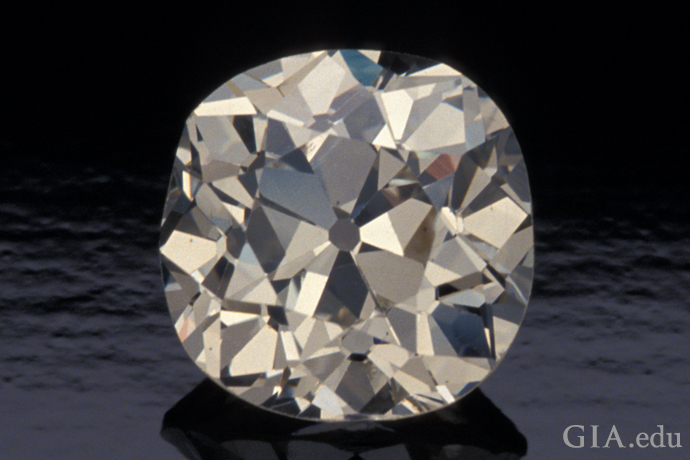
If you’re looking for period jewelry, consider Art Deco style engagement rings and Art Nouveau style engagement rings. Also consider diamonds with older cut styles such as the rose cut or the Old Mine cut.

This ring features three rose cut diamonds and sapphire melee. Rose cut diamonds give rings a mellow, vintage look. Courtesy: Shelly Purdy Studio
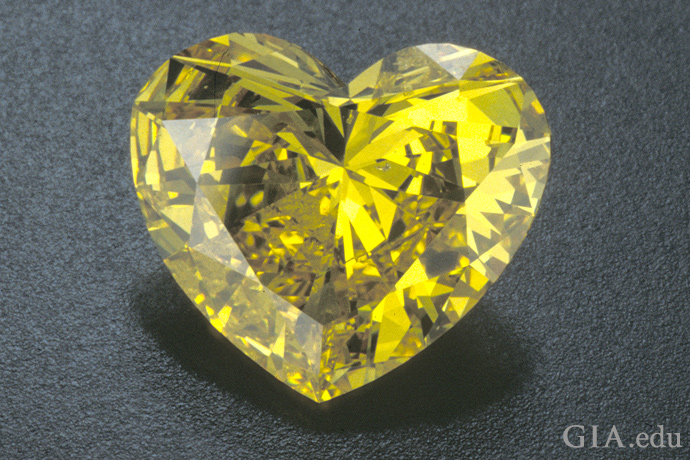
Heart Rings: Heart motifs have been popular since medieval times and have never gone out of style since. Not only do they symbolize love, heart shaped diamonds are typically more affordable than round brilliants. It is a unique option that will definitely make a ring stand out.

This ring features a heart-shaped yellow diamond with a yellow diamond halo and a split shoulder shank. Courtesy: 1stdibs.com.
Bohemian Rings: Bohemian style rings play with unexpected gemstone shapes, setting styles and silhouettes, such as geometric diamond cuts, black diamonds, and rings with open shapes. Some are edgy; others have a more romantic vibe.

This rose gold ring has a chevron-shaped band above a 1.25 carat pear-shaped diamond. The pear diamond and chevron gives this ring a vintage feel. The claw prongs and suspended look are distinctly modern. Courtesy: Brilliant Earth
Stacked Engagement and Wedding Rings: Will your diamond engagement ring be worn alongside a wedding ring? Make sure that their silhouettes match and that the two rings fit together. A popular trend now is stacking multiple rings together with the engagement ring to complement it in design.

This custom stacked engagement ring consists of diamonds surrounded by opals, aquamarines and sapphires. Courtesy: Maggi Simpkins Designs
Custom Rings: Personalization makes rings feel unique and memorable. Consider a custom engagement ring for a one-of-a-kind ring that celebrates the special moments in your relationship.
8. Measure ring size
Once you’ve picked out a diamond and chosen a style for the ring, the next step is to measure the wearer’s ring size. The best way to do this is with a ring sizer, which is a series of plastic or metal rings in different sizes that you try on. Your jeweler will have a ring sizer and can help you find the perfect fit. If you want the ring-making process to be a surprise, try guessing ring size by borrowing a ring your fiancée or fiancé already owns. Trace the inner circle on a piece of paper. Or slide it down one of your own fingers and draw a line where it stops. A jeweler can help you to estimate the approximate ring size. Note that ring size varies from finger to finger, so using this method will only give you an approximation.
The good news is that most rings can easily be resized up or down by a size or two. Resizing more than that may be more difficult depending on the style of the ring. Solitaire rings are easy to resize, while rings with pavé or bead-set diamonds or other details on the band will require more work.

Choosing a knowledgeable, accredited jeweler will ease your decision-making process. Photo: andresr/E+/Getty Images.
9. Pick a reputable jeweler
Since an engagement ring is a significant investment, you’ll want to buy it from a jeweler you can trust. Your jeweler should be armed with expert training, be open to questions and be able to explain how to buy a diamond in clear, simple language. Tip – start by looking for a jeweler who has earned a credential from a highly recognized and internationally accredited program, such as the GIA Graduate Gemologist (GG) or Applied Jewelry Professional (AJP) diploma programs. As your personal diamond-buying guide, an educated jeweler will not only explain the 4Cs of Diamond Quality, but will also be able to demonstrate the differences between apparently similar diamonds. They will encourage you to compare a number of diamonds that fall within your budget. The GIA Retailer Look Up can help you find local jewelers who carry GIA-graded diamonds or have GIA-trained staff.

The GIA Retailer Lookup is a quick, easy way to find local jewelers who carry GIA-graded diamonds or have GIA-trained staff.
10. Insist on a diamond grading report
A diamond grading report from an independent, scientific laboratory such as GIA is more than a document containing important information. Purchasing a diamond with a GIA report ensures that you know the identity and quality of your diamond. It tells you whether your diamond is natural and whether it has received any treatments. GIA Diamond Grading Reports are also used by appraisers to determine a diamond’s value if you want to insure your diamond engagement ring.
At GIA, we know diamonds. We created the 4Cs of diamond quality and the GIA International Diamond Grading System™ used worldwide for grading diamonds. Top museums and auction houses trust us to evaluate their finest treasures, and our reports are recognized internationally. We apply the same passion and precision we use in grading these world-famous diamonds to grading every diamond—including yours. Our expertise is reflected in a variety of diamond reports, ranging from the GIA Diamond Dossier to the GIA Diamond Origin Report. Learn what each report can tell you about your diamond and insist on one when you are ready to make your purchase.

A GIA Diamond Grading Report let you know the identity and quality of what you are buying.