Please ensure Javascript is enabled for purposes of website accessibility.
Search
Search
Search

GIA 4Cs Diamond Blog

GIA 4Cs Diamond Blog

Triple X Diamonds

Triple X diamond is a trade term referring to stones that have Excellent cut, polish and symmetry on their GIA grading reports. GIA does not use this term but many jewelers do. Does Triple X rating matter and should you pay more for a Triple X diamond? (more…)

VVS Diamond versus VS Diamond: What’s the Difference in Diamond Clarity?

A VVS diamond (Very Very Slightly included) and a VS diamond (Very Slightly included) differ in clarity and, if all else is equal, they can differ significantly in price. Knowing these differences can help you make a smart engagement ring purchase.
(more…)

10 Tips for Buying a Diamond Engagement Ring

Looking for the perfect diamond engagement ring? You’ll need to know about the 4Cs of diamond quality, metal characteristics, setting styles and more.

Follow these 10 tips for buying an engagement ring to make a smart purchase:

  1. Know the 4Cs
  2. Know diamond shapes and cut styles
  3. Look at diamonds under different lighting
  4. Pick a metal for the band
  5. Choose the setting
  6. Consider side stones
  7. Know styles, motifs and trends
  8. Measure ring size
  9. Pick a reputable jeweler
  10. Insist on a diamond grading report

The diamonds in this image show Poor, Good and Excellent cut grade from left to right. Photo: Kevin Schumacher/ GIA

1. Know the 4Cs

The first tip for buying a diamond engagement ring is to know the 4Cs: Color, Clarity, Cut and Carat Weight. Created by GIA, the 4Cs are the global standard for assessing the quality of diamonds and allow you to compare one diamond to another.

In brief, the 4Cs are:

  • Color: Color is graded on a D-to-Z scale, with D meaning that a diamond is completely colorless and Z meaning that a diamond has light yellow or brown color. In this color range, diamonds with less color are rarer and more highly sought-after.
  • Clarity: Diamond clarity refers to the absence of internal features, called inclusions, and surface irregularities, called blemishes. Clarity is graded on a scale from Flawless to Included.
  • Cut: The quality of a diamond’s cut determines how well it interacts with light. A diamond’s proportions, symmetry and polish determine its brightness (or brilliance), scintillation (or sparkle) and fire (flashes of color).
  • Carat Weight: Diamond carat weight determines a diamond’s apparent size. Generally speaking, the greater the carat weight, the rarer and more valuable the diamond, if the other Cs are comparable.

Once you understand what the 4Cs mean, the next step is to ask yourself “Which C is the most important to me?” Prioritizing the 4Cs will help you quickly eliminate some diamonds from your search and hone in on the diamond that’s right for you. It will also help you work with your budget, knowing which C you are willing to spend more on and which you are willing to compromise on.

A range of fancy diamond shapes and cuts

These fancy diamond shapes include, from left to right: cushion cut, square emerald cut (aka Asscher cut), emerald cut, radiant cut, oval cut, marquise cut and pear cut. Photo: Robert Weldon/GIA

2. Know diamond shapes and cut styles

Before you start shopping for an engagement ring, you should understand the difference between a diamond’s shape and its cutting style. Shape describes a diamond’s outline when viewed face up. The most popular diamond shape is round. But there are other shapes—known as fancy shapes—which include the marquise, pear, oval, rectangle, square and heart.

*Tip: Round brilliant diamonds tend to cost the most of all the shapes and cut styles. Choosing a fancy shape can be a good way to save money and choose a unique center stone.

Cutting style refers to how a diamond’s facets are arranged. The brilliant cut is popular due to how it maximizes a diamond’s brightness. This cut style can be seen on a range of shapes, from round to oval to square (princess cut) to marquise. The most popular shape and cut combination by far is the round brilliant cut, which has 57 or 58 facets.

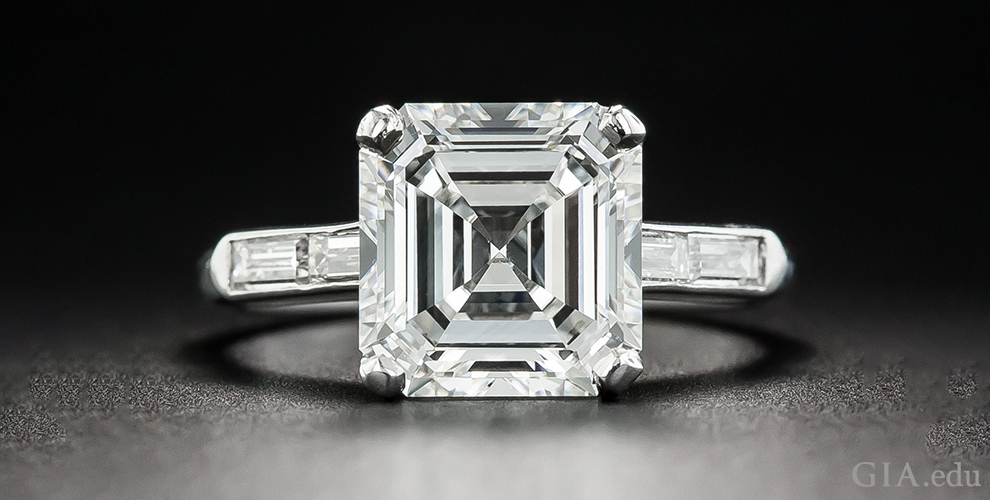
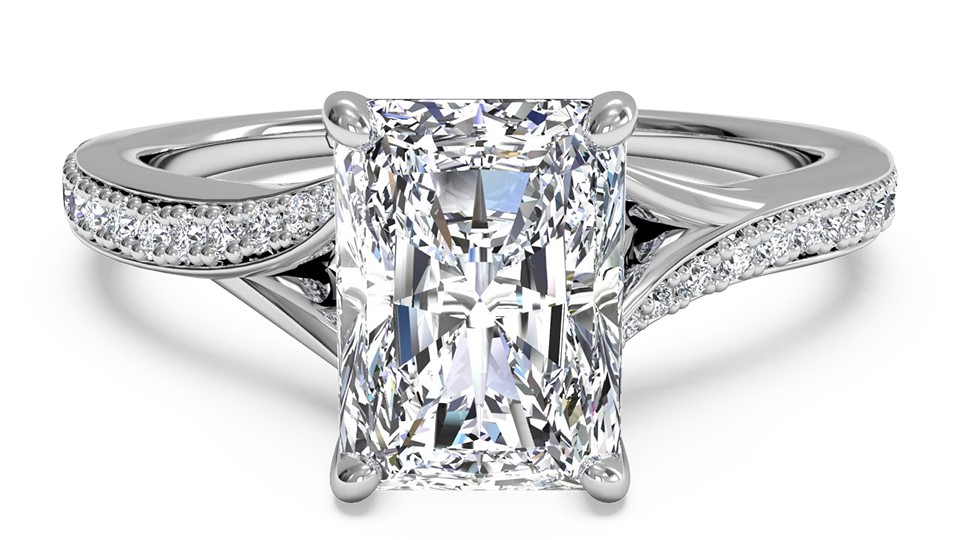
The step cut is another popular cutting style. Steps cuts have long, sleek lines, which  gives them an elegant, sophisticated gleam. A popular step cut is the emerald cut—a square or rectangular shape with by concentric rows of parallel facets and beveled corners. In contrast, a radiant cut diamond also has a square or rectangular shape but is cut in the brilliant style.

*Tip: Step cuts tend to show their color and clarity more, while brilliant cuts are better at hiding color and inclusions. If you are purchasing a step cut, considering going up in color and clarity.

Emerald cut diamonds are known for their elegant, gleaming hall-of-mirrors effect rather than brilliance. Courtesy: Alrosa

3. Look at diamonds under different lighting

Daylight, fluorescent light, spot lighting – a diamond looks very different under various lighting conditions. Many jewelers use white spotlighting, which brings out a diamond’s brilliance and fire and will make most diamonds look dazzling. Most day-to-day situations do not consist of such dramatic lighting, however. Be sure to see how your diamond performs under average lighting conditions, such as outdoors in light or shadow or under the diffused, fluorescent light of an office workplace or the warm, diffused lighting common in most homes.

Note that fluorescent lighting brings out a diamond’s brightness, while incandescent lighting brings out a diamond’s fire.

Mixed fluorescent and incandescent lighting is ideal for showing both a diamond’s brilliance and fire. Courtesy: Alrosa

4. Pick a metal for the band

Popular jewelry metals include yellow gold, rose gold, white gold and platinum. Gold and platinum have different characteristics. Their colors can also change the appearance of a piece of jewelry and set off the color of a ring’s gemstones differently.

Metal Types:
Yellow gold is a classic. It has been used in jewelry for thousands of years. It enchants because of its color, rarity and luster (the appearance of a material’s surface in reflected light). Pure gold is soft, so it is typically alloyed with other metals. Karat is the term used to state gold’s fineness, which is based on 24 parts. Gold that is 75% pure—18K gold—is 18 parts gold and six parts of other metals to create an alloy. The most popular fineness in the U.S.—14K gold—is 14 parts gold and 10 parts of other metals.

*Tip: Metals with a higher amount of gold will have richer color, be heavier, softer (slightly more prone to dents and scratches) and more costly.

Rose gold has been a popular choice for many years. It was often used in engagement rings during the Retro era (1935 to the 1950s). It is usually made by alloying gold with copper and silver, which is what gives it its warm, pinkish tone. Companies closely guard their special blends.

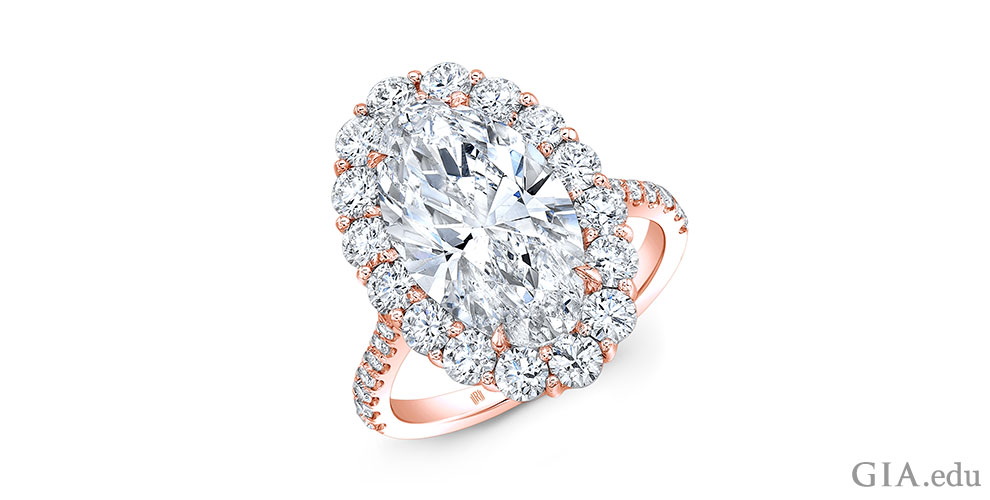
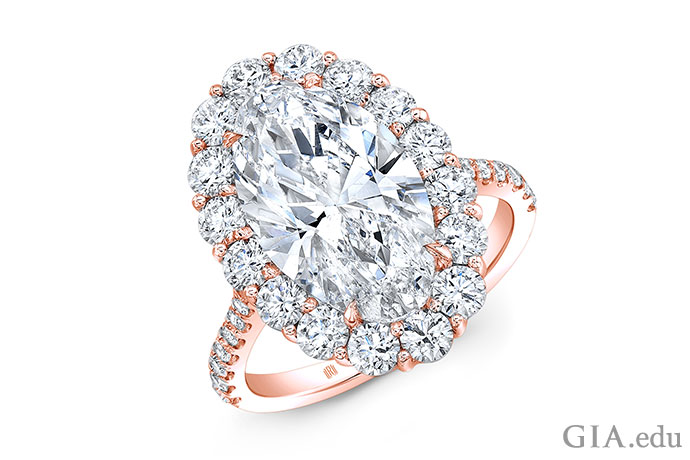
Moval Collection by Rahaminov Diamonds. Ring in 18K rose gold with a total of 5.31 carats of diamonds.

White gold is made by alloying pure gold with white metals such as nickel or palladium among others. It is a beautiful and durable choice for engagement rings. White gold is usually plated with rhodium, a platinum group metal, to give it a whiter finish. This can wear away over time. White gold jewelry typically requires replating, or the slightly yellowish color of the white gold underneath may start to show through. This is easy and relatively inexpensive to do, however; simply ask your local jeweler for this service.

Platinum is a slightly grayish white metal that is extremely durable and corrosion resistant. Because platinum is soft in its pure state, it is typically alloyed with other platinum group metals such as iridium or ruthenium. Courtesy: Rahaminov

According to the U.S. Federal Trade Commission, only jewelry containing at least 95% platinum (5% alloys) can be marked “Platinum;” other platinum alloys are marked according to the Federal Trade Commission Guidelines. Platinum is generally more expensive than gold, but it is also hypoallergenic and more durable.

How Metal Color Affects Gemstone Color

White gold and platinum are good choices for diamonds graded in the colorless to near-colorless ranges–D through J on the GIA color scale—as they highlight the diamond’s colorlessness.

The color of the metal reflects throughout the diamond. Setting a colorless diamond in yellow prongs can cause it to look more yellowish in appearance. Gold and rose gold settings tend to benefit diamonds with lower color grades or colored diamonds or colored stones as they can help enhance the color of the gemstones. If you have a diamond with a distinctively yellow or brownish tint, a white gold or platinum setting might conversely emphasize the color of the stone due to contrast.

If you love the color of yellow gold or rose gold, use white gold or platinum prongs or bezels to set the diamonds and pair with yellow gold or rose gold bands. This way, the diamonds will appear more colorless while you get the style that you want.

The diamonds in this ring are set in platinum to showcase their colorlessness. Rose gold bands are woven throughout for contrast. Courtesy: Sylvie Collection

5. Choose the setting

In jewelry, diamonds are held in place by settings. The setting has two jobs: to hold the diamond in place and to protect it from damage. Different settings offer different degrees of protection.

Here are two popular types of settings:

  1. Prong: A diamond is held in place with four to six prongs (narrow metal supports). The prongs can be rounded on top for a classic look or sharp (claw prongs) for an edgy, modern appearance. Six prongs can give a round brilliant diamond a more rounded look; it also holds the diamond securely. Four prongs can give a round diamond a slightly more square look, and they cover up slightly less of a diamond’s area. There are many variations to the prong setting and it can be used in a number of rings styles, such as solitaire, three-stone and more.

The six-prong setting in this solitaire engagement ring provides extra security for the diamond. Courtesy: JK & Co Jewelers

  1. Bezel: The bezel setting is one of the most protective styles. For this style, a thin metal strip is pushed or hammered all around the diamond to hold it in place. This means that the diamond cannot be viewed from the side, but it also means that there are no prongs that can snag on gloves (helpful for nurses) and that any corners are well-protected. It is an excellent choice for diamonds with sharp points that are more likely to chip, such as princess cut and marquise cut diamonds.

This ring has a bezel set princess cut diamond, surrounded by a diamond halo with latticework and millgraining.

6. Consider side stones

Side stones are a dazzling way to dress up an engagement ring and make it look bigger. Popular choices include making the ring a three-stone ring, adding a halo, including channel, pavé or bead set diamonds along the shank of the ring, and adding colored gems or birthstones. If you want diamond side stones, choose those with 4Cs grades similar to that of the center stone. Having a similar color grade is especially important if you want the stones to match.

Emerald is the May birthstone. These pear-shaped emeralds give this ring a unique look, and the diamond halo adds a luxurious touch. Photo: Ziva

Three-Stone Ring: The three-stone ring, also known as the trinity or trilogy ring, symbolizes friendship, love, and fidelity, or past, present, and future. To add to its romantic connotation, you can incorporate birthstones for a personal touch.

Sapphire is the September birthstone. It symbolizes fidelity and nobility, and the color contrast can really make the center diamond pop. Courtesy: Omi Privé

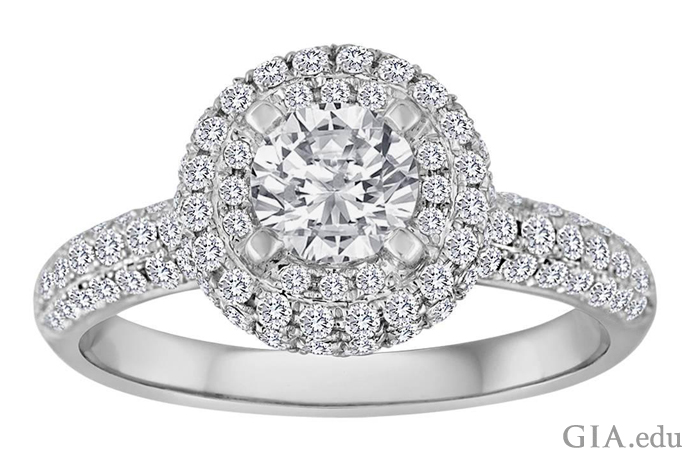
Halo Setting: Adding melee diamonds around your center stone and on the shank can make the center stone look larger and add more sparkle to your engagement ring. Most rings have a single or double halo but there’s no limit to the number of halos you can add!

This ring features a 0.42 carat marquise-cut pink diamond center stone set in a triple-halo of pink and white round brilliant diamonds. The triple-halo makes the ring look a lot larger and so does the split shoulder band set with melee diamonds. Courtesy: Yael Designs

Cluster Setting: Cluster settings are a great way to maximize sparkle at a relatively affordable price. Smaller diamonds cost less than large ones and can be set in a way to create the illusion of a single larger diamond. Small diamonds also be arranged in unique designs.

This cluster-style ring has a small diamond in the center surrounded by a halo with more small diamonds set in a flower motif. The additional diamonds dramatically increase the size of this ring and add sparkle throughout. Courtesy: Kat Florence Atelier

7. Know Styles and Trends

What style of ring are you looking for—vintage, modern, timeless, Bohemian, romantic? Know your time periods and motifs or add personalized touches for a stand-out ring.

This Belle Époque ring from the early 1900s features a 2.02 carat D Internally Flawless diamond surrounded by old European-cut diamonds set in platinum accented with millgraining. Courtesy: Lang Antiques

Vintage and Modern Vintage: Vintage styles are making a comeback, or perhaps they’ve simply never gone out of style! For an Edwardian style engagement ring, go for vintage motifs such as scrollwork, millgraining, and engraving. Many setting styles are rich with meaning. The toi et moi ring, French for “you and me,” has been popular for centuries. It features a ring with two gemstones representing the couple coming together. This motif was made famous by Napoleon who gifted his future-empress Josephine with a sapphire and diamond toi et moi ring.

Napoleon Bonaparte gave this diamond and sapphire toi et moi engagement ring to Josephine de Beauharnais in 1796. Photo: PATRICK KOVARIK/AFP/Getty Images

This modern toi et moi ring features a 4.06 carat pear-shaped Fancy brownish yellow diamond and a 3.02 carat pear-shaped colorless diamond. Notice that the yellow diamond is set in yellow gold while the colorless diamonds are set in white gold. Courtesy: 1stdibs.com

If you’re looking for period jewelry, consider Art Deco style engagement rings and Art Nouveau style engagement rings. Also consider diamonds with older cut styles such as the rose cut or the Old Mine cut.

This ring features three rose cut diamonds and sapphire melee. Rose cut diamonds give rings a mellow, vintage look. Courtesy: Shelly Purdy Studio

Heart Rings: Heart motifs have been popular since medieval times and have never gone out of style since. Not only do they symbolize love, heart shaped diamonds are typically more affordable than round brilliants. It is a unique option that will definitely make a ring stand out.

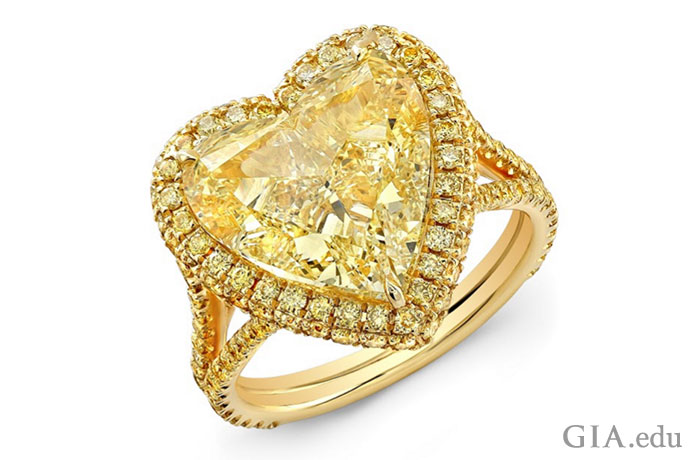
This ring features a heart-shaped yellow diamond with a yellow diamond halo and a split shoulder shank. Courtesy: 1stdibs.com.

Bohemian Rings: Bohemian style rings play with unexpected gemstone shapes, setting styles and silhouettes, such as geometric diamond cuts, black diamonds, and rings with open shapes. Some are edgy; others have a more romantic vibe.

This rose gold ring has a chevron-shaped band above a 1.25 carat pear-shaped diamond. The pear diamond and chevron gives this ring a vintage feel. The claw prongs and suspended look are distinctly modern. Courtesy: Brilliant Earth

Stacked Engagement and Wedding Rings: Will your diamond engagement ring be worn alongside a wedding ring? Make sure that their silhouettes match and that the two rings fit together. A popular trend now is stacking multiple rings together with the engagement ring to complement it in design.

This custom stacked engagement ring consists of diamonds surrounded by opals, aquamarines and sapphires. Courtesy: Maggi Simpkins Designs

Custom Rings: Personalization makes rings feel unique and memorable. Consider a custom engagement ring for a one-of-a-kind ring that celebrates the special moments in your relationship.

8. Measure ring size

Once you’ve picked out a diamond and chosen a style for the ring, the next step is to measure the wearer’s ring size. The best way to do this is with a ring sizer, which is a series of plastic or metal rings in different sizes that you try on. Your jeweler will have a ring sizer and can help you find the perfect fit. If you want the ring-making process to be a surprise, try guessing ring size by borrowing a ring your fiancée or fiancé already owns. Trace the inner circle on a piece of paper. Or slide it down one of your own fingers and draw a line where it stops. A jeweler can help you to estimate the approximate ring size. Note that ring size varies from finger to finger, so using this method will only give you an approximation.

The good news is that most rings can easily be resized up or down by a size or two. Resizing more than that may be more difficult depending on the style of the ring. Solitaire rings are easy to resize, while rings with pavé or bead-set diamonds or other details on the band will require more work.

Choosing a knowledgeable, accredited jeweler will ease your decision-making process. Photo: andresr/E+/Getty Images.

9. Pick a reputable jeweler

Since an engagement ring is a significant investment, you’ll want to buy it from a jeweler you can trust. Your jeweler should be armed with expert training, be open to questions and be able to explain how to buy a diamond in clear, simple language. Tip – start by looking for a jeweler who has earned a credential from a highly recognized and internationally accredited program, such as the GIA Graduate Gemologist (GG) or Applied Jewelry Professional (AJP) diploma programs. As your personal diamond-buying guide, an educated jeweler will not only explain the 4Cs of Diamond Quality, but will also be able to demonstrate the differences between apparently similar diamonds. They will encourage you to compare a number of diamonds that fall within your budget. The GIA Retailer Look Up can help you find local jewelers who carry GIA-graded diamonds or have GIA-trained staff.

The GIA Retailer Lookup is a quick, easy way to find local jewelers who carry GIA-graded diamonds or have GIA-trained staff.

10. Insist on a diamond grading report

A diamond grading report from an independent, scientific laboratory such as GIA is more than a document containing important information. Purchasing a diamond with a GIA report ensures that you know the identity and quality of your diamond. It tells you whether your diamond is natural and whether it has received any treatments. GIA Diamond Grading Reports are also used by appraisers to determine a diamond’s value if you want to insure your diamond engagement ring.

At GIA, we know diamonds. We created the 4Cs of diamond quality and the GIA International Diamond Grading System™ used worldwide for grading diamonds. Top museums and auction houses trust us to evaluate their finest treasures, and our reports are recognized internationally. We apply the same passion and precision we use in grading these world-famous diamonds to grading every diamond—including yours. Our expertise is reflected in a variety of diamond reports, ranging from the GIA Diamond Dossier to the GIA Diamond Origin Report. Learn what each report can tell you about your diamond and insist on one when you are ready to make your purchase.

A GIA Diamond Grading Report let you know the identity and quality of what you are buying.
How to Buy a Quality Diamond

Buying a quality diamond begins with 3Cs—not 4. Surprising? Cut, clarity and color all determine diamond quality, but carat doesn’t. After all, size doesn’t affect quality. Learn how to buy a stunning diamond based on 3Cs, fluorescence and shape.

(more…)
Are Diamonds Rare?

If you’re shopping for a diamond engagement ring and see the price tag, you may wonder, are diamonds rare? Why do they cost so much? Is demand only driven by advertising? Do they have intrinsic value? We look at these questions and more.
(more…)

How to Choose Diamond Stud Earrings

Diamond stud earrings can dress up your look. They add a splash of style to any outfit. And turn heads. Just ask trendsetter Meghan Markle, now the Duchess of Sussex. Here’s how to choose a pair of diamond studs you’ll love. (more…)

GIA Diamond Cut Grade: Six Things You Need to Know

A GIA diamond cut grade is key to knowing how well your round brilliant diamond will sparkle. Cut is the most complex of a diamond’s 4Cs. Let’s cover some essentials so you can pick the perfect round brilliant diamond engagement ring.

In this blog, we cover:

  1. Diamond cut quality and why it’s important
  2. What goes into a GIA diamond cut grade
  3. Diamond sparkle and face-up appearance
  4. Why diamond proportions are important
  5. Design, craftsmanship and the GIA diamond cut grade
  6. How GIA assigns a diamond cut grade

1. Diamond cut quality and why it’s important

The most popular diamond in the marketplace is the round brilliant. Experts estimate that this cut alone accounts for more than 70% of all diamonds sold today. The quality of a round brilliant diamond’s cut determines how much the diamond sparkles. To pick a diamond whose flashes of light enchant the eye, you need to know the 4Cs of diamond quality, the universal standard for judging diamonds: color, cut, clarity and carat weight. All else being equal, the better the cut grade, the more valuable the diamond.

Some professionals consider cut the most important C of diamond quality. A well-cut round brilliant delivers that unmistakable, stop-in-your-tracks light show that telegraphs “diamond” across a crowded room. If the diamond is well cut, most compromises in clarity, color and even carat weight can be forgiven. A diamond’s cut grade is also an indication of how well it was designed and crafted. So, understanding the diamond cut grade is key to picking a round brilliant that’s not only beautiful, but also the best value.

2. What goes into a GIA diamond cut grade

In arriving at its cut grading system, GIA spent 15 years studying how light behaves within a round brilliant cut diamond. GIA’s aim was to understand the factors that contribute to a round brilliant’s appearance and to determine which of those factors – or combination of factors – produce diamonds that people consider attractive.

GIA’s research included the use of advanced computer modeling to analyze tens of thousands of possible proportion combinations. GIA then validated its research with human subjects, conducting more than 70,000 observations on actual diamonds, to determine which diamonds people found appealing and why.

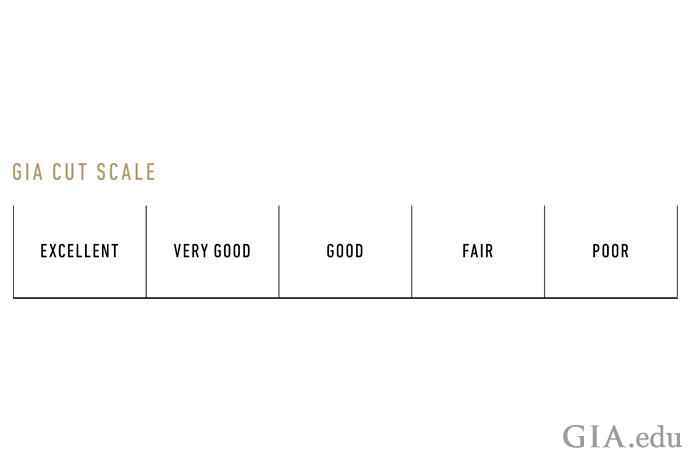
The result was the GIA Cut Grading System, which evaluates the cut quality of a round brilliant diamond along a five-point scale ranging from Excellent to Poor.

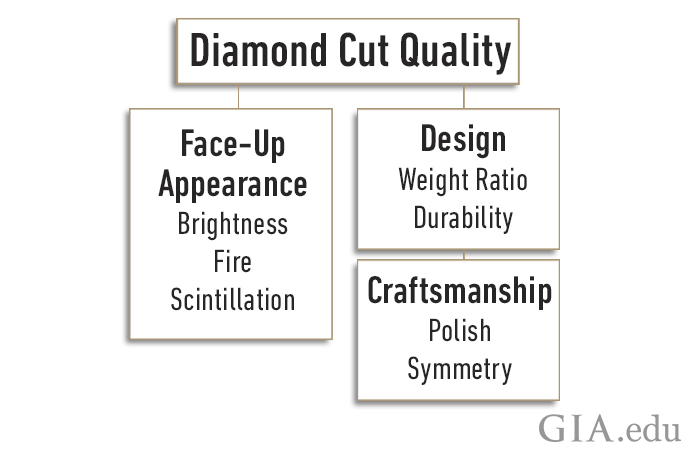
A GIA cut grade evaluates:

  1. How the diamond appears when viewed face-up based on the attributes of brightness, fire and scintillation
  2. How well the diamond was designed to ensure durability and optimal weight
  3. The quality of the workmanship or craftsmanship that went into aligning and polishing the diamond’s facets

The GIA diamond cut grade is based on seven factors: brightness, fire, scintillation, weight ratio, durability, polish and symmetry.

The GIA diamond cut grade is based on seven factors: brightness, fire, scintillation, weight ratio, durability, polish and symmetry.

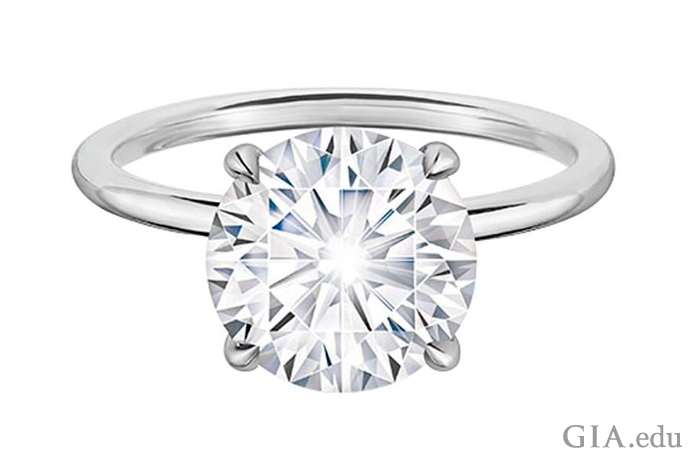
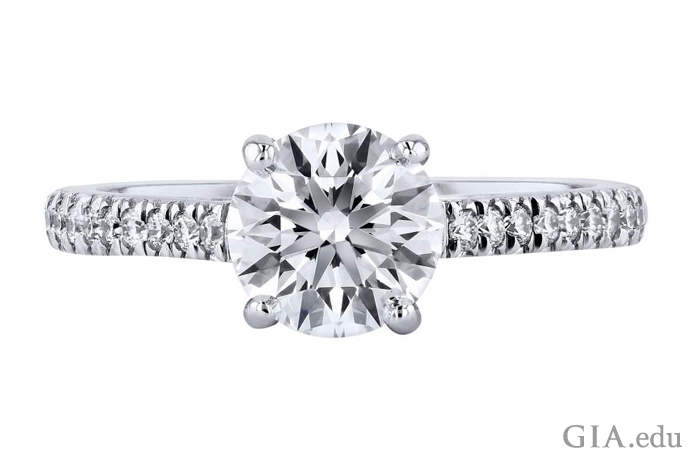
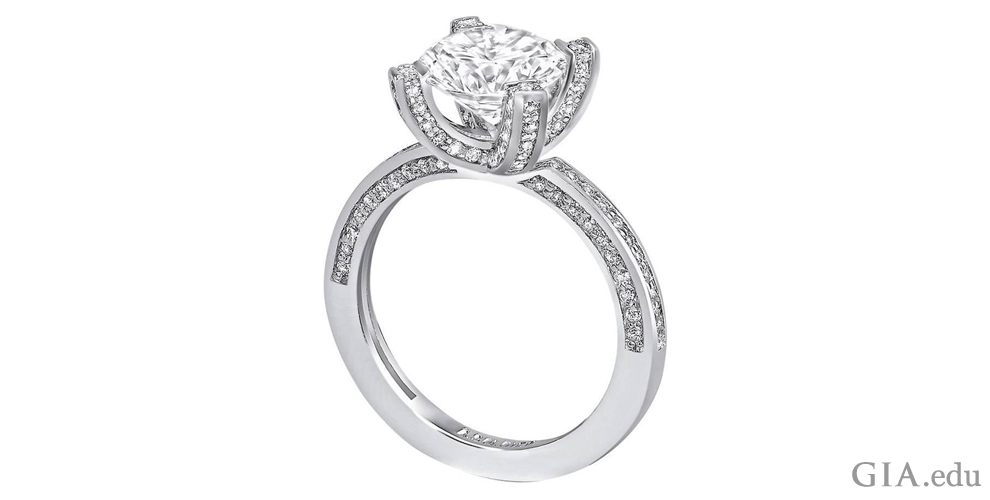
A 2.02 carat round brilliant cut diamond engagement ring with excellent cut, polish and symmetry.

This 2.02 carat (ct) round brilliant has excellent cut, polish and symmetry. Courtesy: 1stdibs.com

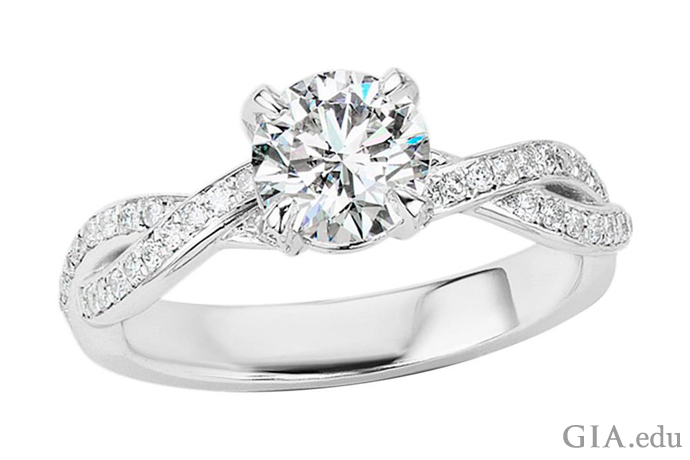
A 1.01 ct round brilliant cut diamond engagement ring that received an Excellent cut grade from GIA.

The reason behind the sparkle of this 1.01 ct round brilliant cut diamond engagement ring is the quality of the diamond’s cut. The diamond received an Excellent cut grade from GIA. Courtesy: 1stdibs.com

3. Diamond sparkle and face-up appearance

A key component of a GIA diamond cut grade is the diamond’s face-up appearance – or how the diamond looks when viewed from above, as if it was set in an engagement ring. People love diamonds for their dazzling interplay with light – which the layperson often translates as “sparkle.” But there’s a lot more going on here.

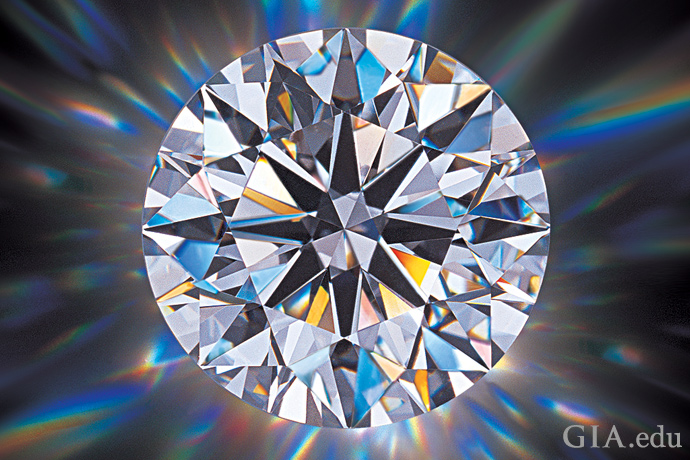
When you see internal and external white light reflected from a diamond, you’re noticing “brightness.” If you see the scattering of light into all the colors of the rainbow, you’re being treated to “fire.” Sparkle is actually “scintillation,” the pattern of bright and dark areas caused by reflections within the diamond as it or the light source moves. What you might consider “sparkle” is really the overall visual effect of these three factors. A GIA cut grade includes an assessment of how well a diamond delivers on each of these attributes.

Round brilliant cut diamond showing good brightness, fire and scintillation when the diamond is moved.

This round brilliant cut diamond shows good brightness and fire. Scintillation, the pattern of light and dark areas and the flashes of light, or sparkle, can only be seen when a diamond is moved. Copyright: GIA & Harold and Erica Van Pelt

4. Why diamond proportions are important

A diamond’s proportions – its crown and pavilion angles and the relative measurements of its facets – are key contributors to a diamond’s overall face-up appearance. Remember that facets are tiny mirrors. Their size and placement will influence how light behaves as it passes through the diamond and back to your eye.

A diamond’s proportions can help predict how well a diamond will deliver brightness, fire and scintillation. However, an important outcome of GIA’s cut research was the finding that there is no single set of proportions that defines a well-cut round brilliant diamond. In fact, diamonds with different proportions can receive the same cut grade. The diamonds may look and perform differently but they will still have a similar impact on the observer. So, as a diamond shopper, you need to look beyond the measurements on a grading report. Be sure to view a diamond in person to see if it’s the right choice for you.

An illustration demonstrating the proportions that affect a diamond’s cut grade.

This graphic illustrates the proportions that affect a diamond’s cut grade. The crown and pavilion angles and the relative measurements of its facets contribute to a diamond’s brightness, fire and scintillation.

5. Design, craftsmanship and the GIA diamond cut grade

While face-up appearance is all about how a diamond looks, design and craftsmanship evaluate the quality of the diamond’s manufacture. Poor design could add unnecessary weight to a diamond or cause durability issues that would prevent you from enjoying it for a lifetime. A diamond with poor craftsmanship won’t deliver much in the way of brightness, fire and scintillation. In evaluating these two components, the GIA Cut Grading System takes into account the diamond’s physical shape, its proportions, its weight ratio, and the care that went into fashioning and polishing its facets.

Design
Design refers to decisions made during the fashioning process that determine the diamond’s physical shape, as seen in its proportions, weight ratio and durability. Weight ratio is the diamond’s weight in relation to its average girdle diameter (a fairly complex mathematical equation). A diamond with a smaller girdle diameter relative to its weight might appear smaller face-up than its well-designed counterpart, because much of the weight would be “hidden” in the overall depth of the diamond. For example, while a diamond with a thicker girdle could look great, the girdle is hiding unnecessary weight. As a result, you might end up paying more for a heavier diamond with no greater visual impact for the added cost. The bottom line: A diamond should not weigh more than its face-up size would indicate.

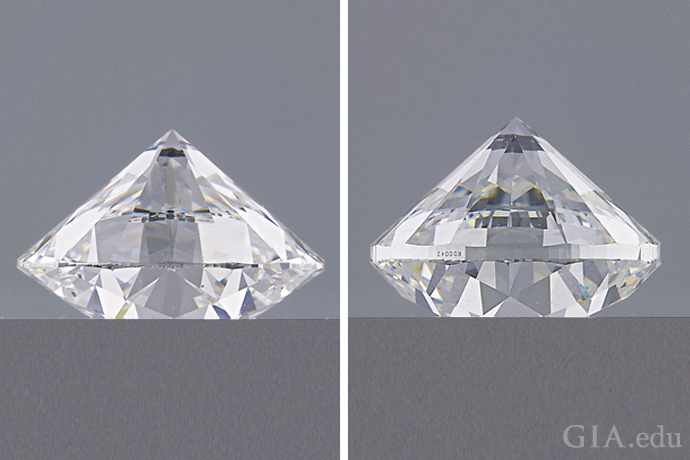
Image showing a diamond with a much thicker girdle (right) than the diamond on the left.

These pictures show the importance of weight ratio. Both of these diamonds have the same average girdle diameters, so face-up they appear to be the same size. But the diamond on the right has a much thicker girdle, so it weighs more (0.71 ct vs. 0.61 ct). The thicker girdle has no visual benefit, but the added weight will make the diamond more expensive. Photos: Maha Tannous/GIA

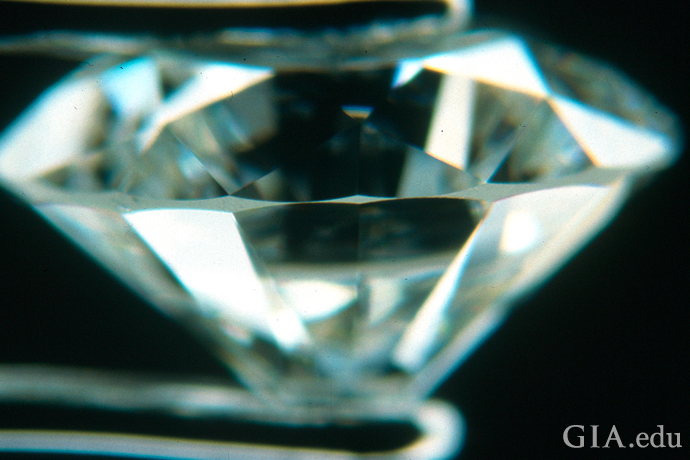
Durability in the case of a round brilliant diamond refers to the risk of damage that might result from an extremely thin girdle. Such a girdle can make a diamond highly vulnerable to damage during the jewelry setting procedure or even normal wear. Considering how much a diamond costs and its emotional significance, you want to avoid one that is susceptible to damage. A GIA Diamond Grading Report can eliminate this concern.

A 1.35 carat diamond with girdle areas very think to extremely thin.

Here is an example of why durability is important. This 1.35 ct diamond has girdle areas that are very thin to extremely thin, making it more susceptible to damage during everyday wear. Courtesy: Gary Roskin, G.G., F.G.A.

Craftsmanship

Craftsmanship describes the care that went into fashioning the diamond, as seen in its polish and symmetry. Polish refers to the overall quality and condition of the facet surfaces. It includes evaluation of any blemishes created by the polishing process or during wear. Polish is critical to the mirror-like performance of a diamond’s facets.

Diamond (left) showing lines created during polishing and diamond (right) with abraded facet junctions.

The diamond on the left shows lines created during the polishing process. The diamond on the right has abraded facet junctions caused by wear. Polish lines and abraded facet junctions can also affect a diamond’s clarity grade. Photos: Mitchell Moore/GIA

Symmetry is the exactness of a finished diamond’s shape and the arrangement and placement of its facets. A symmetrical diamond has an even display of brightness, fire and scintillation. A diamond with poor symmetry will have poor light performance, meaning that it’s likely to look flat.

An illustration showing all eight sections of a round brilliant identically. Illustration: GIA

All eight sections of a round brilliant cut diamond should be identical. This symmetry will help produce even brightness, fire and scintillation. Illustration: GIA

6. How GIA assigns a diamond cut grade

GIA evaluates a round brilliant diamond’s cut based on seven components – brightness, fire, scintillation, weight ratio, durability, polish and symmetry – to arrive at a GIA diamond cut grade, which ranges from Excellent to Poor. The grade is set by the lowest assessment the diamond receives for five of the seven components. In other words, if a diamond receives a Poor grade for brightness, then the highest its overall cut grade can be is Poor. The exceptions are polish and symmetry, which are assessed using standard GIA grading methodology: A diamond with Very Good polish and/or symmetry, for example, may receive an Excellent cut grade.

A GIA Diamond Grading Report contains the diamond’s full cut assessment, in addition to a diagram showing the diamond’s proportions and relative measurements. Consider the report an invaluable tool in helping you pick a dazzling diamond.

The official GIA Cut Scale for round brilliant cut diamonds.

The official GIA Cut Scale for round brilliant cut diamonds. Illustration: GIA

While knowing a diamond’s cut grade is essential, it shouldn’t be a substitute for seeing a diamond in person. As mentioned above, a diamond cut grade represents a range. For example, two diamonds with an Excellent Cut Grade may look – and perform – very differently. In addition, a diamond will look different under various lighting conditions, so you should take it for a test drive, so to speak. Last, you need to fall in love with the diamond – and no report can substitute for what stirs your heart.

A 2.03 carat round brilliant cut diamond engagement ring with Excellent cut.

An Excellent cut grade makes this 2.03 ct round brilliant diamond mesmerizing. Courtesy: 1stdibs.com
Diamond cut is extremely important. So is diamond color. Learn about it, too, so you can pick a spellbinding diamond.

Fact Checking Diamond Fluorescence: 11 Myths Dispelled

If you’re shopping for a diamond engagement ring, you’ve probably heard about diamond fluorescence, along with varying opinions about its pros and cons. Let’s dig into a few common myths about fluorescence and D-to-Z color diamonds.

In this blog, we cover:
Myth #1: All diamonds fluoresce
Myth #2: You can see diamond fluorescence – no matter the lighting
Myth #3: Diamond fluorescence can always be detected
Myth #4: Diamond fluorescence influences a diamond’s color grade
Myth #5: Diamond fluorescence is given a grade, just like color, clarity and cut
Myth #6: Diamonds only show blue fluorescence
Myth #7: Strong blue diamond fluorescence is bad
Myth #8: Diamond fluorescence detracts from a diamond’s sparkle and beauty
Myth #9: Fluorescence means the diamond is a “real” natural diamond
Myth #10: Fluorescence can make a diamond less durable
Myth #11: Diamond fluorescence does/doesn’t affect value


Myth #1: All diamonds fluoresce
FACT: The majority of diamonds do not fluoresce. In a study of more than 26,000 diamonds submitted for grading to GIA, researchers found that only approximately 25% to 35% of them exhibited some degree of diamond fluorescence when examined with a standard long-wave UV lamp. So, it’s likely that the diamond you’re eyeing does not fluoresce.


Myth #2: You can see diamond fluorescence – no matter the lighting
FACT: Diamonds that fluoresce only do so when they are exposed to invisible UV rays and other higher energy radiation sources such as X-rays and lasers. You might see your diamond fluoresce under a bright sun, in a tanning bed, at a dance club or in other places where strong fluorescent or black lights are used. But once the light source is removed, the diamond will stop fluorescing. Incandescent lighting will not cause a diamond to fluoresce.
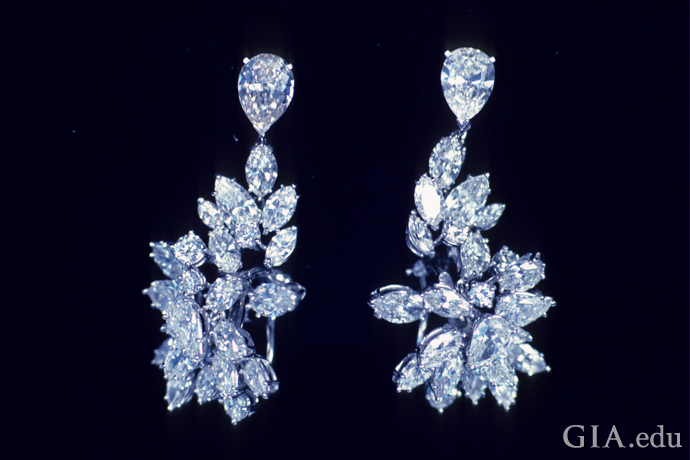
Diamond earrings shown under incandescent light appear to be the same color.

When viewed with incandescent light, all the diamonds in these earrings appear to be the same color. Photo: GIA

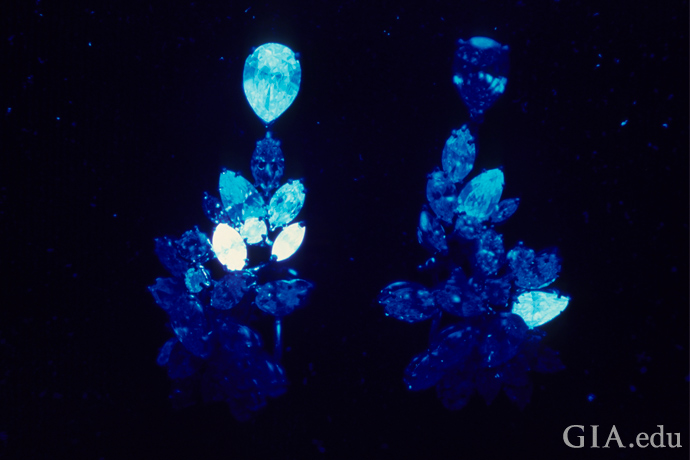
Diamond earrings viewed under a UV lamp showing different degrees of diamond fluorescence.

When viewed with a UV lamp, the diamonds in the earrings show different degrees of diamond fluorescence. Photo: GIA


Myth #3: Diamond fluorescence can always be detected
FACT: Diamond fluorescence cannot always be detected. You need conditions where UV rays are present and the intensity of the fluorescence is strong enough to be observed. A reputable grading laboratory, like GIA, follows strict protocols to determine the presence of fluorescence. It also adheres to set standards in describing its intensity, to ensure objective and consistent reporting.

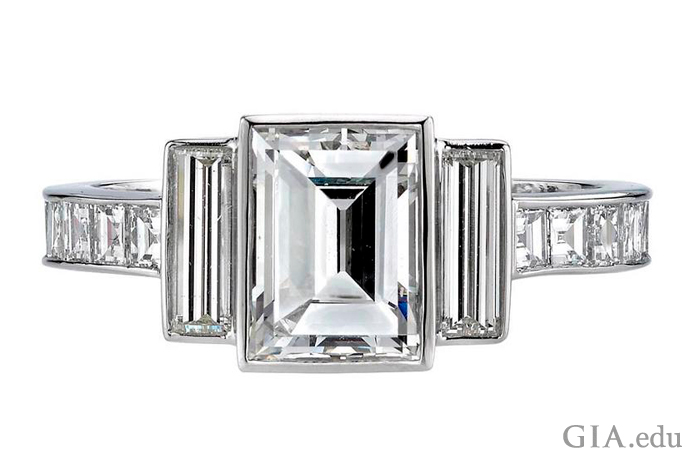
 A 1.42 carat step cut diamond engagement ring set in platinum.

Fluorescent or not, this 1.42 carat (ct) diamond engagement ring, with diamonds lining the band, captivates with its bold, clean lines. Courtesy: 1stdibs.com


Myth #4: Diamond fluorescence influences a diamond’s color grade
FACT: In assigning a diamond color grade, GIA examines the gem in a highly controlled viewing environment, designed to minimize the influence of fluorescence and to produce an accurate and objective assessment of the diamond’s color.

However, the way you perceive a diamond’s color grade may be affected by the extent to which it fluoresces – in a positive way. In a diamond lower on the GIA D-to-Z color scale (say, I to N) with a yellow tint, moderate-to-strong blue fluorescence may cancel out some of the yellow for a better color appearance than what its color grade would indicate. See Myth #7.


Myth #5: Diamond fluorescence is given a grade, just like color, clarity and cut
FACT: Diamond fluorescence is not one of the 4Cs – like color, clarity, cut and carat weight – which describe the quality of a diamond. GIA considers fluorescence an identifying characteristic – additional information that helps distinguish one diamond from another.

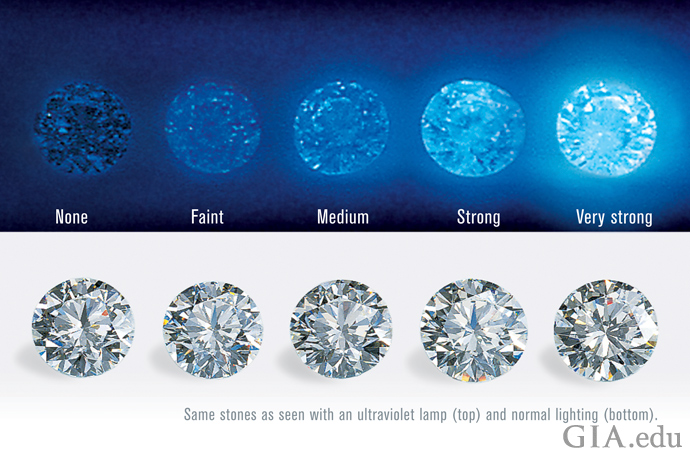
GIA diamond grading reports describe the intensity of fluorescence as None, Faint, Medium, Strong and Very Strong. If the fluorescence is Medium, Strong or Very Strong, the color of the fluorescence will be noted on the grading report.
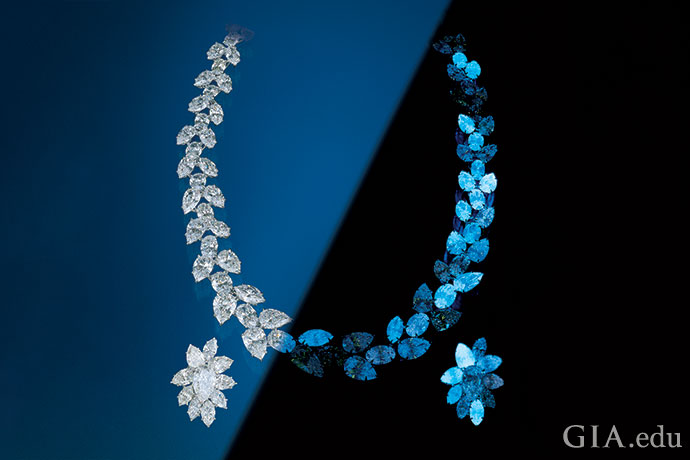
Photo showing the intensity of diamond fluorescence described as: None, Faint, Medium, Strong and Very Strong under UV lighting (top) and under normal lighting (bottom).

A GIA Grading Report describes the intensity of a diamond’s fluorescence as: None, Faint, Medium, Strong and Very Strong. Composite photo in UV: Maha DeMaggio/GIA. Composite photo in normal light: Harold and Erica Van Pelt/GIA


Myth #6: Diamonds only show blue fluorescence
FACT: Diamonds can fluoresce in a variety of colors. These include orangy yellow, yellow, orange, red, white and green. Variations in the atomic structure, such as the number of nitrogen atoms present, cause the phenomenon. Blue, however, is by far the most common color of diamond fluorescence.

Rough diamonds displaying a range of colors when exposed to UV light.

These rough diamonds exhibit a range of colors when exposed to UV light. Photo: GIA


Myth #7: Strong blue diamond fluorescence is bad
FACT: GIA studied the influence of blue fluorescence on the appearance of a diamond under normal viewing conditions. The Institute found that average observers (meant to represent the jewelry buying public) could not consistently discriminate any fluorescence-related effects in the viewing environments most similar to those in which jewelry is purchased and worn.

However, GIA also found that strong blue diamond fluorescence could be beneficial. The results of its study revealed that, as noted for Myth #4, some strongly blue fluorescent diamonds were perceived to have a better color appearance than their color grade would suggest when viewed table-up, with no discernible trend table-down.

Composite photo of diamond necklace and one earring shown under normal lighting conditions (left) and a long-wave UV lamp (right).

Bejeweled fireworks: Half the diamonds in this necklace (132 carats total weight) and the one earring (3.20 ct center stone) in this composite photo are shown under normal lighting conditions (left), and the other half of the necklace and the same earring are shown as they appear under a long-wave UV lamp (right). Composite photo: Harold and Erica Van Pelt/GIA. Courtesy: Harry Winston Inc., New York


Myth #8: Diamond fluorescence detracts from a diamond’s sparkle and beauty
FACT: Diamond fluorescence has little to no effect on a diamond’s sparkle, and research shows that it doesn’t impact beauty either.

A diamond’s sparkle is determined primarily by its cut, not by whether the diamond fluoresces or not. A diamond’s cut – that is, the angles and relative measurements of its facets, as well as its other proportions, design and craftsmanship – determines how well light performs when it strikes the diamond and how well it will sparkle.

A 1.29 carat round brilliant cut diamond engagement ring with diamond melee in the shank.

Even strong blue fluorescence would not affect the beauty of this 1.29 ct E color diamond engagement ring in normal lighting. Courtesy: 1stdibs.com


MYTH #9: Fluorescence means the diamond is a “real” natural diamond
FACT: Absolutely not. The presence or absence of fluorescence should not be used as a DIY test to determine if your diamond is real. First, not all natural diamonds fluoresce under the standard UV lamp used by gemologists (see Myth #1). Second, some synthetic or lab grown diamonds do fluoresce to these wavelengths. Although differences have been noted in the intensity, color and pattern of fluorescence between natural and synthetic diamonds, there is overlap. Finally, some materials used to impersonate diamond – like cubic zirconia – can display fluorescence.

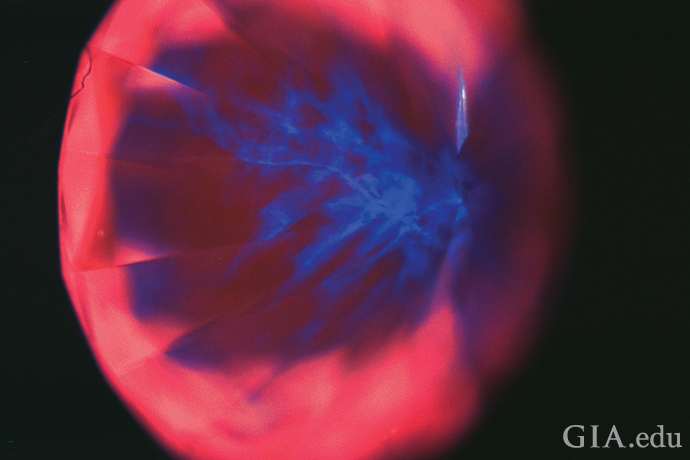
CVD diamond displaying strong pinkish orange fluorescence, with regions of strong blue or violet, when exposed to high-intensity ultra-short wavelengths.

Synthetic diamonds made by the chemical vapor deposition method may display strong pinkish orange fluorescence (among other colors), with regions of strong blue or violet, when exposed to high-intensity ultra-short wavelengths. Photo: Wuyi Wang/GIA


Myth #10: Fluorescence can make a diamond less durable
FACT: A diamond that fluoresces under a standard UV lamp has the same structural integrity as one with no reaction to it. Nothing in the submicroscopic structures that cause fluorescence inherently weakens the diamond.


Myth #11: Diamond fluorescence does/doesn’t affect value
FACT: Jewelry professionals disagree about whether fluorescence adds to or detracts from the value of a diamond. Some trade professionals believe those very rare diamonds at the high end of the D-to-Z color scale that have extremely strong blue fluorescence are worth less than their nonfluorescent counterparts because the fluorescence can affect their transparency by giving them a hazy or milky appearance. Conversely, some traders pay higher prices for blue-fluorescing diamonds of a lower color grade because, as noted above, they believe the fluorescence masks the faint to very light yellow color of these diamonds.

Diamond fluorescence and its effect on value is not a simple question, and there isn’t a simple answer. We recommend that you compare diamonds in a variety of lighting environments and choose the stone that you like best. Ultimately, GIA believes the beauty of a diamond is truly in the eye of the beholder.

A 1.67 ct diamond engagement ring set in platinum, surrounded by 0.56 carats of diamonds in the halo and shank.

Wouldn’t it be awesome if this 1.67 ct center diamond fluoresced in a night club? Courtesy: 1stdibs.com

Is there a diamond fluorescence “fact” you’d like to verify? Leave us a comment below. In the meantime, if you enjoyed this post, you might like reading about common engagement ring myths.

Diamond Color: Seven Things You Need to Know

If you’re shopping for a diamond engagement ring, you need to know about what diamond color is if you want to understand quality and how diamonds are valued. If you are curious about what colors diamonds come in and how color grade impacts value, check out our seven essential things about diamond color you should know.

In this blog we cover:

  1. Diamond value is based (in part) on the absence of color.
  2. A diamond’s color grade should be determined by a grading laboratory.
  3. Colored diamonds are graded and valued differently from colorless diamonds.
  4. Treatments can improve diamond color.
  5. Diamond fluorescence has little to no impact on diamond color.
  6. Engagement ring settings can influence the perception of diamond color.
  7. To be sure of a diamond’s color, get a GIA grading report.

1. Diamond value is based (in part) on the absence of color

Diamond color is important: Most diamonds used in engagement rings are near-colorless with hints of yellow or brown. All things being equal, the more colorless a diamond is, the rarer it is, and this rarity will be reflected in its price.

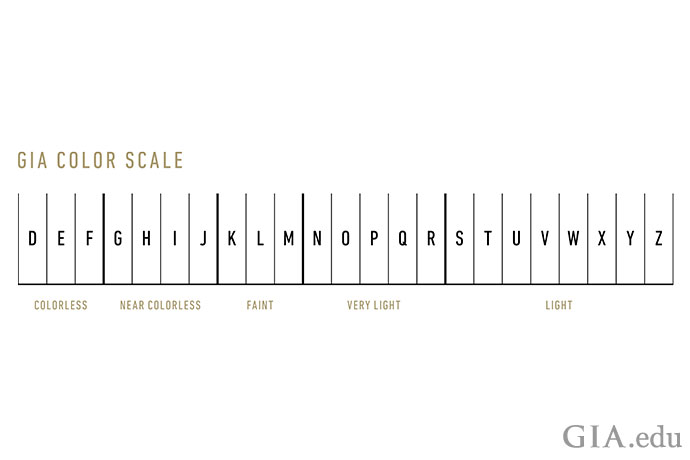
GIA D-to-Z diamond color scale.

The GIA D-to-Z Color Scale allows for precise measurement of diamond color. Illustration: GIA

GIA’s D-to-Z Color Scale is used to measure the degree of colorlessness of a diamond. The letter “D” represents a colorless diamond, with each following letter representing a diamond that has slightly more yellow or brown.

GIA organizes diamond color into five groups:

  • Colorless (D-F): The most rare, and therefore the most valuable
  • Near-colorless (G-J): Color is often unnoticeable except by trained graders
  • Faint (K-M): Color is still difficult to see by the untrained eye
  • Very Light (N-R): Subtle color can be seen in larger stones by an untrained eye
  • Light (S-Z): Color can be seen in stones of different sizes. The diamonds appear slightly yellow or brown but do not have sufficient color to be considered a “fancy” colored diamond

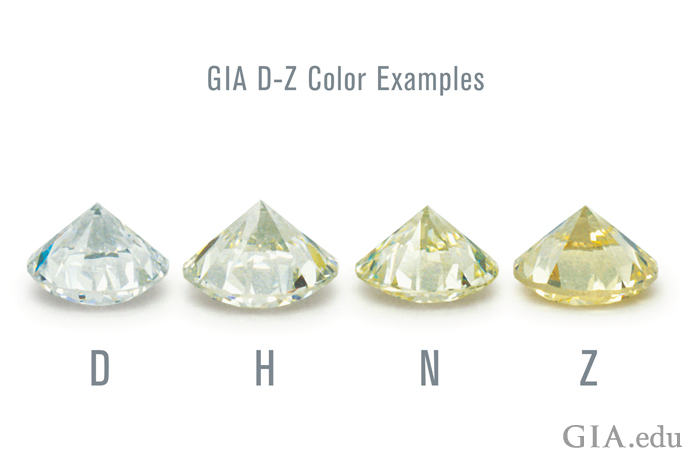
GIA D-to-Z diamond color scale showing diamonds at either end of the grading spectrum.

When diamonds at either end of the grading spectrum are placed side by side, it is easy to see the differences in diamond color. Photo: GIA

2. A diamond’s color grade should be determined by a grading laboratory

The distinctions between diamond color grades can be so subtle that they are undetectable to the untrained eye. But they do make a very big difference in diamond price. That’s why determining a diamond’s color grade is best left to a gemological laboratory, like GIA, that has the expertise and processes to ensure objective, unbiased color grading.

In working to evaluate what color a diamond is, GIA graders follow a strict protocol that dictates the type of lighting and neutral background used, as well as precisely how the diamond should be held and viewed during the assessment. A color grade is determined by comparing the diamond to masterstones – a set of color-comparison diamonds of known position on the GIA D-to-Z color grading scale – when all are placed table down in a grading tray. This viewing position reduces the complex appearance of a faceted colorless to near-colorless diamond when viewed face up.

A 6.75 carat round brilliant cut diamond engagement ring featuring a diamond melee halo and band.

One look at this 6.75 carat (ct), F-color, SI-clarity round brilliant and you’ll know why diamonds are the universal symbol of love. Courtesy: 1stdibs.com

3. Colored diamonds are graded and valued differently from colorless diamonds

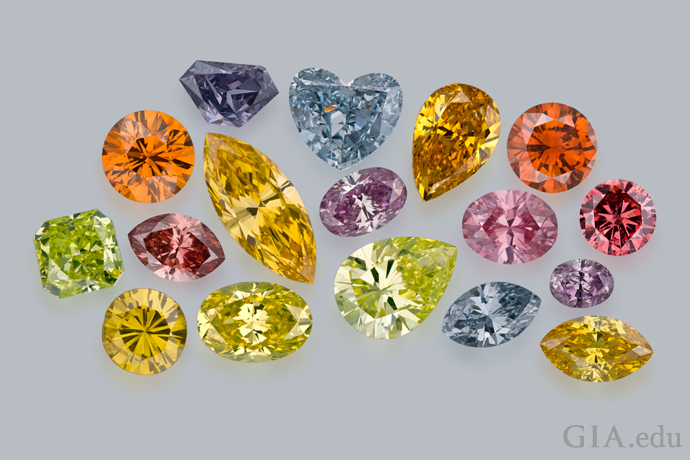
Diamond color is arguably the most important factor in colored diamonds. Some common colors that diamonds come in are yellow, brown, pink, red, blue, orange, purple, green, gray or black. This does not include diamonds in the normal color range that are slightly yellowish, slightly brownish or slightly grayish. When the color is natural, the diamonds are called fancy-color diamonds, fancy diamonds or fancies.

Colored diamonds come in a rainbow of hues.

Colored diamonds come in a rainbow of hues. Photo: Robert and Orasa Weldon/GIA

GIA grades colored diamonds differently from colorless diamonds. Unlike GIA’s D-to-Z grading system for colorless to light yellow diamonds, which is based on the absence of color when the diamond is viewed table down, the grading system for colored diamonds is based on the presence of color when the diamond is viewed face up. Terms used by GIA to describe colored diamonds include: Faint, Very Light, Light, Fancy Light, Fancy, Fancy Dark, Fancy Intense, Fancy Deep and Fancy Vivid.

What to look for in colored diamonds? In general, the more color a colored diamond has, the better. Fancy Deep and Fancy Vivid diamonds, for example, have more color than Fancy Light diamonds—and are usually more valuable. However, tone is also important: For example, a diamond that is extremely dark (Fancy Dark) may be less desirable than a lighter stone graded Fancy Intense.

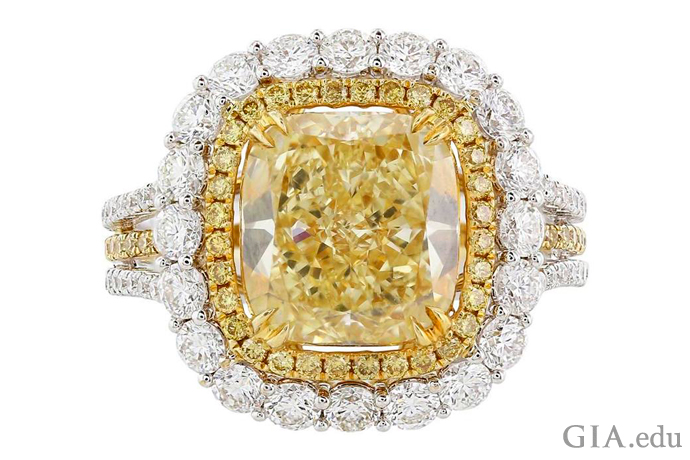
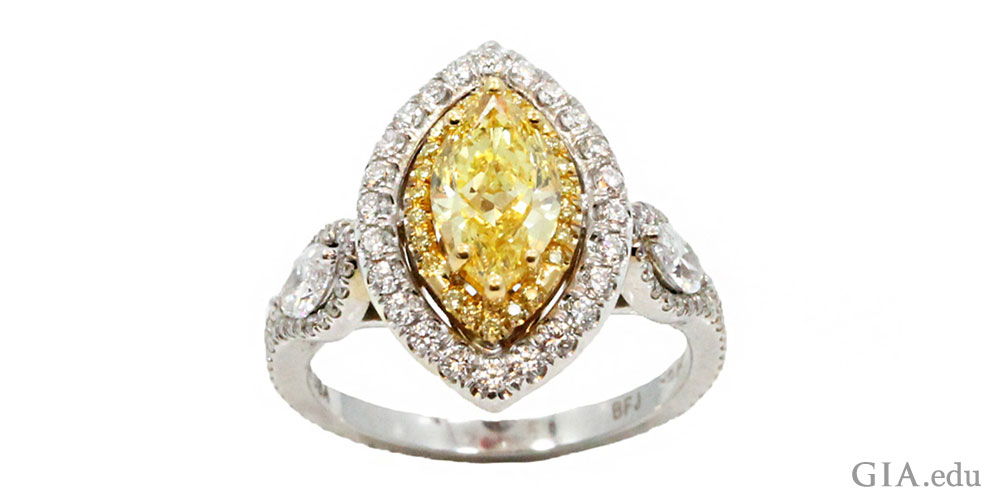
A 3.66 ct Fancy Yellow diamond engagement ring with two halos containing 0.37 carats of yellow diamonds and 1.50 carats of colorless diamonds.

Colored diamonds can be far more expensive than colorless diamonds. Here a 3.66 ct Fancy Yellow glows like a ray of sunshine. Two halos encircle it: the inner containing 0.37 carats of yellow diamonds; the outer, 1.50 carats of colorless diamonds. Courtesy: 1stdibs.com

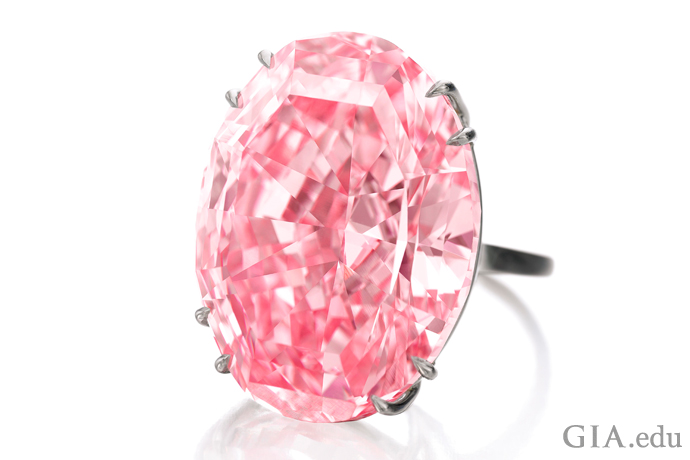
Fancy-color diamonds are, for the most part, far rarer than diamonds in the D-to-Z color range. Some experts estimate that only two percent of total rough diamond production is fancy colored. Since rarity influences price, it’s not surprising that spectacular blue, pink, green, orange and other colored diamonds can sell for millions of dollars at auction.

The Pink Star ring, which sold at a Sotheby’s auction for $71 million, contains a 59.60 ct Fancy Vivid pink diamond graded by GIA.

The GIA-graded Fancy Vivid pink 59.60 ct Pink Star diamond sold for $71 million at the April 4, 2017 Sotheby’s auction in Hong Kong. Courtesy: Sotheby’s

4. Treatments can improve diamond color

Diamond color can be altered by treatments. All else being equal, diamonds that have not been treated are more expensive than diamonds that have been treated. Legally, the seller must disclose any treatments. If you are aware what diamond color is, it’s easier to understand how they have been treated. 

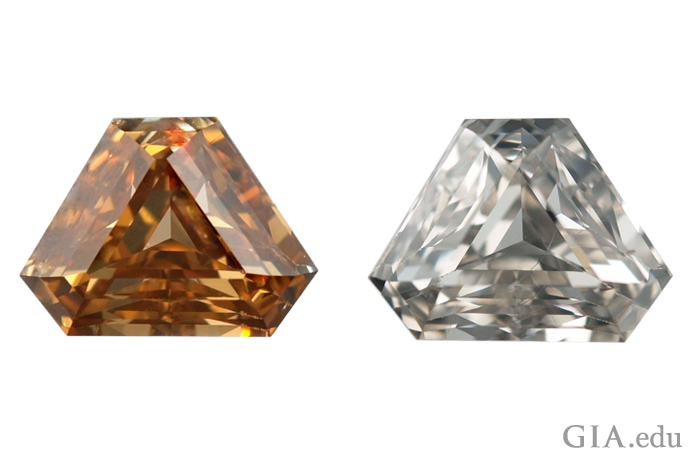
High pressure, high temperature (HPHT) processing is perhaps the most common technique used to alter, enhance or remove color. HPHT treatment can change some brown diamonds into colorless ones or into other colors like yellow, greenish yellow or green. This process is also associated with treated pink, blue and orange-yellow diamonds. The resulting color is considered permanent, but HPHT treatment should always be disclosed.

Annealing is another process that uses controlled heating and cooling to change the color of a gem material, especially after irradiation. Irradiating a diamond or coating it are other methods used to enhance a diamond’s color.

.

A 6.61 ct Fancy yellow brown diamond (left) before annealing and the same diamond (right), graded L (faint yellow) after annealing.

Before HPHT annealing to remove color, this 6.61 ct diamond was a Fancy yellow brown (left). After annealing (right), GIA graded the diamond an L (faint yellow). Photo: Robert Weldon/GIA

5. Diamond fluorescence has little to no impact on diamond color

Diamond fluorescence is visible light temporarily emitted by some diamonds when they are exposed to ultraviolet (UV) rays from the sun, fluorescent lamps or other sources. This emitted light can display various colors (often blue in diamonds), intensities (faint to very strong) and distribution patterns. When the light source is removed, the fluorescence is no longer visible.

Many in the diamond trade believe that strong blue fluorescence can make a light yellow diamond look closer to colorless when exposed to a UV source such as sunlight. Blue and yellow are color opposites and tend to cancel each other out, so blue fluorescence masks the yellow color. In rare cases, some diamonds with extremely strong fluorescence may appear slightly hazy or oily. Fewer than 0.2% of the fluorescent diamonds submitted to GIA exhibit this effect.

.

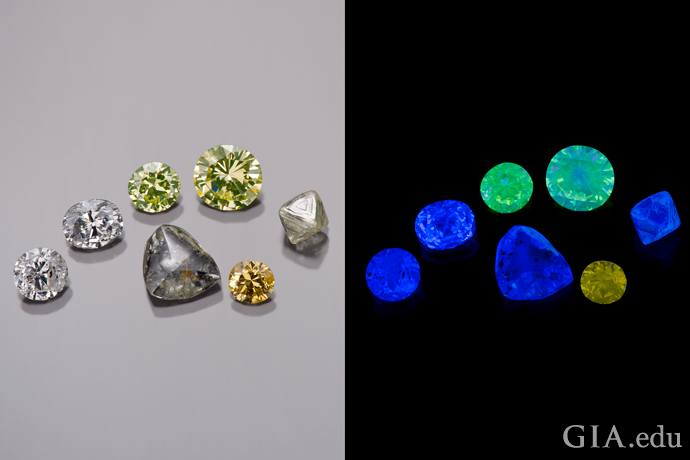
A group of seven diamonds shown under daylight-equivalent illumination (left) and exposed to long-wave UV irradiation (right).

The same group of seven diamonds is shown here under daylight-equivalent illumination (left) and when exposed to long-wave UV irradiation (right). Photos: Kevin Schumacher/GIA

To answer questions from consumers and the trade about the impact of fluorescence on diamond color in the D-to-Z range, GIA conducted extensive observer testing. Here’s what its researchers found: “For the average observer, meant to represent the jewelry buying public, no systematic effects of fluorescence were detected [on the face-up appearance of the groups of diamonds]. Even the experienced observers did not consistently agree on the effects of fluorescence from one stone to the next.” As a result, GIA considers diamond fluorescence to be an identifying characteristic, not a grading factor – meaning, it has little to no impact on what color the diamond is.

6. Engagement ring settings can influence the perception of diamond color

Diamonds are highly reflective – their facets are essentially an arrangement of tiny mirrors reflecting light and the surroundings. So it should come as no surprise that the color of a ring’s prongs and shank can influence the color you see in the diamond. A white metal like platinum or white gold can emphasize the absence of color in a diamond that is colorless or near-colorless, while a gold band might make a diamond lower on the D-to-Z scale appear more yellow.

Learn more about how metal affects a diamond’s color appearance.

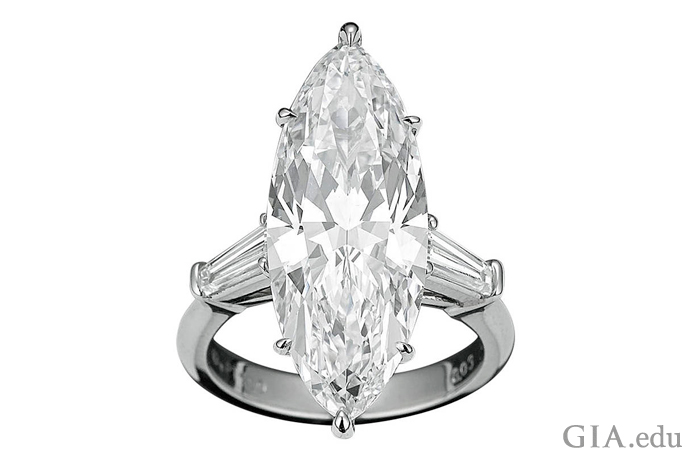
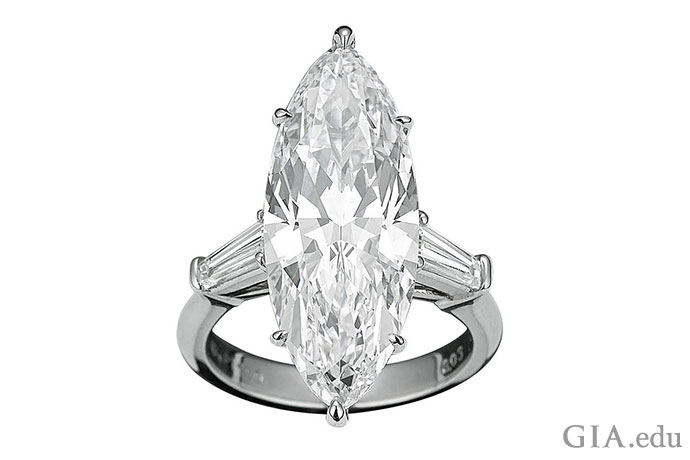
A 8.03 carat D color marquise cut diamond engagement ring set in platinum, flanked by two tapered baguettes weighing 0.72 carats.

The 8.03 ct marquise cut diamond in this engagement ring is D color. It is flanked by two tapered baguettes weighing a total of 0.72 carats. The platinum band and prongs highlight the beauty of the diamond. Courtesy: 1stdibs.com

7. To be sure of a diamond’s color, get a GIA grading report

A GIA Diamond Grading Report and GIA Diamond Origin Report provides an in-depth assessment of a diamond’s quality based on the 4Cs: diamond color, clarity, cut and carat weight. A report not only contains an objective color grade, but it also discloses other identifying characteristics like fluorescence, as well as any treatments detected. Learn what diamond color information is included in a GIA report.

An engagement ring is profoundly intimate and symbolic – it represents your love and commitment. A GIA Diamond Grading Report lets you make this most important purchase with peace of mind.

Now that you understand  what diamond color is and  its importance, here are 12 tips for buying an engagement ring.

Lead image courtesy of 1stdibs.com

Diamond Engagement Ring Setting: How Metal Affects Diamond Color Appearance

Selecting the right metal for your engagement ring setting is just as important as selecting the right diamond. The metal will not only define the ring’s style, but it can also play a big role in your diamond’s color appearance. Here’s how to choose wisely.

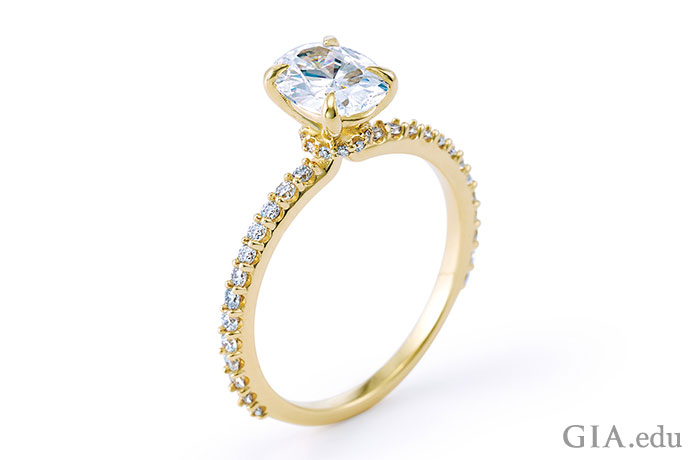
A solitaire center stone surrounded by diamond melee in a gold engagement ring setting.

A gold engagement ring allows the solitaire diamond to be the star of the show. Diamond melee along the ring’s shank play a supporting role, adding even more sparkle to the overall effect. Courtesy: Stuller Inc.

Gold, platinum and silver are the metals most often used in jewelry. Their allure, workability and durability make gold and platinum excellent choices for an engagement ring. For many people, choosing an engagement ring setting starts with a color and style preference. Some prefer the warmth of yellow gold or rose gold engagement rings; others opt for the coolness and classicism of white metals such as platinum or white gold for their engagement rings. Yet few people consider the effect that engagement ring’s metal color has on the most important feature of an engagement ring – the center stone, which is often a diamond.

A 5.31 carat (ct) oval diamond set in a rose gold engagement ring setting.

An 18K rose gold band brings warmth to this 5.31 carat (ct) oval diamond. Courtesy: Rahaminov Diamonds

The importance of diamond color and reflection

When choosing an engagement ring setting in white gold, rose gold, yellow gold, platinum or silver, consider these important things:

Your diamond’s color. Although many people think of gem-quality diamonds as colorless, truly colorless diamonds are actually very rare. Most diamonds used in jewelry and diamond engagement rings are nearly colorless with hints of yellow, brown or gray. In picking an engagement ring in yellow gold, white gold or other metal for your ring setting, you’ll need to know where your diamond is on the GIA D-to-Z Color Scale.

The fact that diamonds are highly reflective. The many facets of a standard round brilliant diamond and other diamond shapes act like tiny mirrors reflecting their surroundings, including the color of the band and the prongs holding the gem.

Knowing this, you can use the color of the metal in your engagement ring to highlight your diamond’s color or create a more harmonious appearance.

A 1.20 ct emerald cut diamond set in an 18K gold engagement ring setting.

An 18K gold band complements the hint of yellow in this 1.20 ct N color emerald cut diamond for a very harmonious look. Courtesy: 1stdibs.com

Once you’ve settled on whether you want your engagement ring design to highlight the main diamond or create a sense of harmony between the setting and the center stone, you’ll have many options to choose from. Remember, your jeweler is your best resource. She or he will understand the subtle nuances of diamond color and can make the best metal color recommendations to achieve the look you’re going for. Also, the best way to see a metal’s effect on diamond color appearance is to see the diamond and the engagement ring setting in person. In the meantime, though, here are some tried and true ideas to get you thinking.

Metals for diamonds graded D through J

All things being equal for diamonds on the D-to-Z scale, the less color the stone has the more valuable it is. Diamonds graded D-E-F on the GIA color scale are considered colorless, and a white metal—platinum or white-gold engagement ring setting is the ideal choice to emphasize their beauty. Diamonds graded G through J are in the near-colorless range, with an almost imperceptible hint of yellow. They, too, are good candidates for a platinum or white gold ring setting.

If you choose another color of metal or opt for a two-tone ring to create contrast, the prongs that hold the diamond should be a white metal like white gold or platinum. Yellow gold prongs could impart some yellow color to the diamond, making your colorless or near-colorless stone look like it has a different color grade.

A 8.03 ct D color marquise diamond with 0.72 carats of colorless baguettes set in a platinum engagement ring setting.

A platinum band heightens the icy beauty of this 8.03 ct D color marquise diamond with 0.72 carats of colorless baguettes. Courtesy: 1stdibs.com

This diamond ring features white diamond melee in an 18K rose gold halo engagement ring setting.

Like the white look, but want some contrast? This diamond ring features white diamond melee in an 18K rose gold halo, which adds visual richness to the design. Courtesy: PE Jay Creations

Metals for diamonds graded M through Z

A diamond with a color grade of M or lower will likely have a noticeable yellow tint. A yellow gold band will accentuate the yellow in the diamond; a white band might make the diamond appear more colorless. Diamonds with a color grade of K or L are in something of a middle zone; you can use either yellow gold or white metal bands such as platinum or white gold, depending on the effect you want for your engagement ring setting.

A K color diamond in a gold engagement ring setting.

The diamond center stone in this ring is a K color. A gold band brings out the hint of yellow, giving the diamond a softer appearance. Courtesy: TrueFacet.com

Set in a platinum engagement ring setting, this 11.04 ct yellowish diamond is surrounded by 5.05 carats of white diamond melee.

A fanciful platinum setting with 5.05 carats of white diamond melee provides a pleasing contrast with the 11.04 ct yellowish diamond center stone. Photo: Robert Weldon/GIA. Courtesy: MUNNU The Gem Palace

Picking metals for fancy-color diamonds

Diamonds that fall outside the D-to-Z color range are called “fancy colors.” Selecting the right metal to accentuate these unique stones is key to delivering the radiance and allure of each engagement ring. Naturally occurring colors include bluebrownpink, yellow and green. These diamonds are evaluated less for brilliance or fire and more for color intensity. Depending on the hue, tone and saturation of the color, the GIA Colored Diamond Color Grading System assigns colored diamonds one of these color grades: Faint, Very Light, Light, Fancy Light, Fancy, Fancy Intense, Fancy Vivid, Fancy Dark and Fancy Deep. Generally, Fancy Vivid and Fancy Deep command the highest prices.

Metals for brown diamonds

Brown diamonds were once deemed unsuitable for jewelry. Then marketers in the 1980s gave them tantalizing names like champagne, cognac and chocolate, and brown diamonds developed their own niche.

Like yellowish diamonds, brown diamonds can be placed on a white gold or platinum engagement ring setting to highlight their color, or they can be placed in a yellow gold or rose gold engagement ring setting to complement their color. Even the metal used for prongs can either contrast or complement the diamond in the center.

A 0.38 ct brown diamond in an 18K white gold engagement ring setting, surrounded by a double halo of white diamond melee.

A 0.38 ct brown diamond pops because it is set in an 18K white gold band and surrounded by a double halo of 0.39 carats of white diamond melee. White prongs accentuate the look. Courtesy: 1stdibs.com

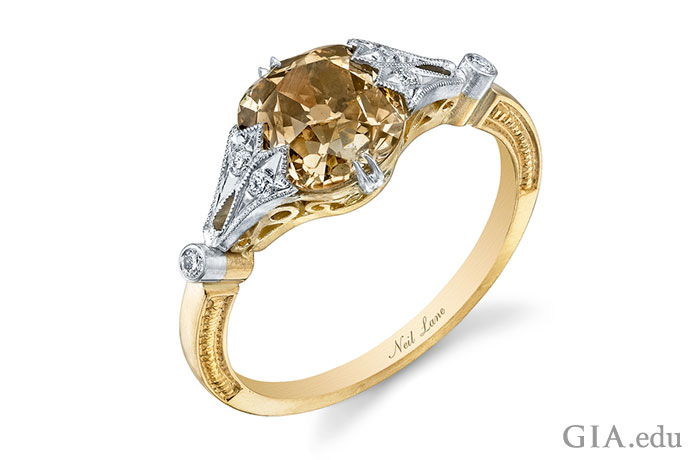
A yellow gold engagement ring setting featuring a brown cushion cut diamond accented with platinum prongs and white diamond side stones.

Neil Lane designed this ring for actress, model and Paralympic medalist Amy Purdy. A brown cushion cut diamond is the center stone. A yellow gold band creates a soft backdrop, while platinum prongs and white diamond side stones provide an arresting contrast. Courtesy: Neil Lane

Metals for yellow diamonds

Yellow diamonds were relatively rare until the discovery in the late 1860s of quantities of what today would be considered fancy yellows at several locations in South Africa. They are now found around the world. The presence of nitrogen gives them their color.

A platinum or white gold engagement ring can highlight the color of a yellow diamond, while a yellow gold ring will harmonize with the color of the yellow diamond.

A double halo engagement ring setting of 0.94 carats of white diamonds is the backdrop for a 1.02 ct yellow diamond

A double halo of 0.94 carats of white diamonds is the frosty backdrop for a 1.02 ct yellow diamond. Courtesy: 1stdibs.com

A 7.02 ct fancy yellow heart shaped diamond with 1.08 carats if yellow diamonds in the halo and shank in an 18K gold engagement ring setting.

The combination of a 7.02 ct fancy yellow heart shaped diamond, 1.08 carats of yellow diamonds in the halo and along the shank and an 18K yellow gold band creates an enchanting engagement ring setting. Courtesy: Norman Silverman

Metals for pink diamonds

Pink diamonds are exceedingly rare. Historically, they have been found in Brazil’s alluvial workings and in Indian and African mines. Since the late 1980s, the Argyle mine in Australia has been the most important source of pink diamonds, but even here they are quite rare. According to Rio Tinto Ltd., the owner of the mine, “more than 800 million carats of rough diamonds have been produced from the Argyle Diamond Mine. Total carats of pink rough: less than 1% of total production.” Not surprisingly, pink diamonds are extremely expensive.

Since the color of pink diamonds is so prized, it is rare to see them set in a yellow gold engagement ring setting. A pink diamond is the star, and the white metal band is used to highlight its color.

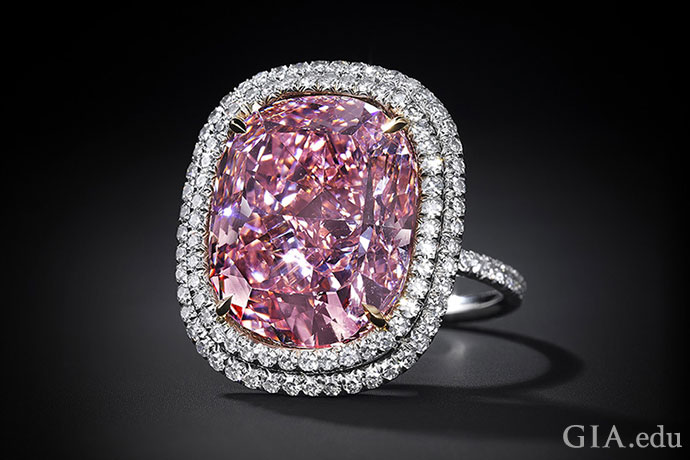
A white metal engagement ring setting and double halo of white diamonds surround a 16.08 ct Fancy Vivid pink diamond.

A white metal band and double halo of white diamonds form the elegant frame for this 16.08 ct Fancy Vivid pink diamond. The piece sold for more than $28.5 million at a Christie’s auction in November 2015. Courtesy: Christie’s

Metals for blue diamonds

Blue diamonds are also extraordinarily rare and very expensive. India is their historic source, and it is believed that the 45.52 ct Hope Diamond, the 31.06 ct Wittelsbach-Graff and other famous blue diamonds originated there. Today, the Premier mine in South Africa, which opened in 1903, is considered the most significant source of blue diamonds. Nevertheless, at the end of the 20th century blue diamonds accounted for less than 0.1% of diamonds found there.

Like pink diamonds, they are almost always set in a platinum, white gold or silver engagement ring setting that highlights their color.

A 5.98 ct Fancy light blue diamond in a platinum engagement ring setting.

A natural 5.98 ct Fancy Light blue diamond sits in a platinum band. Courtesy: Royal Ontario Museum, Toronto, Canada; Gift of Vincent Tovell. Certified by the Canadian Cultural Property Export Review Board under the terms of the Cultural Property Export and Import Act.

A beautiful engagement ring is the product of a number of choices that add up to a stunning creation. Knowing how to protect your diamond engagement ring setting is another important consideration.

The History of the 4Cs of Diamond Quality

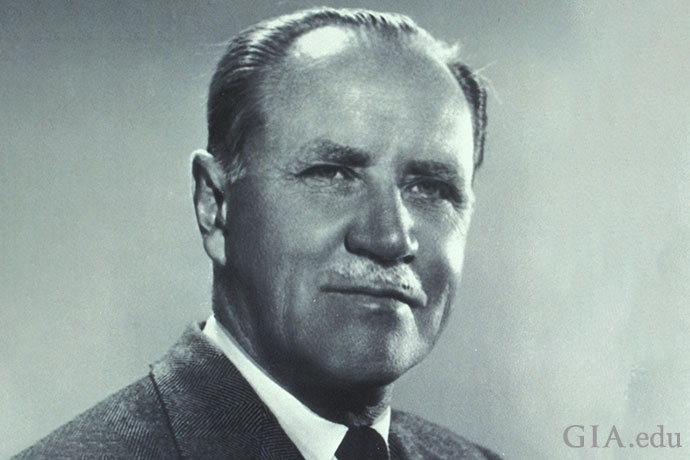
The term 4Cs we know today had its start in the early 1940s, as the brainchild of GIA founder Robert M. Shipley. A former retail jeweler, Shipley was fiercely committed to professionalizing the American jewelry industry. He established an institute (GIA) to provide jewelers with formal training and was a tireless advocate for greater knowledge, ethics and standards when it came to buying and selling gems.

Robert M. Shipley, GIA Founder.

Robert M. Shipley founded the Gemological Institute of America in 1931. Photo: GIA

Shipley developed the 4Cs as a mnemonic device to help his students remember the four factors that characterize a faceted diamond: color, clarity, cut and carat weight. The concept was simple, but revolutionary.

Throughout history, diamond merchants used a variety of different, usually broad, terms to talk about these four factors, rarely with any consistency. Terms such as river or water were used to describe diamonds that were the most colorless, with Cape assigned to pale yellow diamonds from South Africa’s Cape of Good Hope region. To describe clarity, they referred to diamonds as being “without flaws” or “with imperfections.” Cut was described as “made well” or “made poorly.” As a result, it was very difficult for jewelers to communicate those elements of value to their customers or for their customers to remember them. Only the term carat to describe weight has been used consistently from the 1500s to today.

Under Shipley’s direction, the term 4Cs became part of the American gem industry’s vernacular, popularized through advertising campaigns, lectures and GIA education courses. Within decades, they were integrated into the international nomenclature as well.

The 4Cs and the Diamond Grading Scales

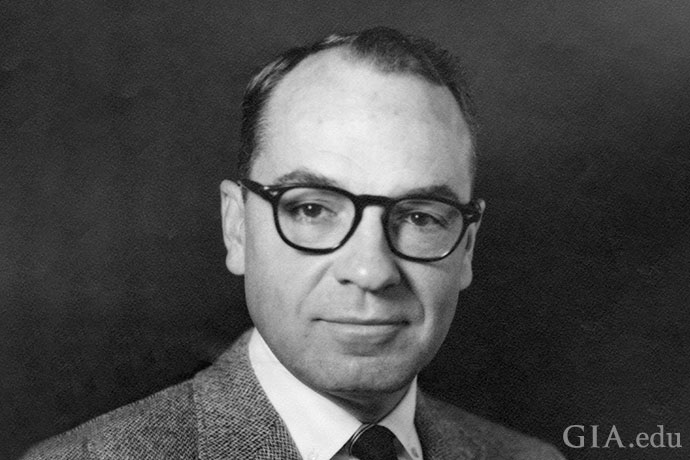
Jewelers welcomed Shipley’s innovation, but GIA did not stop there. Shipley’s successor as president, Richard T. Liddicoat (affectionately known as “RTL” by later generations of GIA staff) – along with colleagues Lester Benson, Joseph Phillips, Robert Crowningshield and Bert Krashes – expanded on the 4Cs.

Richard T. Liddicoat, president of GIA from 1952 to 1983.

Richard T. Liddicoat, president of GIA from 1952 to 1983, integrated the 4Cs into GIA’s curriculum and laboratory reports. Courtesy: Norman B. Samuels Portrait Photographers, Los Angeles

Their work included not only development of the now famous GIA D-to-Z Color Scale and GIA Clarity Scale for diamonds, but also the scientific methods and procedures for objectively grading a diamond’s quality.

2.78 carat (ct) D-color round brilliant diamond that is internally flawless.

A 2.78 carat (ct) D-color round brilliant diamond that is internally flawless is a wonder of nature. GIA invented the color- and clarity-grading terminology that is now used internationally to describe diamond quality. Photo: Robert Weldon/GIA. Courtesy: Rogel & Co. Inc.

Color: The GIA D-to-Z Color Scale

Before the 4Cs and RTL’s contributions, a confusing alphabet soup was used to describe a diamond’s color. In communicating color quality to consumers, retailers used competing systems with descriptors like “A,” “AA” and “AAA.” There was virtually no agreement among firms as to what was considered an “A” grade. Most diamond wholesalers used terms like rarest white and top Wesselton, in addition to those mentioned above. In short, there were no standards that allowed for consistent evaluation and comparison.

Since the 1930s, GIA had been working on an accurate, objective color-grading system for colorless to light yellow diamonds. The goal was to develop a system based on absolutes, instead of relative terms and vague descriptions. In 1953, GIA, under RTL’s direction, introduced the GIA D-to-Z color scale, choosing the letter “D” for the top grade (colorless) precisely because the letter had negative associations and so was unlikely to be misinterpreted or misused.

GIA's D-to-Z Color Scale is the industry standard for grading the color of colorless to light yellow diamonds.

GIA’s D-to-Z Color Scale is the industry standard for grading the color of colorless to light yellow diamonds.

In addition to establishing a color scale, RTL and his colleagues defined the methods that would be used to grade a diamond’s color accurately and consistently. These included determining the type of lighting and neutral background with which a diamond should be evaluated, prescribing precisely how the diamond should be held and viewed, and developing master stones: sets of diamonds of predetermined color value against which the subject diamond is carefully compared.

The D-to-Z diamond color terminology RTL and his colleagues pioneered is now used around the world, and strict color-grading procedures are followed by the GIA laboratory.

This engagement ring has a 1 ct center stone surrounded by four diamond side stones. Melee diamonds in a halo setting frame the design and continue down the shoulders of the ring.

Understanding the 4Cs is essential if you’re shopping for a diamond engagement ring. This one has a 1 ct center stone surrounded by four diamond side stones. Melee diamonds in a halo setting frame the design and continue down the shoulders of the ring. Courtesy: Sylvie Collection

The GIA Clarity Scale contains 11 grades that range from Flawless (FL) to Included (I3).

The GIA Clarity Scale contains 11 grades that range from Flawless (FL) to Included (I3).

Clarity:  The GIA Diamond Clarity Scale – Flawless to I3

Diamond clarity grading was another area that was plagued by inconsistencies in terminology and methods. Some trade professionals used terms like perfect in addition to without flaws and with imperfections, which were vague and imprecise. Others used terms we recognize today, such as VS, VVS, and included, but without any agreed-upon definitions.  RTL and Benson used these terms in creating a clarity-grading scale, but defined precise categories and expanded the number of grades within each category to account for the array of diamonds in the market. Fine-tuned in subsequent years, the GIA Clarity Scale today consists of six categories ranging from Flawless to Included and contains 11 specific grades.

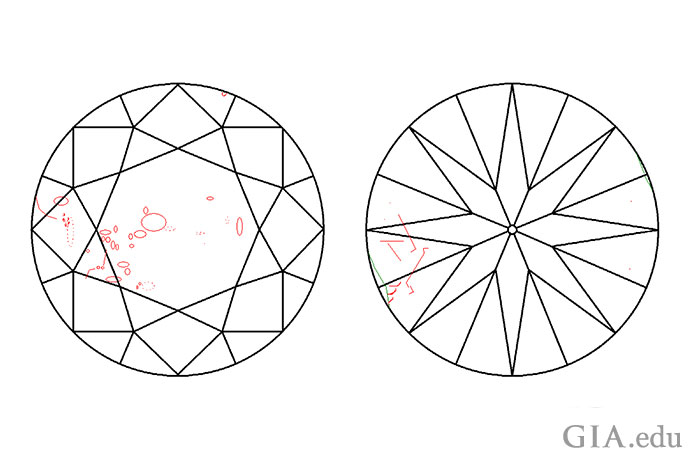
This precision in clarity grading was made possible by another GIA innovation: the introduction of the gemological microscope as a tool for clarity grading. Using the microscope, GIA graders plot the inclusions and blemishes in all diamonds for which a full GIA Diamond Grading Report has been requested.

A plotting diagram, a feature of all GIA Diamond Grading Reports, uses specific symbols to map a diamond’s various inclusions and blemishes.

A plotting diagram, a feature of all GIA Diamond Grading Reports, uses specific symbols to map a diamond’s various inclusions and blemishes.

Cut: Evaluating a Diamond’s Interaction with Light

The impact of Cut – how well a diamond interacts with light – was another attribute that RTL and his associates wanted to better explain and standardize. Originally, RTL turned to the work of Belgian mathematician and diamond cutter Marcel Tolkowsky to help determine “ideal” proportions for a round brilliant cut diamond. RTL’s contribution included a rating system with deductions for proportions that deviated from those.

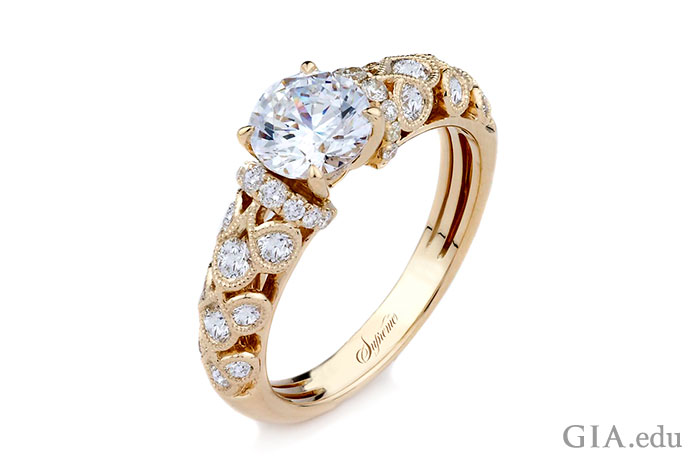
Because of GIA’s efforts to standardize the evaluation of diamond cut, round brilliants such as these can now be objectively graded.

Because of GIA’s efforts to standardize the evaluation of diamond cut, round brilliants such as these can now be objectively graded. Courtesy: Supreme Jewelry

GIA’s system for evaluating cut has been modified over the decades. In 2006, after years of extensive research that included advanced computer modeling and observational studies, GIA introduced the GIA cut grading system for round brilliant cut diamonds. Today, the GIA Cut Scale, ranging from Excellent to Poor, describes how successfully a diamond interacts with light to deliver the brightness, fire and scintillation we associate with a fine round brilliant.

The GIA Cut Scale assesses the overall cut quality of each diamond individually, taking into account such features as proportions, table size, polish and symmetry.

The GIA Cut Scale assesses the overall cut quality of each diamond individually, taking into account such features as proportions, table size, polish and symmetry.

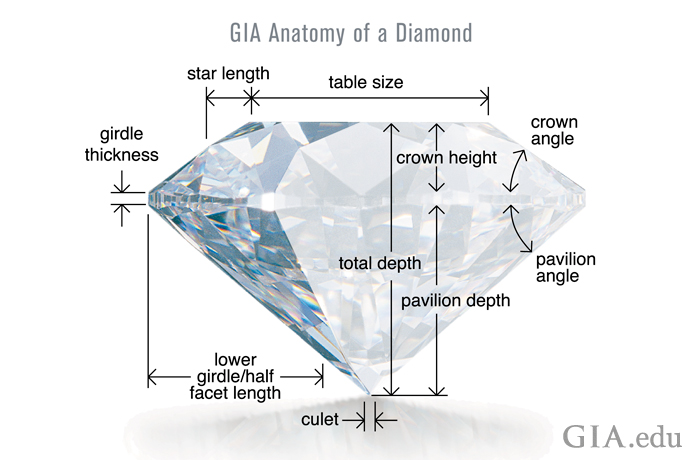
Many factors contribute to the evaluation of a diamond’s cut, including the size of the facets, girdle thickness and total depth.

Many factors contribute to the evaluation of a diamond’s cut, including the size of the facets, girdle thickness and total depth.

More than the 4Cs: The World Standard

Using the latest scientific advances to establish grading standards that provide consistent, repeatable results, GIA has revolutionized the jewelry industry. With the framework provided by the 4Cs, it has transformed the way diamond quality is determined and communicated and, ultimately, how diamonds are bought and sold.

These standards are strictly followed by the GIA laboratory in its nine locations worldwide. They allow GIA to deliver objective, consistent diamond grading results anywhere in the world. It is important to note that although the terminology introduced by GIA has been adopted by other laboratories worldwide, only the GIA laboratory has the proprietary equipment and procedures to grade diamonds to these standards.

All this critical information becomes part of a GIA Diamond Grading Report. With it, you’ll know the essential facts about the diamond you’re considering.

1.37 ct H-color, VS1-clarity round brilliant in a platinum Tiffany & Co. setting.

The GIA Diamond Grading System provides a complete description of diamonds such as this 1.37 ct H-color, VS1-clarity round brilliant in a platinum Tiffany & Co. setting. Courtesy: 1stdibs.com

Why ask for a GIA Diamond Grading Report? Read more and decide for yourself.

Eight Common Diamond Engagement Ring Myths —Demystified

There’s no shortage of engagement ring myths. Here are some of the more common ones: Bigger diamonds always look better than smaller ones. Round brilliants are the best. Diamonds are unbreakable. True? False? We investigate these myths and deliver the facts.

In this blog, we examine the following engagement ring myths:

A Bigger Diamond Is Always Better
Any Diamond Will Sparkle
I Need to Buy a Round Brilliant
Diamonds Can’t Break
Inclusions Will Cause a Diamond to Break
I Can Get a Better Deal on a Diamond by Not Buying Retail
Diamond Fluorescence Is Bad
A Diamond Engagement Ring Should Cost Three Months’ Salary

Myth #1: A Bigger Diamond Is Always Better

A common myth about engagement rings is that a bigger diamond has a better face-up appearance than a smaller one. But just because a diamond is big doesn’t mean it will have more brightness, fire and scintillation. A small diamond can have mesmerizing sparkle, while a large diamond can look dull. How a diamond performs under light is a function of its cut, not its carat weight. So, debunking one of the biggest myths about engagement rings, a bigger diamond is not necessarily a better one.

Myth #2: Any Diamond Will Sparkle

A common misconception about diamond engagement rings is that every diamond sparkles. A diamond’s cut – how its facets interact with light – creates its sparkle. Precise artistry and workmanship are required to fashion a stone so its proportions, symmetry and polish deliver the magnificent return of light. A diamond with a poor cut will have little to no sparkle.

A diamond’s cut greatly affects its appearance, as these three round brilliants illustrate.

A diamond’s cut greatly affects its appearance, as these three round brilliants illustrate. From left to right, they received cut grades of: Poor, Good and Excellent. Photo: Kevin Schumacher/GIA

You can turn to a GIA Diamond Grading Report, a GIA Diamond Origin Report or GIA Diamond Dossier for an objective evaluation of the cut of a round brilliant diamond. A GIA cut grade of Good or better will deliver the sparkle you’re expecting.

It’s worth mentioning that dirt is the enemy of sparkle. Just as a dirty mirror will reflect poorly, so will diamond facets that have skin oils, lotion and other substances on them. Keeping your diamond clean is key to keeping it sparkling.

The sparkle of this E color 0.61 ct round brilliant is dulled by oil and dirt.

The sparkle of this E color 0.61 ct round brilliant is dulled by oil and dirt. Photo: Maha Tannous/GIA

What a difference a cleaning makes.

What a difference a cleaning makes. Oils have been removed from the same diamond, and it now has a scintillating sparkle. Photo: Maha Tannous/GIA

The takeaway from all of this: If you want a diamond that sparkles, make sure it is cut well; if it is a round brilliant, look for one with a cut grade of Good or better on its GIA Diamond Grading Report. Once it is yours, keep it clean. This way, the engagement ring will be noticed and admired.

Myth #3: I Need to Buy a Round Brilliant

round brilliant diamond is the most popular shape and cut for engagement rings. About half of all brides wear one. And for good reason: It’s beautiful, appealing and can have spectacular brightness, fire and scintillation.

Simply enchanting and enchantingly simple, this six-prong ring with a 1.37 ct H color diamond is sure to win the heart of a bride to be.

Simply enchanting and enchantingly simple, this six-prong ring with a 1.37 ct H color diamond is sure to win the heart of a bride to be.

But do you need to buy a round brilliant? Consider that about half of all brides wear engagement rings set with diamond shapes other than round brilliants. These fancy shapes can be just as beautiful and deserve your consideration. And some might even cost less per carat than a round brilliant. Some of the more popular fancy shape diamonds include: the princess cutmarquisecushion cut and emerald cutOvals are currently popular and can have bewitching sparkle. So, the myth that only a round brilliant diamond makes for a beautiful engagement ring is untrue!  Other diamond shapes are just as popular, and just as beautiful. 

A princess cut diamond can rival the brightness of a round brilliant.

A princess cut diamond can rival the brightness of a round brilliant. Square or rectangular in shape, the princess cut also looks a bit different, like this 1.03 ct beauty in a four-prong setting. Courtesy: TrueFacet.com

This sunny stunner of an engagement ring boasts a 1.10 ct marquise yellow diamond and two white marquise diamonds in the shank, with a halo of melee diamonds surrounding the center stone.

Supposedly named after the Marquise de Pompadour because its outline resembled the shape of her mouth, the marquise diamond is rich in beauty and lore. This sunny stunner of an engagement ring boasts a 1.10 ct marquise yellow diamond and two white marquise diamonds in the shank, with a halo of melee diamonds surrounding the center stone. Courtesy: TrueFacet.com

The cushion cut diamond traces its roots to the 1700s, and the passage of time hasn’t dimmed its beauty.

The cushion cut diamond traces its roots to the 1700s, and the passage of time hasn’t dimmed its beauty. Its appeal is easy to see in this engagement ring, which features a 7.82 ct cushion cut center stone. Courtesy: 1stdibs.com

This 2.71 ct diamond showcases the stately beauty of an emerald cut, The center diamond is accentuated by two tapered baguettes.

This 2.71 ct diamond showcases the stately beauty of an emerald cut, The center diamond is accentuated by two tapered baguettes. Courtesy: Blue Nile

Romance and sparkle abound in this three stone platinum engagement ring featuring a 1.57 ct oval diamond center stone.

Romance and sparkle abound in this three stone platinum engagement ring featuring a 1.57 ct oval diamond center stone. Photo: GIA

Myth #4: Diamonds Can’t Break

Diamond is the hardest gem material on earth and is impervious to virtually all acids. It can also withstand higher temperatures than most gemstones. But if a diamond cutter can purposely cleave (split) a diamond by giving it a sharp blow in the right direction, you can achieve the same result if you accidentally hit it hard enough in the right place.

Cleavage planes in diamond occur because carbon atoms parallel to these planes are more tightly bonded (that is, tougher) than the atoms between the planes. A cleavage plane is the weakest direction in the molecular arrangement of a diamond crystal, and it always parallels one of the crystal’s triangular faces. If a diamond is hit hard along one of these planes, it can chip or fracture.

Chips typically occur when the girdle edge or an exposed point, like the tip of a pear shape or marquise, strikes something hard. Diamonds being unbreakable is simply a myth. Storing or wearing diamond-set jewelry items next to each other can also cause chips, scratches or other damage. Certain diamond cuts with pointed corners, like the princess cut, are particularly vulnerable and are often set with V-shaped prongs positioned over the corners to protect them from chipping.

This 1.05 ct diamond has a chip starting at its girdle that extends to the culet.

Diamonds are known for their hardness – their ability to resist scratches and abrasions. But contrary to some diamond engagement ring myths, diamonds are not impervious to damage, since their hardness varies depending on the crystal direction. This 1.05 ct diamond has a chip starting at its girdle that extends to the culet. Photo: GIA

This illustration shows examples of cleavage planes parallel to the triangular octahedral face of a diamond.

This illustration shows examples of cleavage planes parallel to the triangular octahedral face of a diamond. Illustration modified from V. C. Venkatesh and S. Izman, Precision Engineering, 2007, p. 54.

Myth #5: Inclusions Will Cause a Diamond to Break

Of all the diamond engagement ring myths covered here, there is some truth to this one.  Inclusions are clarity characteristics that lie within a diamond. Inclusions in themselves won’t necessarily cause a diamond to break. But if they’re located on or near a cleavage plane or another vulnerable area like a girdle or culet, they could make the diamond more prone to chipping.

This diamond is marred by a chip, which may have been caused by an inclusion located on or near a cleavage plane or the girdle.

This diamond is marred by a chip, which may have been caused by an inclusion located on or near a cleavage plane or the girdle. Photo: GIA

Myth #6: I Can Get a Better Deal on a Diamond by Not Buying Retail

This is one of those engagement ring myths that really demands your due diligence and some research. It’s tempting to think that you’ll get a better price buying a diamond from “a friend of a friend,” through an online auction, or directly from a wholesaler or dealer. After all, you think, these sellers have lower overhead, so they should also have a lower markup — with these savings passed along to you. You may be right. However, it pays to comparison shop, taking into account all the costs associated with purchasing an engagement ring.

Whether you decide to buy your diamond from a traditional brick and mortar retailer or through another channel, be sure to look for some basic consumer protections: a minimum 30-day period for refunds or exchanges, quality guarantees, and diamonds accompanied by grading reports from a reputable lab. Any seller failing to provide these basic services may be offering a deal that’s too good to be true.

Buying from a traditional retailer may offer some additional advantages. A jeweler’s expertise is invaluable in helping you select both the diamond and the right setting for it. And many retailers offer discounted diamond-and-ring packages. Many also offer cleaning, repair and maintenance as long as you own the ring, as well as insurance and even trade-in programs should you want to up-grade your diamond in the future. In the end, you may find that the savings offered by other types of sellers are negated by the package discount and additional services offered by a retailer.

All this is to say that you have more options than ever when it comes to buying a diamond. Just be careful and smart, as you would with any important purchase. 

Myth #7: Diamond Fluorescence Is Bad

This is one of the more common engagement ring myths – here are the facts: Diamond fluorescence is neither good nor bad. It is a naturally occurring characteristic that a diamond may possess. Some people like the blue (or rarely another color) glow that some diamonds emit when exposed to long-way ultraviolet (UV) light such as that from the sun and fluorescent lamps. Whether you choose a diamond with fluorescence is a matter of personal preference.

Fluorescence is common: Between 25% and 35% of the diamonds on the market exhibit some degree of fluorescence, which GIA grading reports describe as None, Faint, Medium, Strong or Very Strong. It’s worth noting that fluorescence is not considered a quality factor like the 4Cs (color, clarity, cut and carat weight). The extent of a diamond’s fluorescence is included in a grading report as additional information to help in identifying that particular diamond.

Blue is by far the most common fluorescence color in diamonds when they are exposed to long-wave UV rays.

Blue is by far the most common fluorescence color in diamonds when they are exposed to long-wave UV rays. Half the necklace and one earring in this composite photo are shown under normal lighting conditions (left), and the other half of the necklace and the same earring are shown as they appear under a long-wave ultraviolet lamp (right). Copyright: GIA and Harold & Erica Van Pelt. Courtesy: Harry Winston, Inc., New York

You may have heard the myth about engagement rings that the fluorescence affects a diamond’s color grade. Not true. GIA color grades diamonds under tightly controlled lighting conditions designed to eliminate any effect from fluorescence. So it has no impact on the color grade assigned. However, the strength of a diamond’s fluorescence can influence your perception of the diamond’s color when viewed with certain types of lighting. For example, in bright sunshine some diamonds with a Medium to Strong blue fluorescence may appear more colorless. In rare cases, diamonds with Very Strong fluorescence may have a hazy or oily appearance; less than 0.2% of fluorescent diamonds exhibit this effect.

GIA’s research discovered that for the average observer, meant to represent the jewelry buying public, blue fluorescence had no systematic effect on a diamond’s face-up appearance. Even experienced observers did not consistently agree on the effects of fluorescence from one stone to the next.

Myth #8: A Diamond Engagement Ring Should Cost Three Months’ Salary

One of the older engagement ring myths, this one dates back to the 1950s. It’s been debunked before, but it’s worth negating again. The fact is, there is no hard and fast rule on how much you should spend on a diamond engagement ring. You need to determine what you can afford, set a budget and stick to it. By learning a little bit about diamonds, including the 4Cs of diamond quality and doing some comparison shopping, you’ll be able to choose a diamond of the best quality for your budget. Remember, at the end of the day the ultimate value of a diamond isn’t what it costs, but the love that goes into giving it.