Please ensure Javascript is enabled for purposes of website accessibility.
Search
Search
Search

GIA 4Cs Diamond Blog

GIA 4Cs Diamond Blog

Diamond Color: Seven Things You Need to Know

If you’re shopping for a diamond engagement ring, you need to know about what diamond color is if you want to understand quality and how diamonds are valued. If you are curious about what colors diamonds come in and how color grade impacts value, check out our seven essential things about diamond color you should know.

In this blog we cover:

  1. Diamond value is based (in part) on the absence of color.
  2. A diamond’s color grade should be determined by a grading laboratory.
  3. Colored diamonds are graded and valued differently from colorless diamonds.
  4. Treatments can improve diamond color.
  5. Diamond fluorescence has little to no impact on diamond color.
  6. Engagement ring settings can influence the perception of diamond color.
  7. To be sure of a diamond’s color, get a GIA grading report.

1. Diamond value is based (in part) on the absence of color

Diamond color is important: Most diamonds used in engagement rings are near-colorless with hints of yellow or brown. All things being equal, the more colorless a diamond is, the rarer it is, and this rarity will be reflected in its price.

GIA D-to-Z diamond color scale.

The GIA D-to-Z Color Scale allows for precise measurement of diamond color. Illustration: GIA

GIA’s D-to-Z Color Scale is used to measure the degree of colorlessness of a diamond. The letter “D” represents a colorless diamond, with each following letter representing a diamond that has slightly more yellow or brown.

GIA organizes diamond color into five groups:

  • Colorless (D-F): The most rare, and therefore the most valuable
  • Near-colorless (G-J): Color is often unnoticeable except by trained graders
  • Faint (K-M): Color is still difficult to see by the untrained eye
  • Very Light (N-R): Subtle color can be seen in larger stones by an untrained eye
  • Light (S-Z): Color can be seen in stones of different sizes. The diamonds appear slightly yellow or brown but do not have sufficient color to be considered a “fancy” colored diamond
GIA D-to-Z diamond color scale showing diamonds at either end of the grading spectrum.

When diamonds at either end of the grading spectrum are placed side by side, it is easy to see the differences in diamond color. Photo: GIA

2. A diamond’s color grade should be determined by a grading laboratory

The distinctions between diamond color grades can be so subtle that they are undetectable to the untrained eye. But they do make a very big difference in diamond price. That’s why determining a diamond’s color grade is best left to a gemological laboratory, like GIA, that has the expertise and processes to ensure objective, unbiased color grading.

In working to evaluate what color a diamond is, GIA graders follow a strict protocol that dictates the type of lighting and neutral background used, as well as precisely how the diamond should be held and viewed during the assessment. A color grade is determined by comparing the diamond to masterstones – a set of color-comparison diamonds of known position on the GIA D-to-Z color grading scale – when all are placed table down in a grading tray. This viewing position reduces the complex appearance of a faceted colorless to near-colorless diamond when viewed face up.

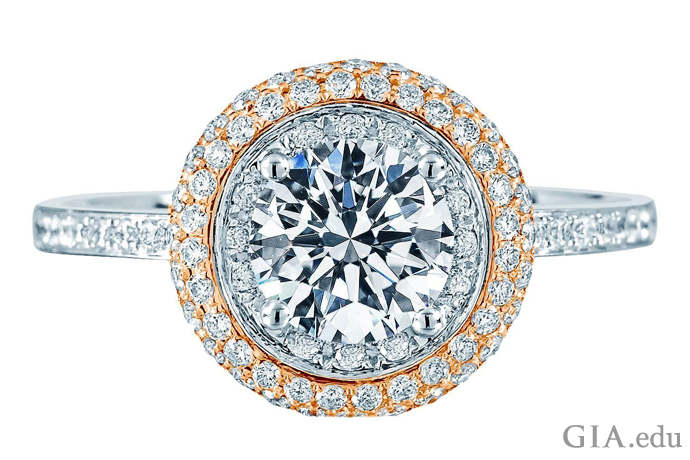
A 6.75 carat round brilliant cut diamond engagement ring featuring a diamond melee halo and band.

One look at this 6.75 carat (ct), F-color, SI-clarity round brilliant and you’ll know why diamonds are the universal symbol of love. Courtesy: 1stdibs.com

3. Colored diamonds are graded and valued differently from colorless diamonds

Diamond color is arguably the most important factor in colored diamonds. Some common colors that diamonds come in are yellow, brown, pink, red, blue, orange, purple, green, gray or black. This does not include diamonds in the normal color range that are slightly yellowish, slightly brownish or slightly grayish. When the color is natural, the diamonds are called fancy-color diamonds, fancy diamonds or fancies.

Colored diamonds come in a rainbow of hues.

Colored diamonds come in a rainbow of hues. Photo: Robert and Orasa Weldon/GIA

GIA grades colored diamonds differently from colorless diamonds. Unlike GIA’s D-to-Z grading system for colorless to light yellow diamonds, which is based on the absence of color when the diamond is viewed table down, the grading system for colored diamonds is based on the presence of color when the diamond is viewed face up. Terms used by GIA to describe colored diamonds include: Faint, Very Light, Light, Fancy Light, Fancy, Fancy Dark, Fancy Intense, Fancy Deep and Fancy Vivid.

What to look for in colored diamonds? In general, the more color a colored diamond has, the better. Fancy Deep and Fancy Vivid diamonds, for example, have more color than Fancy Light diamonds—and are usually more valuable. However, tone is also important: For example, a diamond that is extremely dark (Fancy Dark) may be less desirable than a lighter stone graded Fancy Intense.

A 3.66 ct Fancy Yellow diamond engagement ring with two halos containing 0.37 carats of yellow diamonds and 1.50 carats of colorless diamonds.

Colored diamonds can be far more expensive than colorless diamonds. Here a 3.66 ct Fancy Yellow glows like a ray of sunshine. Two halos encircle it: the inner containing 0.37 carats of yellow diamonds; the outer, 1.50 carats of colorless diamonds. Courtesy: 1stdibs.com

Fancy-color diamonds are, for the most part, far rarer than diamonds in the D-to-Z color range. Some experts estimate that only two percent of total rough diamond production is fancy colored. Since rarity influences price, it’s not surprising that spectacular blue, pink, green, orange and other colored diamonds can sell for millions of dollars at auction.

The Pink Star ring, which sold at a Sotheby’s auction for $71 million, contains a 59.60 ct Fancy Vivid pink diamond graded by GIA.

The GIA-graded Fancy Vivid pink 59.60 ct Pink Star diamond sold for $71 million at the April 4, 2017 Sotheby’s auction in Hong Kong. Courtesy: Sotheby’s

4. Treatments can improve diamond color

Diamond color can be altered by treatments. All else being equal, diamonds that have not been treated are more expensive than diamonds that have been treated. Legally, the seller must disclose any treatments. If you are aware what diamond color is, it’s easier to understand how they have been treated. 

High pressure, high temperature (HPHT) processing is perhaps the most common technique used to alter, enhance or remove color. HPHT treatment can change some brown diamonds into colorless ones or into other colors like yellow, greenish yellow or green. This process is also associated with treated pink, blue and orange-yellow diamonds. The resulting color is considered permanent, but HPHT treatment should always be disclosed.

Annealing is another process that uses controlled heating and cooling to change the color of a gem material, especially after irradiation. Irradiating a diamond or coating it are other methods used to enhance a diamond’s color.

.

A 6.61 ct Fancy yellow brown diamond (left) before annealing and the same diamond (right), graded L (faint yellow) after annealing.

Before HPHT annealing to remove color, this 6.61 ct diamond was a Fancy yellow brown (left). After annealing (right), GIA graded the diamond an L (faint yellow). Photo: Robert Weldon/GIA

5. Diamond fluorescence has little to no impact on diamond color

Diamond fluorescence is visible light temporarily emitted by some diamonds when they are exposed to ultraviolet (UV) rays from the sun, fluorescent lamps or other sources. This emitted light can display various colors (often blue in diamonds), intensities (faint to very strong) and distribution patterns. When the light source is removed, the fluorescence is no longer visible.

Many in the diamond trade believe that strong blue fluorescence can make a light yellow diamond look closer to colorless when exposed to a UV source such as sunlight. Blue and yellow are color opposites and tend to cancel each other out, so blue fluorescence masks the yellow color. In rare cases, some diamonds with extremely strong fluorescence may appear slightly hazy or oily. Fewer than 0.2% of the fluorescent diamonds submitted to GIA exhibit this effect.

.

A group of seven diamonds shown under daylight-equivalent illumination (left) and exposed to long-wave UV irradiation (right).

The same group of seven diamonds is shown here under daylight-equivalent illumination (left) and when exposed to long-wave UV irradiation (right). Photos: Kevin Schumacher/GIA

To answer questions from consumers and the trade about the impact of fluorescence on diamond color in the D-to-Z range, GIA conducted extensive observer testing. Here’s what its researchers found: “For the average observer, meant to represent the jewelry buying public, no systematic effects of fluorescence were detected [on the face-up appearance of the groups of diamonds]. Even the experienced observers did not consistently agree on the effects of fluorescence from one stone to the next.” As a result, GIA considers diamond fluorescence to be an identifying characteristic, not a grading factor – meaning, it has little to no impact on what color the diamond is.

6. Engagement ring settings can influence the perception of diamond color

Diamonds are highly reflective – their facets are essentially an arrangement of tiny mirrors reflecting light and the surroundings. So it should come as no surprise that the color of a ring’s prongs and shank can influence the color you see in the diamond. A white metal like platinum or white gold can emphasize the absence of color in a diamond that is colorless or near-colorless, while a gold band might make a diamond lower on the D-to-Z scale appear more yellow.

Learn more about how metal affects a diamond’s color appearance.

A 8.03 carat D color marquise cut diamond engagement ring set in platinum, flanked by two tapered baguettes weighing 0.72 carats.

The 8.03 ct marquise cut diamond in this engagement ring is D color. It is flanked by two tapered baguettes weighing a total of 0.72 carats. The platinum band and prongs highlight the beauty of the diamond. Courtesy: 1stdibs.com

7. To be sure of a diamond’s color, get a GIA grading report

A GIA Diamond Grading Report and GIA Diamond Origin Report provides an in-depth assessment of a diamond’s quality based on the 4Cs: diamond color, clarity, cut and carat weight. A report not only contains an objective color grade, but it also discloses other identifying characteristics like fluorescence, as well as any treatments detected. Learn what diamond color information is included in a GIA report.

An engagement ring is profoundly intimate and symbolic – it represents your love and commitment. A GIA Diamond Grading Report lets you make this most important purchase with peace of mind.

Now that you understand  what diamond color is and  its importance, here are 12 tips for buying an engagement ring.

Lead image courtesy of 1stdibs.com

Engagement Ring Buying: How to Compare Loose Diamonds

Comparing loose diamonds for an engagement ring? Don’t be dismayed by the dizzying array of choices. The important thing is understanding how to compare loose diamonds. Here are six easy steps to help you pick a diamond that’s beautiful and a smart purchase.

(more…)

Eight Common Diamond Engagement Ring Myths —Demystified

There’s no shortage of engagement ring myths. Here are some of the more common ones: Bigger diamonds always look better than smaller ones. Round brilliants are the best. Diamonds are unbreakable. True? False? We investigate these myths and deliver the facts.

In this blog, we examine the following engagement ring myths:

A Bigger Diamond Is Always Better
Any Diamond Will Sparkle
I Need to Buy a Round Brilliant
Diamonds Can’t Break
Inclusions Will Cause a Diamond to Break
I Can Get a Better Deal on a Diamond by Not Buying Retail
Diamond Fluorescence Is Bad
A Diamond Engagement Ring Should Cost Three Months’ Salary

Myth #1: A Bigger Diamond Is Always Better

A common myth about engagement rings is that a bigger diamond has a better face-up appearance than a smaller one. But just because a diamond is big doesn’t mean it will have more brightness, fire and scintillation. A small diamond can have mesmerizing sparkle, while a large diamond can look dull. How a diamond performs under light is a function of its cut, not its carat weight. So, debunking one of the biggest myths about engagement rings, a bigger diamond is not necessarily a better one.

Myth #2: Any Diamond Will Sparkle

A common misconception about diamond engagement rings is that every diamond sparkles. A diamond’s cut – how its facets interact with light – creates its sparkle. Precise artistry and workmanship are required to fashion a stone so its proportions, symmetry and polish deliver the magnificent return of light. A diamond with a poor cut will have little to no sparkle.

A diamond’s cut greatly affects its appearance, as these three round brilliants illustrate.

A diamond’s cut greatly affects its appearance, as these three round brilliants illustrate. From left to right, they received cut grades of: Poor, Good and Excellent. Photo: Kevin Schumacher/GIA

You can turn to a GIA Diamond Grading Report, a GIA Diamond Origin Report or GIA Diamond Dossier for an objective evaluation of the cut of a round brilliant diamond. A GIA cut grade of Good or better will deliver the sparkle you’re expecting.

It’s worth mentioning that dirt is the enemy of sparkle. Just as a dirty mirror will reflect poorly, so will diamond facets that have skin oils, lotion and other substances on them. Keeping your diamond clean is key to keeping it sparkling.

The sparkle of this E color 0.61 ct round brilliant is dulled by oil and dirt.

The sparkle of this E color 0.61 ct round brilliant is dulled by oil and dirt. Photo: Maha Tannous/GIA

What a difference a cleaning makes.

What a difference a cleaning makes. Oils have been removed from the same diamond, and it now has a scintillating sparkle. Photo: Maha Tannous/GIA

The takeaway from all of this: If you want a diamond that sparkles, make sure it is cut well; if it is a round brilliant, look for one with a cut grade of Good or better on its GIA Diamond Grading Report. Once it is yours, keep it clean. This way, the engagement ring will be noticed and admired.

Myth #3: I Need to Buy a Round Brilliant

round brilliant diamond is the most popular shape and cut for engagement rings. About half of all brides wear one. And for good reason: It’s beautiful, appealing and can have spectacular brightness, fire and scintillation.

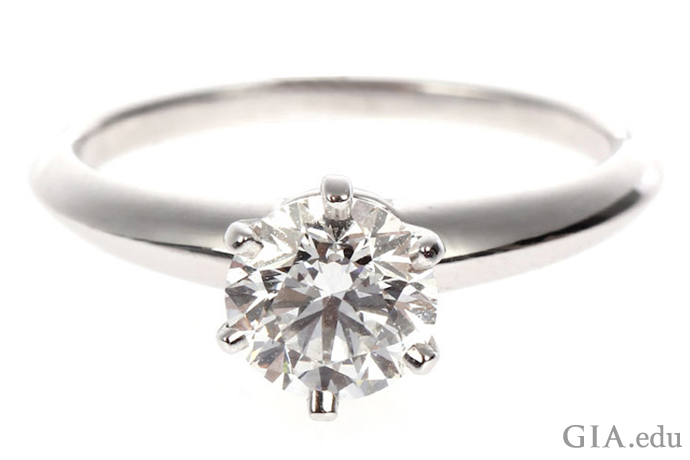
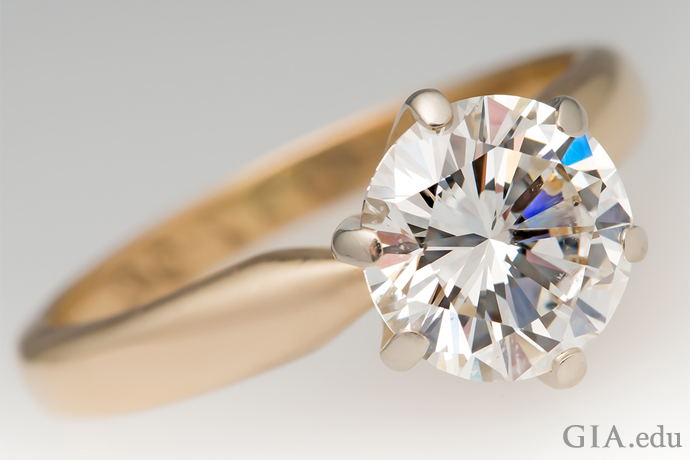
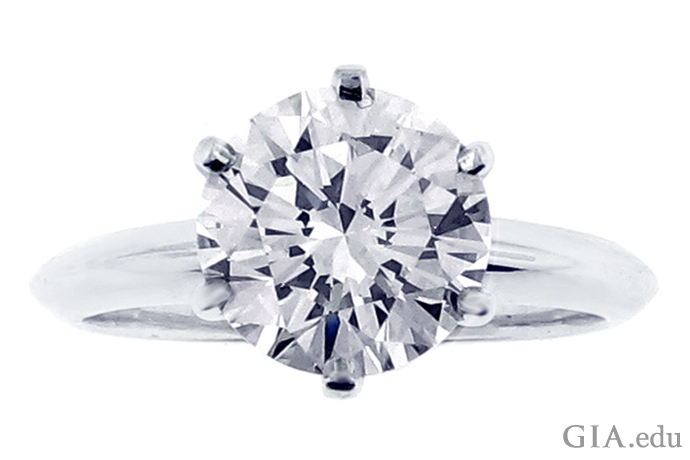
Simply enchanting and enchantingly simple, this six-prong ring with a 1.37 ct H color diamond is sure to win the heart of a bride to be.

Simply enchanting and enchantingly simple, this six-prong ring with a 1.37 ct H color diamond is sure to win the heart of a bride to be.

But do you need to buy a round brilliant? Consider that about half of all brides wear engagement rings set with diamond shapes other than round brilliants. These fancy shapes can be just as beautiful and deserve your consideration. And some might even cost less per carat than a round brilliant. Some of the more popular fancy shape diamonds include: the princess cutmarquisecushion cut and emerald cutOvals are currently popular and can have bewitching sparkle. So, the myth that only a round brilliant diamond makes for a beautiful engagement ring is untrue!  Other diamond shapes are just as popular, and just as beautiful. 

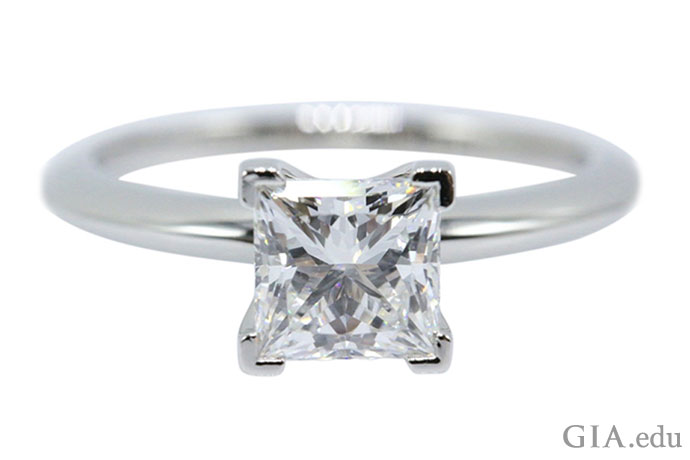
A princess cut diamond can rival the brightness of a round brilliant.

A princess cut diamond can rival the brightness of a round brilliant. Square or rectangular in shape, the princess cut also looks a bit different, like this 1.03 ct beauty in a four-prong setting. Courtesy: TrueFacet.com

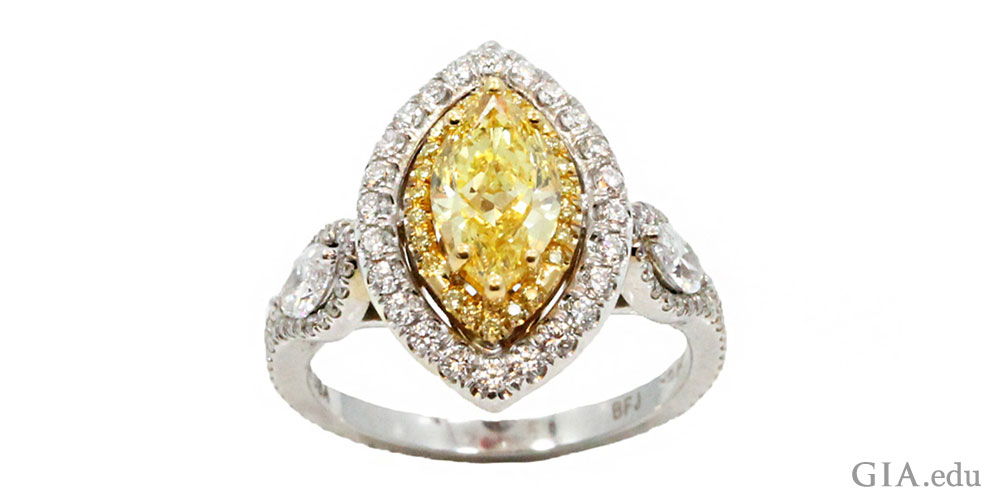
This sunny stunner of an engagement ring boasts a 1.10 ct marquise yellow diamond and two white marquise diamonds in the shank, with a halo of melee diamonds surrounding the center stone.

Supposedly named after the Marquise de Pompadour because its outline resembled the shape of her mouth, the marquise diamond is rich in beauty and lore. This sunny stunner of an engagement ring boasts a 1.10 ct marquise yellow diamond and two white marquise diamonds in the shank, with a halo of melee diamonds surrounding the center stone. Courtesy: TrueFacet.com

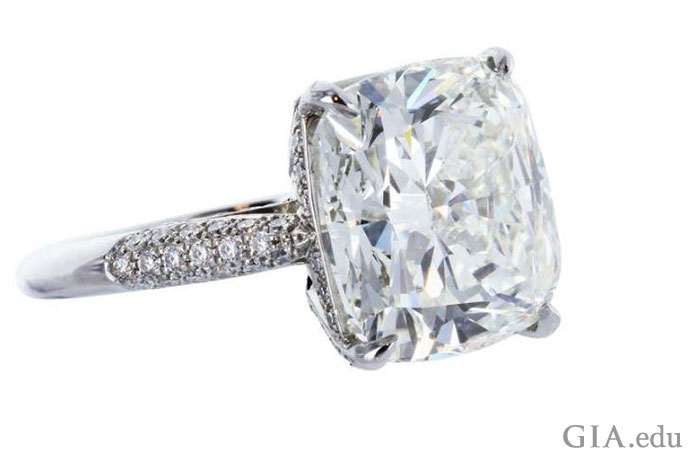
The cushion cut diamond traces its roots to the 1700s, and the passage of time hasn’t dimmed its beauty.

The cushion cut diamond traces its roots to the 1700s, and the passage of time hasn’t dimmed its beauty. Its appeal is easy to see in this engagement ring, which features a 7.82 ct cushion cut center stone. Courtesy: 1stdibs.com

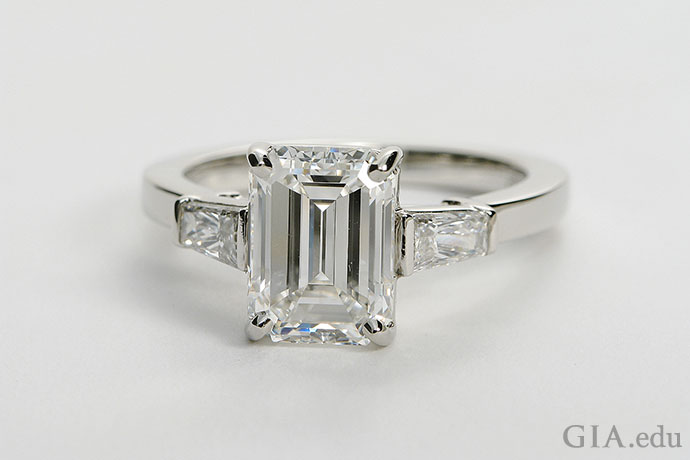
This 2.71 ct diamond showcases the stately beauty of an emerald cut, The center diamond is accentuated by two tapered baguettes.

This 2.71 ct diamond showcases the stately beauty of an emerald cut, The center diamond is accentuated by two tapered baguettes. Courtesy: Blue Nile

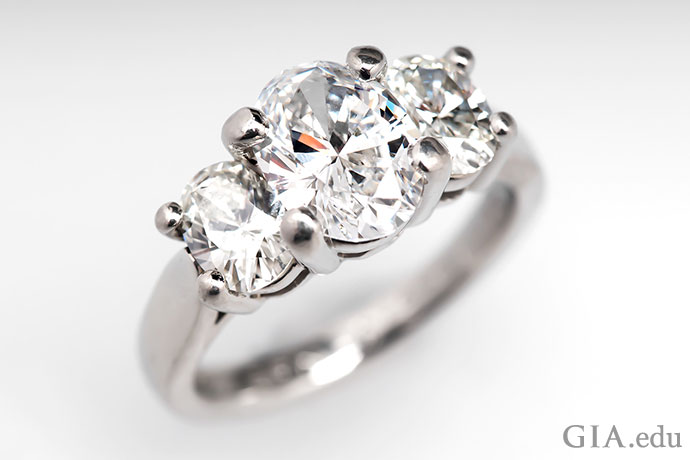
Romance and sparkle abound in this three stone platinum engagement ring featuring a 1.57 ct oval diamond center stone.

Romance and sparkle abound in this three stone platinum engagement ring featuring a 1.57 ct oval diamond center stone. Photo: GIA

Myth #4: Diamonds Can’t Break

Diamond is the hardest gem material on earth and is impervious to virtually all acids. It can also withstand higher temperatures than most gemstones. But if a diamond cutter can purposely cleave (split) a diamond by giving it a sharp blow in the right direction, you can achieve the same result if you accidentally hit it hard enough in the right place.

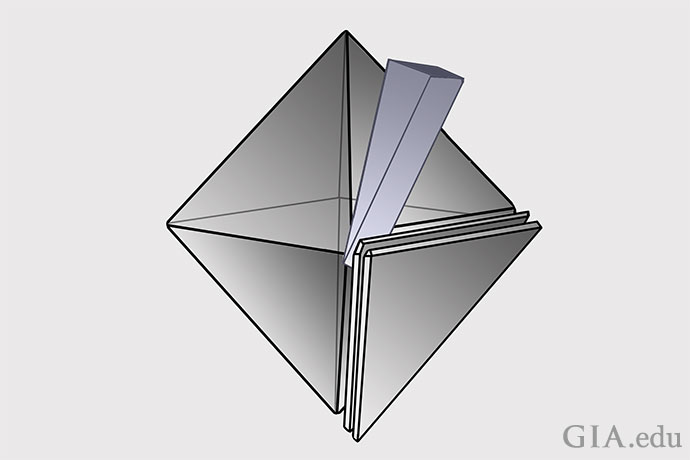
Cleavage planes in diamond occur because carbon atoms parallel to these planes are more tightly bonded (that is, tougher) than the atoms between the planes. A cleavage plane is the weakest direction in the molecular arrangement of a diamond crystal, and it always parallels one of the crystal’s triangular faces. If a diamond is hit hard along one of these planes, it can chip or fracture.

Chips typically occur when the girdle edge or an exposed point, like the tip of a pear shape or marquise, strikes something hard. Diamonds being unbreakable is simply a myth. Storing or wearing diamond-set jewelry items next to each other can also cause chips, scratches or other damage. Certain diamond cuts with pointed corners, like the princess cut, are particularly vulnerable and are often set with V-shaped prongs positioned over the corners to protect them from chipping.

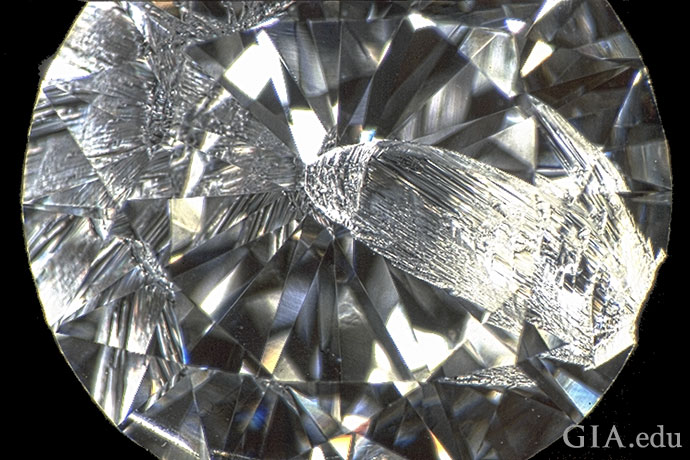
This 1.05 ct diamond has a chip starting at its girdle that extends to the culet.

Diamonds are known for their hardness – their ability to resist scratches and abrasions. But contrary to some diamond engagement ring myths, diamonds are not impervious to damage, since their hardness varies depending on the crystal direction. This 1.05 ct diamond has a chip starting at its girdle that extends to the culet. Photo: GIA

This illustration shows examples of cleavage planes parallel to the triangular octahedral face of a diamond.

This illustration shows examples of cleavage planes parallel to the triangular octahedral face of a diamond. Illustration modified from V. C. Venkatesh and S. Izman, Precision Engineering, 2007, p. 54.

Myth #5: Inclusions Will Cause a Diamond to Break

Of all the diamond engagement ring myths covered here, there is some truth to this one.  Inclusions are clarity characteristics that lie within a diamond. Inclusions in themselves won’t necessarily cause a diamond to break. But if they’re located on or near a cleavage plane or another vulnerable area like a girdle or culet, they could make the diamond more prone to chipping.

This diamond is marred by a chip, which may have been caused by an inclusion located on or near a cleavage plane or the girdle.

This diamond is marred by a chip, which may have been caused by an inclusion located on or near a cleavage plane or the girdle. Photo: GIA

Myth #6: I Can Get a Better Deal on a Diamond by Not Buying Retail

This is one of those engagement ring myths that really demands your due diligence and some research. It’s tempting to think that you’ll get a better price buying a diamond from “a friend of a friend,” through an online auction, or directly from a wholesaler or dealer. After all, you think, these sellers have lower overhead, so they should also have a lower markup — with these savings passed along to you. You may be right. However, it pays to comparison shop, taking into account all the costs associated with purchasing an engagement ring.

Whether you decide to buy your diamond from a traditional brick and mortar retailer or through another channel, be sure to look for some basic consumer protections: a minimum 30-day period for refunds or exchanges, quality guarantees, and diamonds accompanied by grading reports from a reputable lab. Any seller failing to provide these basic services may be offering a deal that’s too good to be true.

Buying from a traditional retailer may offer some additional advantages. A jeweler’s expertise is invaluable in helping you select both the diamond and the right setting for it. And many retailers offer discounted diamond-and-ring packages. Many also offer cleaning, repair and maintenance as long as you own the ring, as well as insurance and even trade-in programs should you want to up-grade your diamond in the future. In the end, you may find that the savings offered by other types of sellers are negated by the package discount and additional services offered by a retailer.

All this is to say that you have more options than ever when it comes to buying a diamond. Just be careful and smart, as you would with any important purchase. 

Myth #7: Diamond Fluorescence Is Bad

This is one of the more common engagement ring myths – here are the facts: Diamond fluorescence is neither good nor bad. It is a naturally occurring characteristic that a diamond may possess. Some people like the blue (or rarely another color) glow that some diamonds emit when exposed to long-way ultraviolet (UV) light such as that from the sun and fluorescent lamps. Whether you choose a diamond with fluorescence is a matter of personal preference.

Fluorescence is common: Between 25% and 35% of the diamonds on the market exhibit some degree of fluorescence, which GIA grading reports describe as None, Faint, Medium, Strong or Very Strong. It’s worth noting that fluorescence is not considered a quality factor like the 4Cs (color, clarity, cut and carat weight). The extent of a diamond’s fluorescence is included in a grading report as additional information to help in identifying that particular diamond.

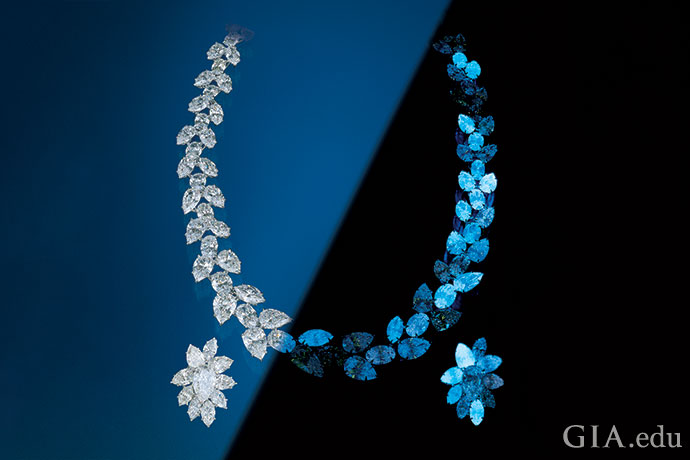
Blue is by far the most common fluorescence color in diamonds when they are exposed to long-wave UV rays.

Blue is by far the most common fluorescence color in diamonds when they are exposed to long-wave UV rays. Half the necklace and one earring in this composite photo are shown under normal lighting conditions (left), and the other half of the necklace and the same earring are shown as they appear under a long-wave ultraviolet lamp (right). Copyright: GIA and Harold & Erica Van Pelt. Courtesy: Harry Winston, Inc., New York

You may have heard the myth about engagement rings that the fluorescence affects a diamond’s color grade. Not true. GIA color grades diamonds under tightly controlled lighting conditions designed to eliminate any effect from fluorescence. So it has no impact on the color grade assigned. However, the strength of a diamond’s fluorescence can influence your perception of the diamond’s color when viewed with certain types of lighting. For example, in bright sunshine some diamonds with a Medium to Strong blue fluorescence may appear more colorless. In rare cases, diamonds with Very Strong fluorescence may have a hazy or oily appearance; less than 0.2% of fluorescent diamonds exhibit this effect.

GIA’s research discovered that for the average observer, meant to represent the jewelry buying public, blue fluorescence had no systematic effect on a diamond’s face-up appearance. Even experienced observers did not consistently agree on the effects of fluorescence from one stone to the next.

Myth #8: A Diamond Engagement Ring Should Cost Three Months’ Salary

One of the older engagement ring myths, this one dates back to the 1950s. It’s been debunked before, but it’s worth negating again. The fact is, there is no hard and fast rule on how much you should spend on a diamond engagement ring. You need to determine what you can afford, set a budget and stick to it. By learning a little bit about diamonds, including the 4Cs of diamond quality and doing some comparison shopping, you’ll be able to choose a diamond of the best quality for your budget. Remember, at the end of the day the ultimate value of a diamond isn’t what it costs, but the love that goes into giving it.

GIA Diamond Grading Reports: Understanding Carat Weight

If you’re shopping for a diamond, carat weight is probably one of the important things you’re considering. It seems like a straightforward measurement, but there is more to it than a simple number. Here’s essential information you need to know.

In this post, we cover:


What Is Carat Weight?

Diamond weight is stated in metric measurements called carats. One carat is equal to 200 milligrams, which is 1/5 of a gram or 0.20 gram. There are 142 carats in an ounce. Carat is also the standard unit of weight for most gemstones.

The modern carat system has its roots in the carob seed, which comes from the locust tree. Because the small seeds are fairly uniform in size and weight, they were a useful standard for determining the weight of a gem. Early gem merchants and jewelers used carob seeds as counterweights in hand-held balance scales.

Carat weight was standardized as 0.20 gram in the early twentieth century. This gave trade professionals a uniform and universally accepted weight standard for diamonds.

Carob seeds and carob pods

Notice that the seeds from the carob pods are nearly identical in size. Photo: Orasa Weldon/GIA

Carat is abbreviated as “ct” and weights are typically given to two decimal places: 1.00 ct, 0.76 ct, 1.57 ct.

Like the dollar, a carat is made up of 100 parts, called “points” and abbreviated as “pt.” An easy way to remember this is to think of carats as dollars and points as pennies. They’re even written the same way: $1.34 means one dollar and 34 cents, and 1.34 ct means one carat and 34 points.”

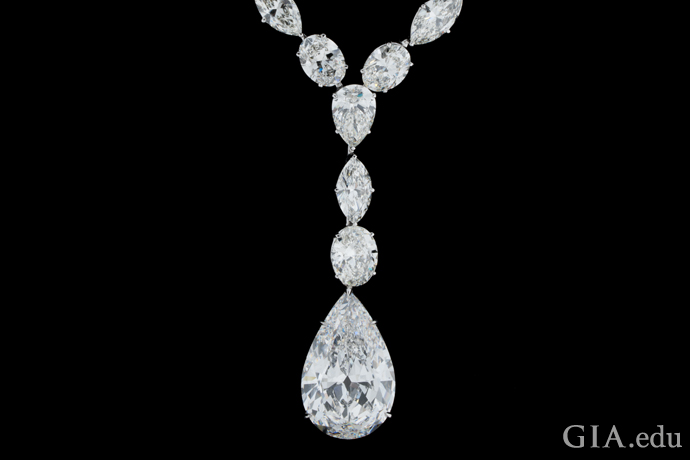
A necklace featuring a 25.04 ct pear shape diamond suspends from 64.24 carats of diamonds

If you like big diamonds, you’ll love this necklace. The large pear shape weighs 25.04 ct, and it is suspended from another 64.24 carats of glittering diamonds. Photo: Robert Weldon/GIA. Courtesy: Chatila


How Does GIA Measure Diamond Carat Weight?

When a diamond is submitted to GIA, one of the first steps in the grading process is to determine its weight. To ensure precision, accuracy and consistency, GIA uses an electronic micro-balance scale to weigh each diamond. GIA adheres to strict calibration and maintenance procedures for its devices. These procedures exceed the manufacturer’s recommendations. In addition, the laboratory monitors and controls environmental conditions that might affect the quality of the results, such as room temperature and humidity.

Diamonds being weighed on an electronic mirco-balance scale

Diamonds submitted to GIA are weighed on an extremely sensitive electronic micro-balance scale. Photo: Valerie Power/GIA

The diamond’s dimensions are also measured. An optical measuring device captures the diamond’s measurements (length and width), as well as its proportions and facet angles, which will eventually inform the diamond’s cut grade.


Diamond Carat Weight and Rounding Up (or Down)

While most trade professionals typically weigh diamonds to a thousandth of a carat (three decimal places), GIA weighs diamonds to the fifth decimal place – a hundred thousandths of a carat, to ensure maximum precision and provide an identifying characteristic.

The rounding rules GIA follows are also stricter than normal mathematical rounding rules. As mentioned above, a diamond’s carat weight is conventionally stated to two decimal places (0.71 ct, 1.34 ct). To arrive at this number, GIA rounds up to the next higher hundredth only if there’s a nine in the thousandth place. For example, a diamond that weighs 1.769 ct would be rounded up to 1.77 ct, but one that weighs 1.768 ct would be rounded down to 1.76 ct. Such differences in carat weight might seem small, but they can make a significant difference in price.

Five fancy color diamonds provide an example of relative diamond size

Get a sense of relative diamond size with this photo. From left to right: a yellow princess cut (0.86 ct), a pink round brilliant cut (0.68 ct), a gray-blue round brilliant (0.56 ct), a gray round brilliant (0.30 ct) and a blue-green round brilliant (0.15 ct). Photo: Robert Weldon/GIA

Once the diamond has been graded, its carat weight and dimensions — as well at its color, clarity and cut grade (if applicable) — are clearly documented on a GIA diamond grading report. Also included is full disclosure of any diamond treatments detected during the process.

A GIA Diamond Grading Report shows a diamond’s weight

The diamond’s weight is prominently stated on a GIA Diamond Grading Report. Photo: GIA


Why Is Carat Weight Important?

All other factors being equal, the price of a diamond increases as its carat weight increases. Since diamonds 1.00 ct or larger are comparatively rare, prices jump dramatically for these gems.

Carat weight also helps you compare prices between diamonds with different weights but the same color, clarity and cut grades, allowing you to compare the per carat price for each stone to see where you’re getting the best value.


Carat Weight and Shopping Considerations

Here are a few concepts related to carat weight that you should be aware of as you’re shopping:


Carat Weight and Gemstone Size – Two Different Things

It’s a common mistake to equate a gem’s carat weight with its physical dimensions. After all, it seems logical that a larger stone will weigh more. This is true if you’re comparing two stones of the same gem material – like a diamond to a diamond, or an aquamarine to an aquamarine.

However, size is a function of the gem material’s specific gravity – the ratio of the weight of a gem to that of an equal volume of water. Materials with different specific gravities (densities) will have different sizes for the same weight (think of an ounce of lead compared to an ounce of feathers). For example, the specific gravity of diamond (3.52; that is, 3.52 times the same volume of water) is lower than that of ruby (4.0), so a one-carat diamond will be larger than a one-carat ruby.

The bigger the diamond, the more bang for your buck?

Not always. When it comes to diamonds, greater carat weight does not guarantee that the diamond will look bigger. For example, a poorly cut diamond may be too deep and have weight hidden below the girdle. You won’t see this weight when the diamond is mounted, and it won’t make the diamond more appealing – but the diamond will weigh more.

An illustration of a diamond showing excessive bulge as seen by gray areas on either side of the outline

Excessive bulge, shown by the gray areas on either side of the outline, adds to a diamond’s weight without contributing to its beauty or perceived size when viewed face-up. Illustration: Peter Johnston/GIA


Magic Sizes

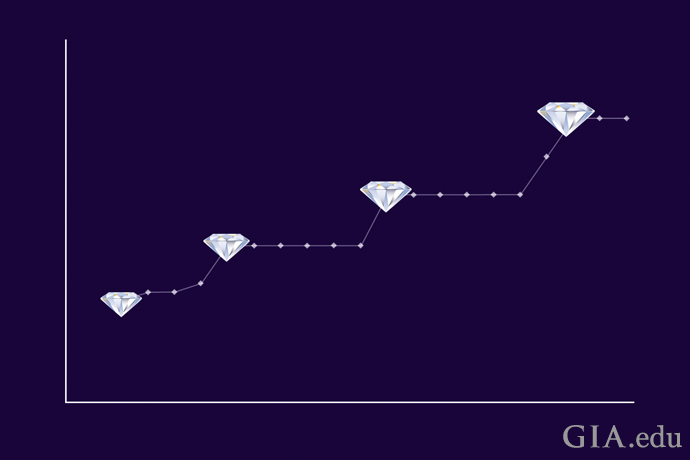
As mentioned earlier, for diamonds that are equal in every way, diamond value increases as weight increases. At certain weight boundaries, called “magic sizes,” the price per carat increases significantly. That’s because these boundaries or thresholds coincide with popular weights, and popularity means greater demand and therefore higher prices for these weights. This is especially true at the magic one-carat size.

A graph showing punctuated increases of diamond values as they reach certain weights

Diamonds increase in price at magic sizes like 0.25 ct, 0.50 ct, 0.75 ct and 1.00 ct. Illustration: Peter Johnston/GIA

A quick comparison of two diamonds shows how magic sizes can affect price. If one diamond weighs 0.96 ct and another weighs 1.02 ct, the 6 pt (0.06 ct) difference in size is almost imperceptible. But if both are D-color round brilliants with identical clarity and cut, the difference in cost is significant. The fact that the second diamond is slightly over the “magic” one-carat threshold may cause its price to be as much as 20 percent more.

A 1.07 ct diamond engagement ring

The 1.07 ct diamond in this Tiffany & Co. ring is a magic size. Courtesy: TrueFacet

Nevertheless, for some people carat weight is symbolic, so they will pay the higher price to reach the magic size.
There is another side to magic sizes – if you think they’re unimportant, you can look for a diamond that weighs slightly less than one of these boundaries and save money.

Carat weight isn’t everything

If you want the largest diamond you can afford, you’ll have to sacrifice clarity, color and/or cut, which may mean sacrificing beauty and sparkle. Choosing a diamond means prioritizing the 4Cs, and then making some compromises. Here is a thoughtful look at determining what’s the most important C for you.


Total Carat Weight

Understanding diamond terminology is essential if you’re going to make a smart purchase decision. “Total carat weight” (abbreviated tcw) is the combined weight of all the diamonds in a piece of jewelry that only contains diamonds.

An engagement ring set with many small melee diamonds weighing 2.15 tcw will cost significantly less than a solitaire engagement ring set with a single 2.15 ct diamond. Again, think size/rarity/price.

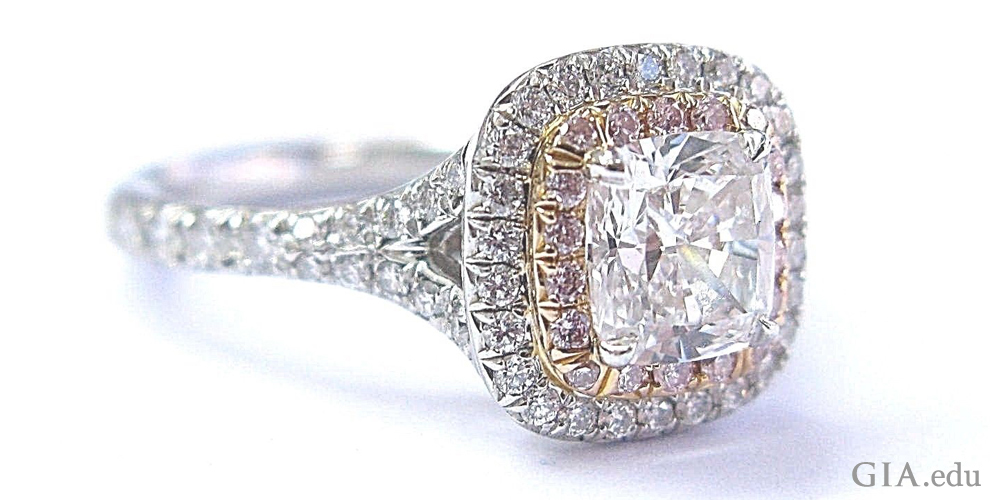
Cushion cut diamond and platinum engagement ring surrounded by a halo of melee and natural pink diamonds

This Tiffany & Co. engagement ring has a cushion cut diamond, weighing 0.84 ct, surrounded by 0.06 carats of natural pink diamonds and 0.34 carats of melee. The total carat weight is 1.24 tcw. Courtesy: TrueFacet.

If an engagement ring has gems other than diamonds in it, the combined weight of all the stones is called “total gem weight.”


The Difference between Carats, Karats and Carrots

Here’s a last bit of terminology that we need to explain. As you know by now, a carat is a metric unit of measure to describe the weight of a diamond and other gemstones. Karat (abbreviated as K) is the measure of the purity of gold. A karat has 24 parts, so 18K gold would mean that the metal is 18 parts gold and 6 parts of other metals (such as copper, silver and/or zinc). Carrots, well, that’s something rabbits are famous for eating.

A diamond engagement ring is a once-in-a-lifetime purchase that is a symbol of your love. Understanding carats and points can help you with this “weighty” decision.

In addition to carat weight, a GIA grading report contains a wealth of information about your diamond. If you’d like to dig deeper, you’ll be interested in the other articles in this series:

GIA Diamond Grading Reports: Understanding the Diamond Color Grade
GIA Diamond Grading Reports: Understanding the Diamond Clarity Plotting Diagram
GIA Diamond Grading Reports: Understanding Diamond Cut Grades

Melee Diamonds: Tiny Diamonds, Big Impact

Look at a beautiful engagement ring and you might see small diamonds, called melee diamonds (pronounced meh-lee), that accent the center diamond and make the ring pop. Melee diamonds are a popular way to add sparkle to diamond engagement rings.

So what do you need to know about melee diamonds to make an informed purchase?

In this post we’ll cover:
What Are Melee Diamonds
How Melee Diamonds Are Cut
Popular Ring Settings for Melee Diamonds
Melee Diamonds and Your Engagement Ring


What Are Melee Diamonds?

GIA defines melee as small diamonds, either single cut or full cut (see definitions below), weighing less than 1/5 carat (ct). However, the exact size range of melee varies from country to country and from one segment of the trade to another. Melee diamonds can be as small as 0.001 ct (1/1000 of a carat). They are often cut into tiny round diamonds and set around a center stone or on the band.

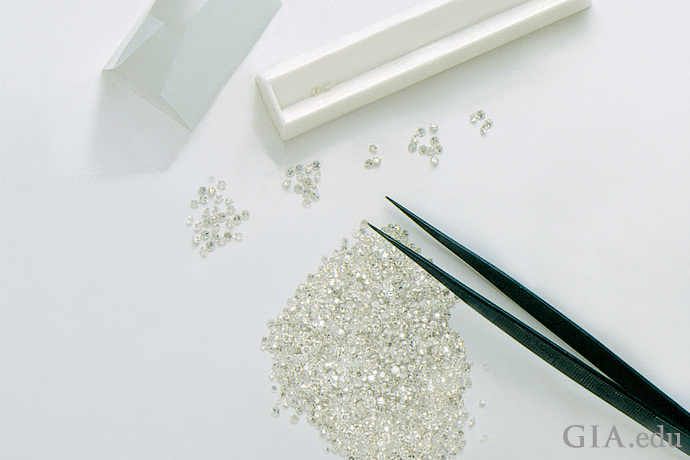
Hundreds of melee diamonds glitter on a table.

Hundreds of melee diamonds glitter on a table, waiting to be sorted. Photo: GIA


How Are Melee Diamonds Cut?

Melee diamonds are produced in large quantities in factories that use the latest diamond cutting equipment. High-tech machines have reduced the amount of labor required and improved the quality of the finished product, but cutting and sorting melee is still a labor intensive business. The city of Surat in India is an important manufacturing hub for diamonds, including melee which are faceted, sorted, and sold in parcels of 100 carats or more to jewelry manufacturers who then set them in a wide array of jewelry.

Typical faceting styles for melee include:

  • Single cut: A cutting style with a round girdle outline and 17 or 18 facets, depending on whether a culet is present, including a table, eight crown facets, eight pavilion facets and (very rarely) a culet
  • Full cut: A round brilliant-cut with 57 or 58 facets, depending on whether a culet is present, including 32 crown facets, 24 pavilion facets, a table and (usually) a culet
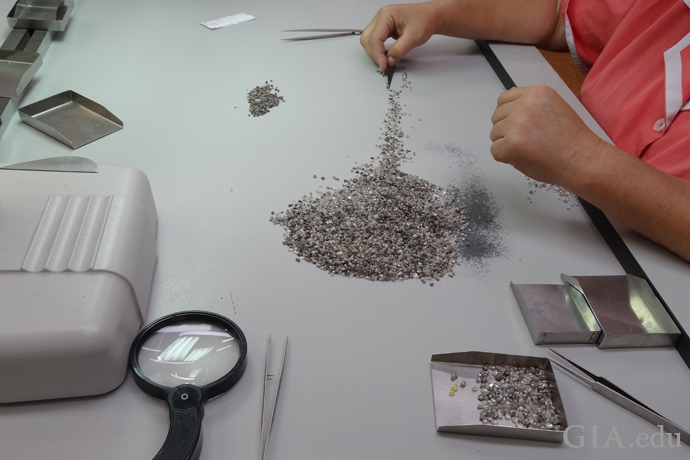
Sorting small rough diamonds by hand at Alrosa's Lomonosov mine,.

Sorting small rough diamonds by hand at Alrosa’s Lomonosov mine, Arkhangel, Russian Federation. Photo: Russ Shor/GIA


Popular Ring Settings for Melee Diamonds

The more diamonds in a ring, the more sparkle it has. Due to their small size, melee diamonds are inexpensive when compared to larger diamond center stones, so they are often generously used in engagement ring designs to add sparkle. You’ll also find them as dazzling accents in watch faces, earrings and pendants – really in any piece of jewelry that calls for added sparkle and brilliance.

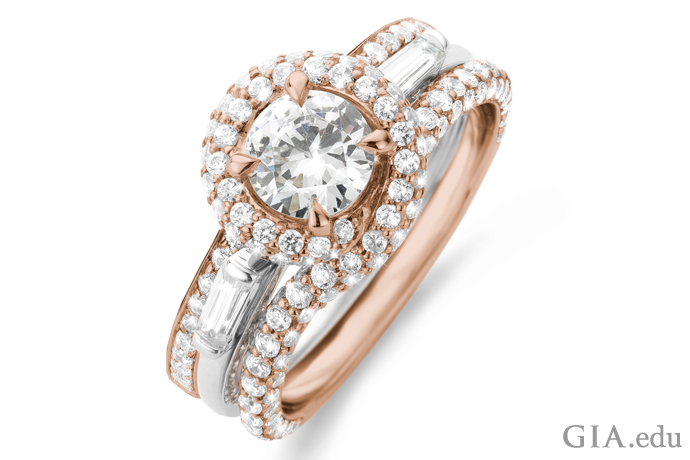
  • Halo setting: Melee diamonds are the building blocks for this popular setting, where tiny diamonds encircle the center stone. This style can add sparkle to a ring and draw attention to the center stone and make it appear larger.
Engagement ring featuring a halo setting of melee diamonds.

A halo of melee diamonds makes this engagement ring all the more dazzling. Courtesy: Ziva

  • Pavé setting: Pronounced “pah-vey” from the French for “to pave,” is a style of bead setting in which many small gems, like melee diamonds, are set close together to create an interlocking honeycomb pattern. It makes for a dramatic, sparkling look and it’s a setting style often used to make complex designs in engagement rings and other jewelry.
Cluster ring featuring 3.35 carats of diamonds in a pavé setting.

Pavé is the central design element in this cluster ring, pavé set with 3.35 carats of diamonds. Photo: Robert Weldon/GIA

The pavé technique also allows for the creation of more affordable engagement rings, as small diamonds are generally less expensive than larger ones of comparable quality. So an engagement ring with pavé may be a good alternative for those on a budget.

Melee diamond and center stone engagement ring.

Melee diamonds transform a simple design into an intricate work of art. Courtesy: Laurence Bruyninckx – Antwerp


Melee Diamonds and Your Engagement Ring

While you’ll have to make decisions about the color, clarity, cut, and carat weight of your diamond center stone, it’s unlikely you’ll have to select the melee for your engagement ring. Melee diamonds are sorted by color and clarity prior to being packaged into parcels and sold to jewelry manufacturers, who will then match them to the diamond center stone.

An independent diamond grading report is a must-have for your diamond center stone given its cost and any reputable jeweler will provide one. A grading report is your assurance that your diamond is natural and discloses any known treatments that may have altered its color or clarity. However, don’t expect to receive grading reports for your melee diamonds. There are a number of reasons why, but the overriding one is economic: The cost of grading for melee is too high in relation to their value. Melee are sold in large parcels often containing hundreds of diamonds so it is not practical to have each one graded.

Carat Weight vs Total Carat Weight

When buying a diamond engagement ring with melee diamonds, it’s important to understand the difference between “carat weight” and “total carat weight,” because diamond weight is a driving factor in determining price. Total carat weight, often abbreviated “tcw” in the jewelry industry, is used to describe the combined weight of all the diamonds in a piece of jewelry that only contains diamonds. The description carat weight, abbreviated “ct,” only applies to an individual stone, like the center stone. A ring with many small diamonds with a combined total weight of 2.50 carats (or tcw) can cost significantly less than a solitaire engagement ring with a single diamond weighing 2.50 ct. That’s because larger diamonds are more rare than smaller ones of comparable quality, and therefore they cost more per carat.

Piaget Limelight ladies watch featuring 4.37 carats of melee diamonds.

Shining like stars in the night sky, some 4.37 carats of melee diamonds twinkle in this luxurious Piaget Limelight tonneau-shaped ladies watch. Courtesy: 1stdibs.com

The sparkle in your engagement ring telegraphs your love to the world. Melee diamonds can make it glow a bit brighter. But if you’re looking to add even more sparkle to your engagement ring, you can go beyond melee diamonds with these additional engagement ring tips.

How to Get the Most Diamond Sparkle

Diamond sparkle might be one of the most-desired requirements for an engagement ring. A diamond’s breathtaking light show is one of the reasons we love this gem. But finding a diamond that sparkles requires some knowledge. So let’s get to it!

In this post, we’ll cover:
What Makes a Diamond Sparkle
How to Choose a Diamond that Sparkles
Maximize Diamond Sparkle – What Works/What Doesn’t

A pavé set diamond halo surrounds a center stone. The diamonds weigh a total of 1.46 carats.

A pavé set diamond halo surrounds a center stone, creating numerous opportunities for sparkle. The diamonds weigh a total of 1.46 carats. Courtesy: 1stdibs.com


What Makes a Diamond Sparkle?

The short answer: light’s interaction with a diamond’s cut. The type and quality of the cut govern how a diamond reacts to the light around it. The angles and relative measurements of a diamond’s facets, as well as its other proportions, have a dramatic effect on how light performs when it strikes a diamond.

The long answer: You probably use the word “sparkle” in a very general way to describe the overall visual effect of a diamond’s interaction with light. But gemologists who have closely studied diamond’s signature light show break it down this way:

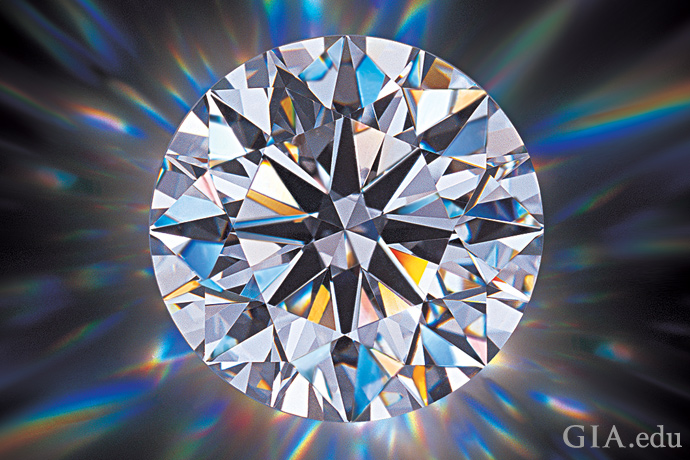
When light enters a diamond, it travels through it, reflecting off its interior surfaces, called facets. It then either leaves the diamond as white light, called brightness, or it divides into the spectral colors of the rainbow: red, orange, yellow, green, blue and violet, called fire.

Light leaving a diamond as spectral colors.

Light leaving a diamond as spectral colors can be quite breathtaking. Copyright: GIA and Harold & Erica Van Pelt.

As you or the diamond moves, an effect called scintillation occurs – visible as alternating flashes of white and spectral-colored light and the contrast of dark and light that moves around the diamond. This contrast is dynamic and causes, in layperson’s terms, sparkle.

How to Choose a Diamond that Sparkles

Since diamond sparkle is all about how well the stone interacts with light, the environment in which you view the diamond and the diamond’s cut quality are critical.

1. Be sure to examine the diamond under four different light sources. Spot lighting (or a lot of individual light sources) is the best way to see all the elements that produce sparkle. However, if there are too many spot lights and they are too bright, there will be so much glare that one diamond will look just as good as any other.

To avoid this, observe the diamond in an environment where the spot lighting is not overwhelming. Then look at the diamond in diffused lighting — fluorescent lights that bounce light off a white ceiling are best. Third, try to view it in a mixed lighting environment of spotlights and diffused lighting. And, finally, don’t forget to view the diamond in natural daylight.

Learn more about how light affects the appearance of a diamond.

A 1.52 carat (ct) round brilliant diamond engagement ring.

A 1.52 carat (ct) round brilliant diamond is a visual delight in this engagement ring. Courtesy: EraGem

2. Pay attention to cutting style. The more facets a diamond has, the more reflective surfaces there are to bounce and scatter light. A round brilliant cut diamond with its 57 or 58 facets will appear to have more sparkle than a single-cut diamond with only 17 or 18 facets. Learn how to pick a round brilliant diamond engagement ring.

If you have your heart set on a shape other than round, you can still get the sparkle if you look for diamond shapes cut in the brilliant faceting style. These include princess, radiant, oval, pear, heart and marquise.

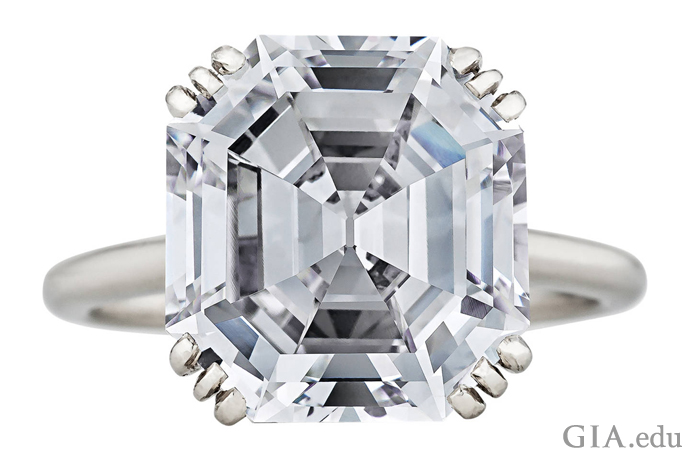
8.06 ct Asscher cut diamond from Cartier, circa 1935.

This 8.06 ct Asscher cut diamond from Cartier, circa 1935, is spectacular. Courtesy: 1stdibs.com

3. Pay attention to cut quality. There’s another solution for standard round brilliants, if you’re unsure about judging a diamond’s sparkle. A GIA Diamond Grading Report can be of great value in finding a diamond that sparkles. GIA issues one of five cut grades for a round brilliant diamond: Excellent, Very Good, Good, Fair and Poor.

A diamond with an Excellent cut grade is very bright. It shows an even pattern with good contrast between light and dark areas, so the reflections appear crisp and well balanced. This tells you that the cutter created the best possible stone from the rough.

A Very Good cut grade means the diamond has bright areas evenly distributed across the stone’s crown and few distracting areas.

A diamond with a Good cut grade isn’t quite as bright – reflections aren’t as sharp and there’s more darkness or dullness in the diamond.

A diamond with a Poor cut grade has much more prominent dark areas or dullness. Given the choice, most people would pick diamonds with either Very Good or Excellent grades.

This diamond has an Excellent cut grade: It is very bright and shows an even pattern with good contrast between light and dark areas.

This diamond has an Excellent cut grade: It is very bright and shows an even pattern with good contrast between light and dark areas. Reflections appear crisp and well balanced. If all else is equal, an Excellent cut grade pretty much guarantees an extremely attractive diamond. Photo: Al Gilbertson and Barak Green/GIA.

This diamond has a Good cut grade. Its bright-reflections aren't as sharp and there's more darkening around the girdle.

This diamond has a Good cut grade. Its bright-reflections aren’t as sharp and there’s more darkening around the girdle. Photo: Al Gilbertson and Barak Green/GIA.

This diamond has a Poor cut grade. It has significantly more prominent dark areas; there's a much smaller bright area.

This diamond has a Poor cut grade. It has significantly more prominent dark areas; there’s a much smaller bright area. Photo: Al Gilbertson and Barak Green/GIA.

Learn more about how GIA grades diamond cut.

Maximizing Diamond Sparkle – What Works/What Doesn’t

Looking for more visual bang for your buck when purchasing a diamond engagement ring? Here are some tips for getting the most diamond sparkle.

1. Bigger is not necessarily better. You may think: the larger the diamond, the more sparkle. But in reality, diamonds with identical proportions, color and clarity have the same amount of sparkle regardless of size. Visually, you might perceive a difference when comparing two diamonds that are dramatically different in size. For example, a 0.25 ct diamond may appear to sparkle less than the 1.00 ct diamond next to it. But when it comes to choosing a diamond, typically you’re making a selection between diamonds that fall within a narrow size range, so slight differences in diamond size would have no effect on your perception of sparkle. Again, this assumes the cut quality of the diamonds being compared is the same.

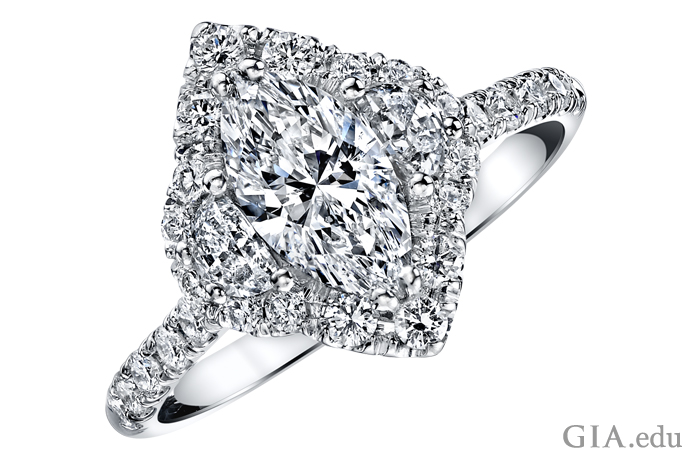
A marquise-shaped diamond in the center is flanked by two half–round brilliant cut diamonds, all of which are surrounded by more diamonds in a pavé setting that extends along the ring’s shank.

Talk about sparkle! This three-stone engagement ring seems to have it all. A marquise-shaped diamond in the center is flanked by two half–round brilliant cut diamonds, all of which are surrounded by more diamonds in a pavé setting that extends along the ring’s shank. Courtesy: ZIVA Jewels Inc.

2. Choose a diamond with good color and clarity. Researchers have found that brightness diminishes in diamonds that grade lower on the D-to-Z color range. Likewise, clarity issues in diamonds graded SI2 or I can diminish the appearance of fire. Both will reduce the sparkle in a diamond.

3. More diamonds, more sparkle. Definitely yes! More diamonds, whether big or small, will add more sparkle to your engagement ring. This is one reason why diamond side stones and pavé settings are so popular.

4. Pick the right setting. If you’re looking for a bigger visual display, a prong setting is better at allowing light to enter the diamond than bezel settings that cover more of the top surface of the diamond. Learn more about different setting styles.

This solitaire engagement ring by Tiffany & Co. features a 2.28 ct round brilliant diamond.

You can have lots of sparkle and still have a simple ring design. This solitaire engagement ring by Tiffany & Co. features a 2.28 ct round brilliant diamond. Courtesy: Pampillonia Estate and Fine Jewelry

5. Keep the diamond clean. This is probably the most important (and affordable) tip. A diamond that’s dirty will not sparkle. Diamonds have an affinity for grease, so it’s important to clean them regularly. Find out how to keep your diamond clean.

In the end, nothing adds sparkle to an engagement ring like the love with which it’s given. So follow your heart and relish the moment — you really can’t go wrong.

If you need a little extra help as you shop, check out our glossary of common engagement ring terms. They’ll help you better communicate your needs and desires with a jeweler.

How to Buy Diamonds Online: Five Non-Negotiable Rules

When it comes to buying diamonds and diamond jewelry online, consumers face a dizzying array of choices in terms of quality, styles and price points. And they also face the uncertainties of buying something sight-unseen. So how can you protect yourself? How safe is it to buy diamonds online? (more…)

Black Diamonds: What You Need to Know

From cast-asides to starring roles, black diamonds have taken quite a journey. They’re even vying for position as center stones in engagement rings! But it pays to look beyond their unique appearance to learn more about this enigmatic gem. (more…)

What Is a White Diamond?

Colored diamonds have been smashing sales records at auction houses the past few years, but here’s one that hasn’t gotten a lot of press: the white diamond. Yes, white! Get ready to fall in love with this remarkable beauty. (more…)

How to Tell if a Diamond Is Real

There’s no shortage of Internet advice on how to tell if a diamond is real, yet much of this information is wrong, and some methods can even damage your gem. Read on to learn about the best way to tell if your diamond is real.

Let’s start with the spoiler, because if you read no further, know this: the most reliable way to authenticate your diamond is to consult a trained gemologist or send it to an independent gemological laboratory for analysis.

A lab, like GIA, will have the expertise and technology to distinguish between natural diamonds, diamond simulants (or imitations), and synthetic diamonds and to detect diamond treatments.

If your diamond already has a GIA diamond report, like a GIA Diamond Grading Report or GIA Diamond Dossier®, you know you have a real diamond. The reports not only identify the diamond, they also provide an unbiased assessment of your diamond’s quality according to the 4Cs: color, clarity, cut and carat weight. The reports also disclose any treatments the diamond may have undergone to improve its color appearance or clarity.

You can even verify your report by visiting GIA Report Check, GIA’s online database, and entering your diamond’s report number to see the grading details of your diamond.

How to Get a GIA Diamond Grading Report?

If you don’t have a GIA report and would like to get one, you can ask your local fine jeweler to send your stone to GIA for you. Your jeweler will be familiar with any shipping and insurance requirements, and will be able to explain the contents of your GIA report once it’s returned to you. Find a jeweler near you.

Do-it-Yourself Diamond Tests – Myth & Fact

If you’ve read this far, you’re probably still wondering if there is an “easy” way to determine whether your local estate find will put the kids through college. Here are some tests we’ve found online – and reasons why you should avoid them!

How to tell if a diamond is real: an array of natural diamonds and diamond imitations.

Natural diamond and various diamond simulants. Top row (left to right): Natural diamond, synthetic rutile, gadolinium gallium garnet (GGG), and synthetic spinel. Bottom row (left to right) strontium titanate, synthetic corundum, yttrium aluminum garnet (YAG), and colorless zircon. Photo: Robert Weldon/GIA.

Myth: Use a jeweler’s loupe to examine a stone. A real diamond will have inclusions. A “fake” diamond will be perfect.

Fact: Most consumers have difficulty using a loupe and spotting inclusions: unless you have some experience looking at diamonds, the reflections and facet junctions can make it difficult to see small inclusions. Also, some diamonds are flawless and you will see no inclusions!

While it’s true that most diamonds, as products of nature, will have inclusions, it is a myth that diamond imitations, whether they are natural or synthetic, will not have inclusions. Inclusions are the result of a gem’s crystal growth process. In fact, inclusions help gemologists identify natural and synthetic gems. Also, glass imitations can have gas bubbles, which could look like natural inclusions to an untrained eye.

Natural gems that might look like diamonds to the average consumer include: colorless sapphire, colorless topaz, and colorless zircon.
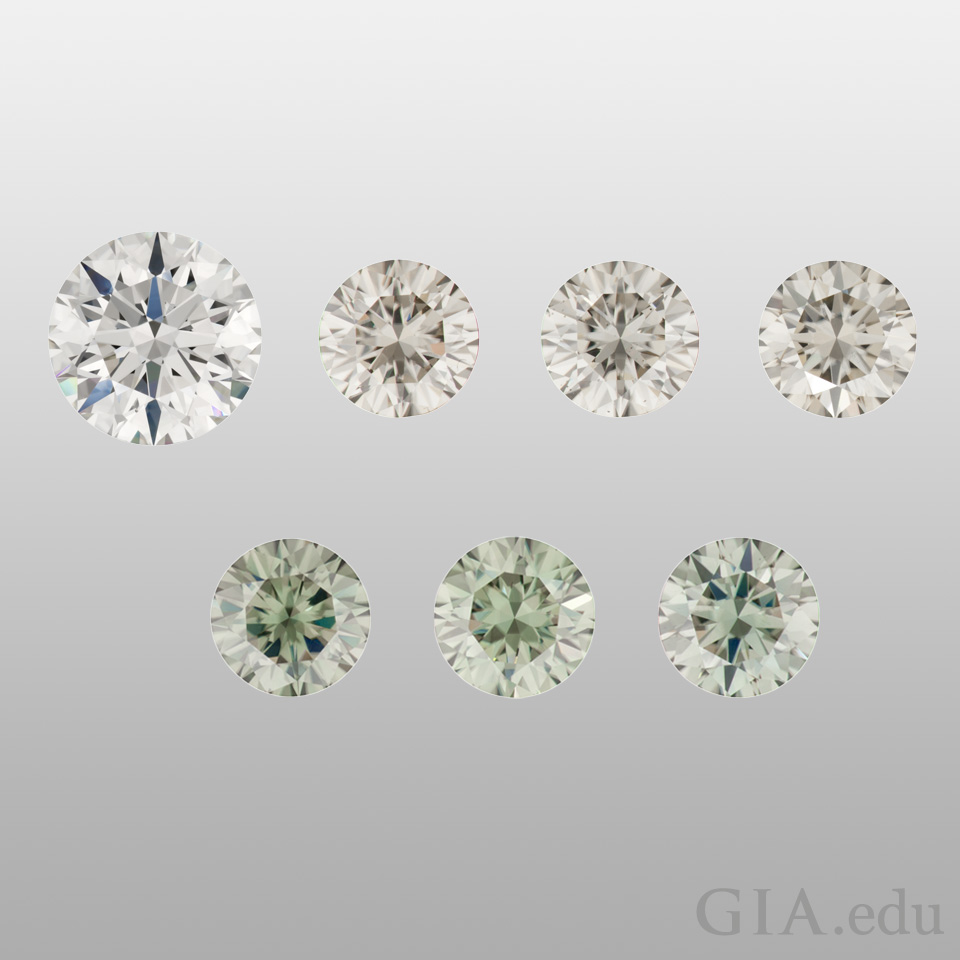
How to tell if a diamond is real: a natural diamond with synthetic moissanite

A natural diamond (upper left) with six smaller laboratory grown moissanite in the near colorless to greenish range. Photo: Robert Weldon/GIA

Many natural gems have a synthetic (i.e., lab-grown) counterpart. The man-made material will have essentially the same chemical composition, crystal structure and optical and physical properties as the natural gem gemstone.

Some of these man-made gems are used to imitate diamond: synthetic rutile, colorless synthetic spinel, and colorless synthetic sapphire. There are also man-made diamond imitations that do not have natural gem counterparts. These are solely the product of man’s ingenuity in the laboratory, like YAG (yttrium aluminum garnet), GGG (gadolinium gallium garnet), CZ (synthetic cubic zirconia), and synthetic moissanite.
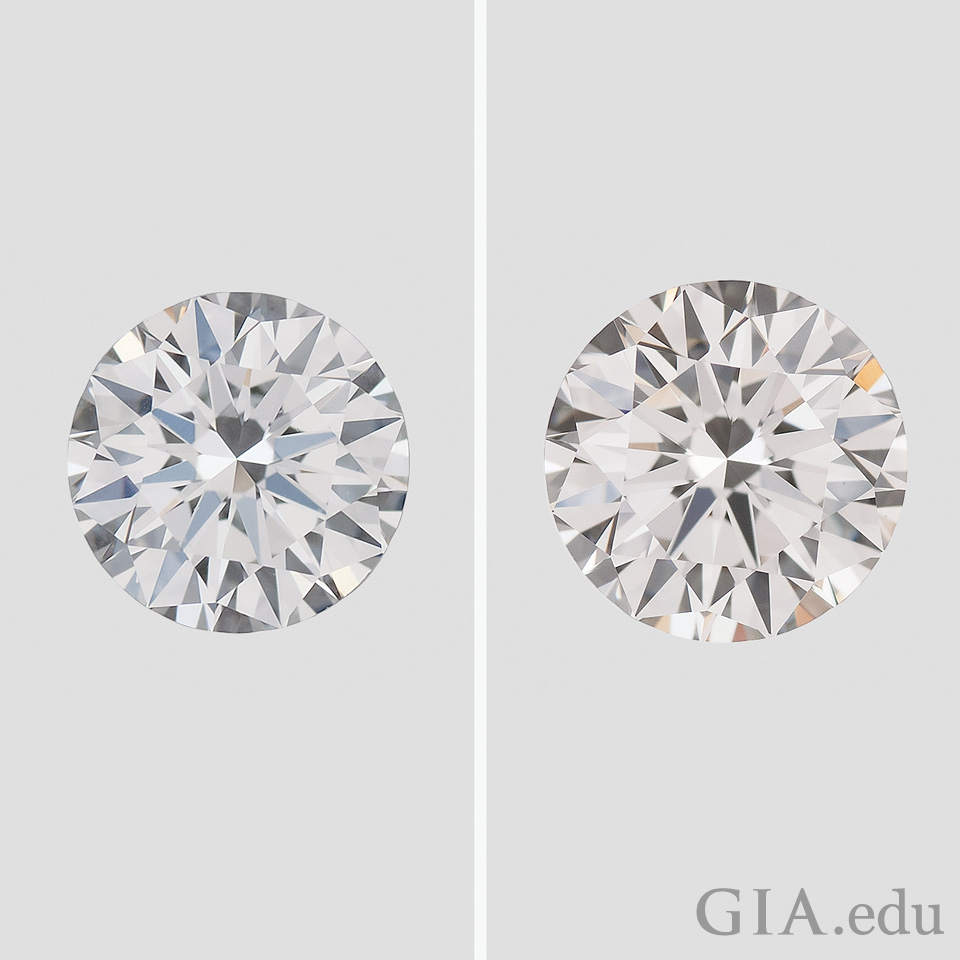
How to tell if a diamond is real: two synthetic (lab-gown) diamonds.

Two synthetic diamonds graded by GIA. The 0.39 carat (ct) on the left was graded F color and VVS2 clarity. The 0.83 ct diamond on the right was graded J color and VVS2 clarity. Photo: Jian Xin (Jae) Liao/GIA

Synthetic diamonds are not imitations. They are real diamonds.

Synthetic diamonds are also man-made and have the same properties as natural diamonds. Synthetic diamonds are real diamonds. But the price difference between lab-grown and natural diamonds can be considerable. You cannot spot a synthetic diamond by looking at it through a loupe. The only way to tell is by laboratory testing.
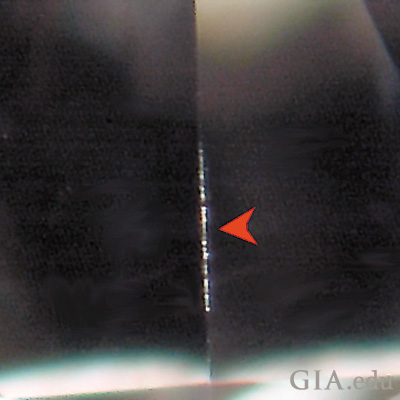
Diamond with abrasions along a facet junction

Contrary to popular myth, real diamonds don’t always have sharp edges. Diamonds can have abrasions: a series of minute nicks along the facet junctions that give the diamond’s edges a white or fuzzy appearance. This clarity characteristic will be noted on GIA diamond grading reports. Photo: Mitchell Moore/GIA

Myth: A real diamond will have sharp edges, a “fake” diamond will not.

Fact: This is only true for imitations that are made in a mold, like plastic (and some glass). A natural diamond will have sharp edges, but so will synthetic diamonds and any gem material used to imitate diamond. In addition, any gem, natural or synthetic, can have abraded facet junctions (the line where two facets meet) caused by damage or wear and tear.
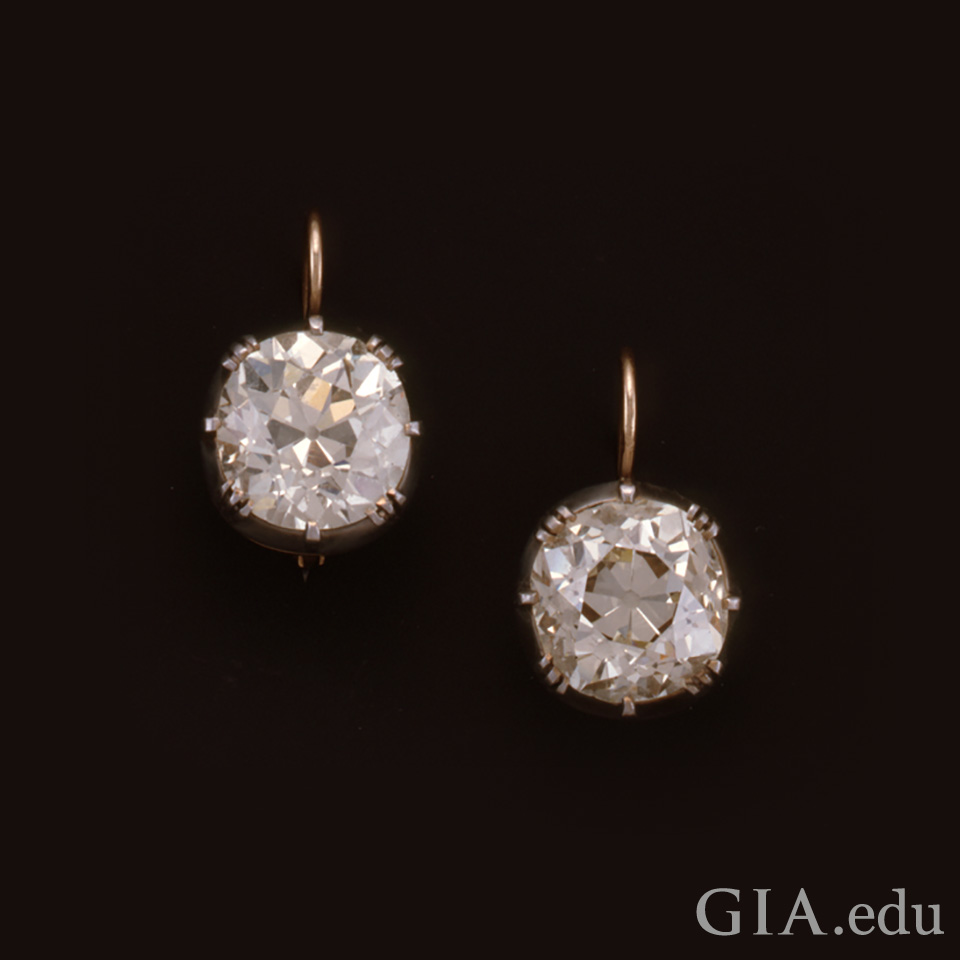
How to tell if a diamond is real: Antique Victorian earrings with old mine cut diamonds

If you’re unfamiliar with antique jewelry, the settings of these circa 1860 Victorian gold and silver earrings may not seem like the highest quality. But don’t be too quick to write off the gemstones based on setting alone. The earrings feature a pair of old mine-cut diamonds with a total weight of 11.94 carats. Photo: David Behl. Copyright: Janet Mavec & GIA

Myth: You can spot a real diamond by the quality and metal of its setting.

Fact: While natural diamonds are often set in gold or platinum, the metal alone is not a definitive clue. Because of the high cost of gold and platinum, diamonds today are sometimes set in silver metal, too. Antique jewelry can contain diamonds set in a mix of gold and silver.

The style of the setting is also not a good clue. Diamonds are set in a variety of mountings. And a poor quality setting does not necessarily mean the diamonds aren’t real. The quality could just be a sign of general wear and tear or work done by an inexperienced jeweler.

Myth: Rub the gem with sandpaper. A diamond won’t be scratched.

Fact: This is a destructive test and should never be used! The grit on sandpaper usually has a hardness between 7 and 9 on the Mohs scale, so using sandpaper on material softer than the grit will damage it. You risk not only scratching the metal if the stone is set, but also abrading the surface of the gem and diminishing its value.

Myth: The fog test: Breathe on the gem. A real diamond will not fog.

Fact: This test cannot be replicated with consistent results. Internet advice doesn’t tell us how long one must breathe on the gem to see results. Nor does it tell us how large the surface area of the gem needs to be so that you can actually see the fogging. Synthetic diamonds and natural diamonds will react in exactly the same way. Ambient humidity might also affect your results.

Round brilliant cut natural diamond engagement ring (left) and emerald cut natural diamond engagement ring (right).

Cutting style can have an effect on a diamond’s visual appearance. The round brilliant cut natural diamond (top) appears brighter than the emerald cut natural diamond (bottom). Both diamonds are set in platinum. Courtesy: JK & Co. Jewelers

Myth: If it sparkles, it must be a real diamond.

Fact: Many consumers use the word “sparkle” in a very generic way to describe the overall visual effect of a faceted gemstone’s interaction with light. To an untrained eye, almost any faceted gem like synthetic moissanite, synthetic cubic zirconia (CZ), or a colorless natural zircon will sparkle.

On the other hand, an emerald cut diamond does not sparkle like some of these round brilliant diamond simulants.

When gemologists refer to a diamond’s sparkle, it means something very specific: scintillation. In addition to sparkle, scintillation also refers to the pattern of light and dark areas caused by reflections within the diamond. Scintillation is only one aspect of a diamond’s appearance; other factors are brightness (the internal and external white light reflected from a diamond when it is viewed face-up) and fire (the scattering of white light into all the colors of the rainbow). It’s the combination of these factors that give diamonds their unique visual appearance.
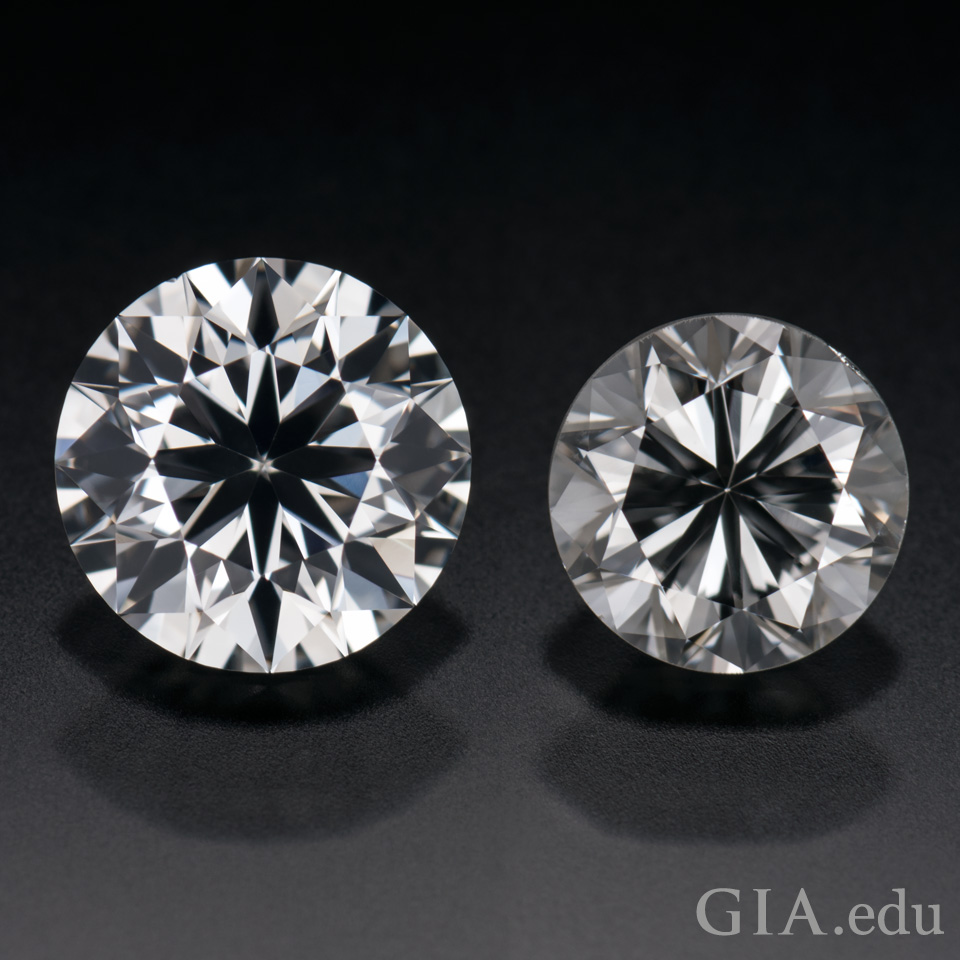
Two round brilliant cut diamonds.

Two round brilliant cut diamonds selected to show how the quality of the cut affects visual characteristics. The Excellent cut (left) is much brighter than the Poor cut (right). Photo: Kevin Schumacher/GIA

Sparkle, or more accurately scintillation, depends on many variables:

  • Cutting style: A brilliant cut diamond will usually appear brighter than a step cut diamond, even when they have the same number of facets and the same shape. This difference in appearance is due to the arrangement of the facets.
  • Number of facets: The more facets a diamond has, the more reflective surfaces to bounce and scatter light. A round brilliant cut diamond with its 57 or 58 facets will appear to have more sparkle than a single cut diamond with only 17 or 18 facets.
  • Cut quality: A poorly cut diamond is still a diamond, but it may not deliver the visual effect you would expect. Do not assume that a diamond that does not sparkle is not a diamond.
  • Lighting: A diamond will appear differently under diffused lighting versus spot lighting. Find out how light affects the appearance of a diamond.
  • Cleanliness: A diamond that’s dirty will not sparkle. Diamonds have an affinity for grease, so it’s important to clean them regularly. Find out how to keep your diamond clean.

Myth: The newspaper test: You can’t see the type through a real diamond.

Fact: This is another problematic test. The logic behind it is that a well-cut modern round brilliant diamond is highly refractive, meaning that as light passes through it, the light slows down and bends. As you look through the diamond to the newspaper, the refraction causes a visual distortion, making the newsprint unreadable.

While this test can give a quick indication if you’re a trained and experienced gemologist, it can be very confusing and misleading for the inexperienced. It should never be used as a definitive test. Many variables can affect the results, for instance lighting conditions and surroundings, whether the stone is clean or dirty, the placement of the stone on the newspaper, the tester’s eyesight, the shape and proportions of the gemstone being tested, and/or whether it is mounted.

Round brilliant cut diamond engagement ring.

A round brilliant cut natural diamond complemented by 14 round brilliant diamonds in 18K rose gold. Courtesy: JK & Co. Jewelers

Unfortunately, there are no easy and reliable at-home tests that will conclusively tell you if your gemstone is a natural diamond or some other material. Your best recourse is to take your jewelry to a trained jeweler for examination and, if necessary, request to have the gemstone tested by an independent gemological laboratory.

Ready to dig deeper into diamonds? Read on to learn all about where diamonds come from.
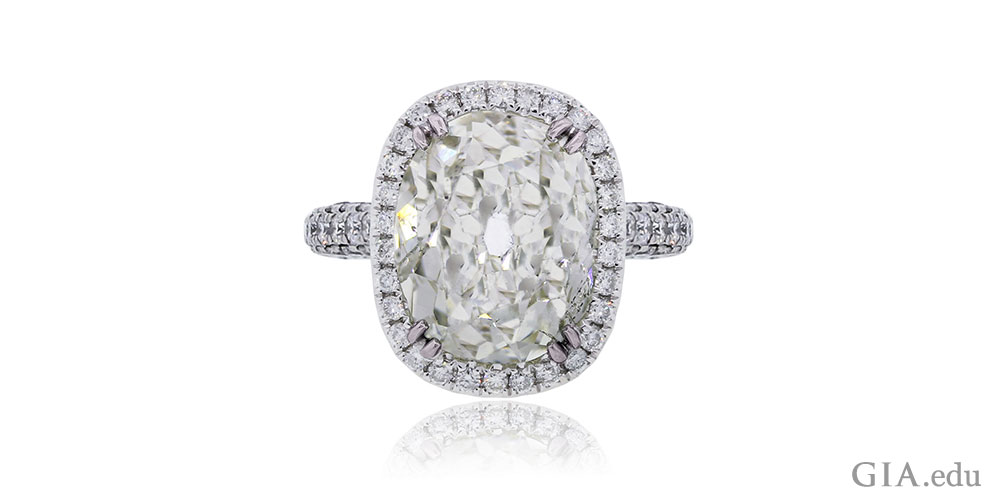
GIA Green Gemstones Buying Guide

Want to spice up your look? Then consider adding green gemstones to your wardrobe. These perennially beautiful gemstones evoke new life, so you’ll look radiant – regardless of the season. Use our guide to find your perfect green gem! (more…)

Gift Ideas for Mom: Jewelry Styles for Every Kind of Mom

Is your mom sporty, hip, classic, or into DIY? We found jewelry styles to please every kind of mom under the sun. If you need gift ideas for mom, read on!

(more…)