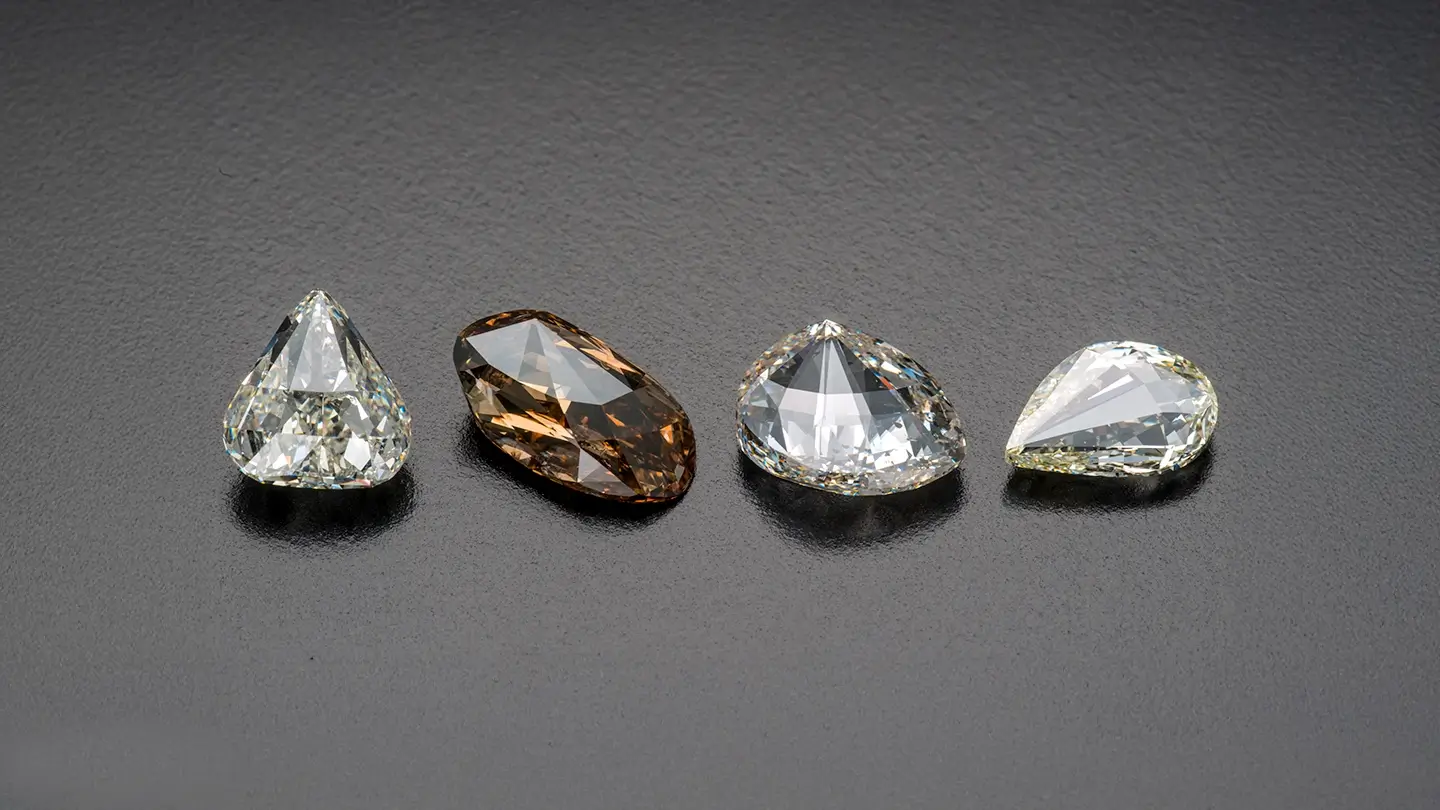
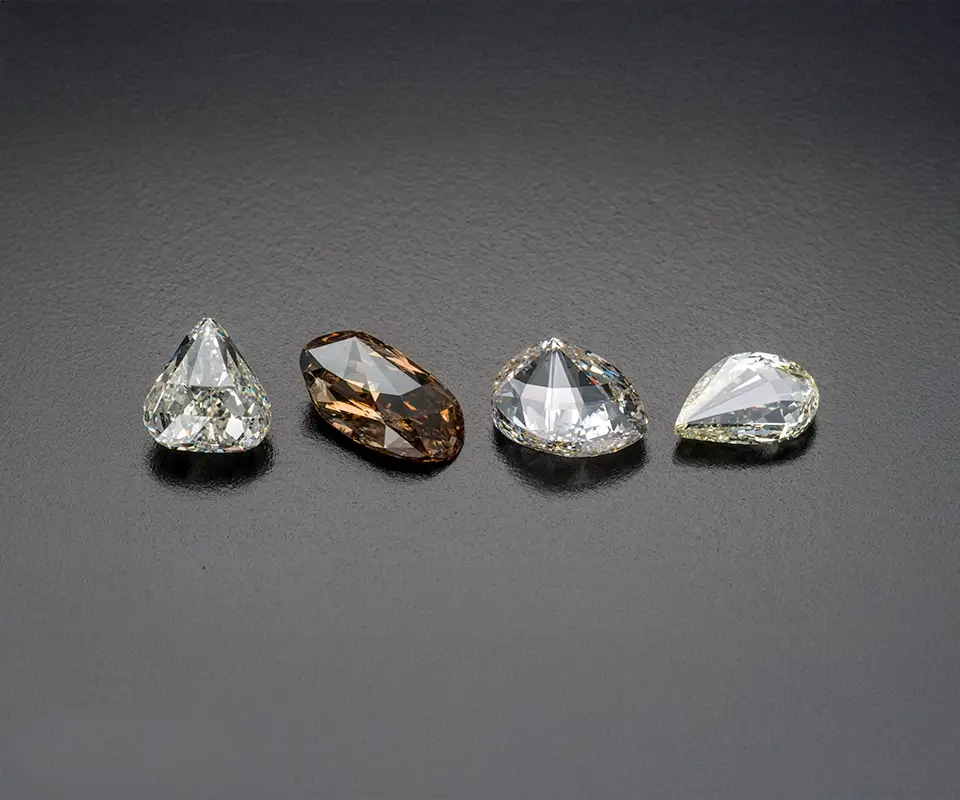
When most people picture diamonds, they imagine icy, colorless sparkle, long considered the ideal. In recent years, however, warm color diamonds—often called “champagne,” “cognac,” “chocolate,” or “desert” diamonds— have gained popularity.
Falling outside the traditionally sought-after color range, these diamonds appeal to those desiring a less conventional stone with personality, depth and often a more accessible price point. From delicate melee accents to striking center stones, warm diamonds pair beautifully with vintage-inspired settings and modern minimalist designs alike.
Curious about their color, value and how to style them? Read on to discover what makes warm diamonds so alluring and how to choose one that speaks to you.
What Are Warm Diamonds?
Warm diamonds generally fall in the K–Z range on the D-to-Z color scale or are Fancy Light Yellow or Fancy Brown on the fancy color scale. These diamonds display hues from pale yellow and light brown to deep brown, caused by trace elements like nitrogen or by distortion of the crystal lattice.
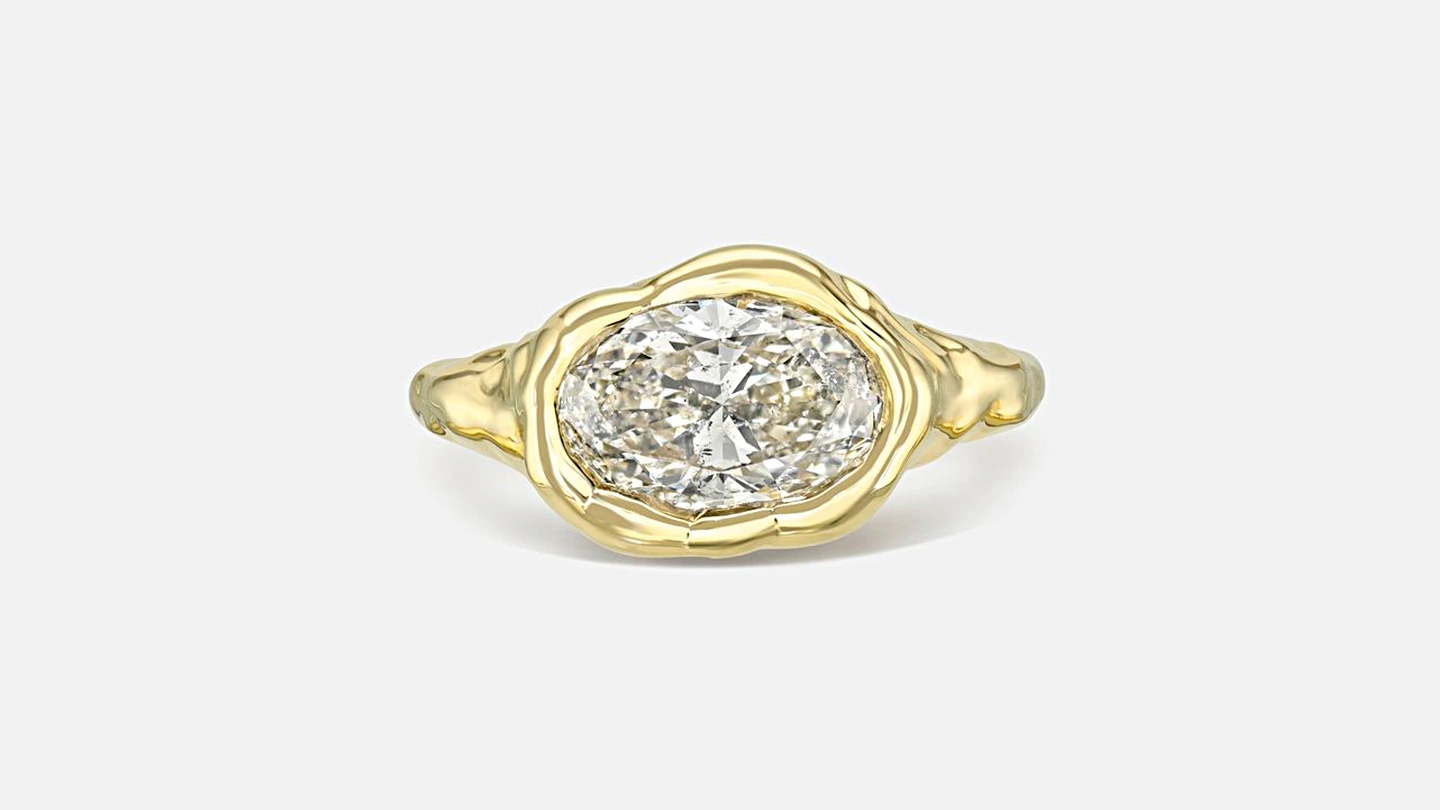
Often described as earthy, grounded and organic in appearance, warm diamonds offer a softer kind of radiance. Instead of sharp, icy flashes, they glow with a luminous warmth that many find more expressive.
Why Are Warm Diamonds Trending?
Antique diamonds are often warmer in tone, and today’s renewed interest in vintage-inspired jewelry has brought pale yellow and champagne diamonds back into the spotlight—especially in cushion cuts, pear shapes and other diamond shapes that highlight depth of color. Their organic palette pairs beautifully with both modern and vintage settings, while Fancy brown diamonds are often considered bolder, edgier and more modern.
Designers and collectors are embracing warm diamonds for their individuality, versatility and relative affordability.
Other Names for Warm Diamonds
Evocative language suggesting richness and indulgence help describe these diamonds’ appeal, but keep in mind that these terms are marketing and trade names—not official grading designations used on laboratory reports.
Depending on hue and intensity, warm diamonds may be referred to as:
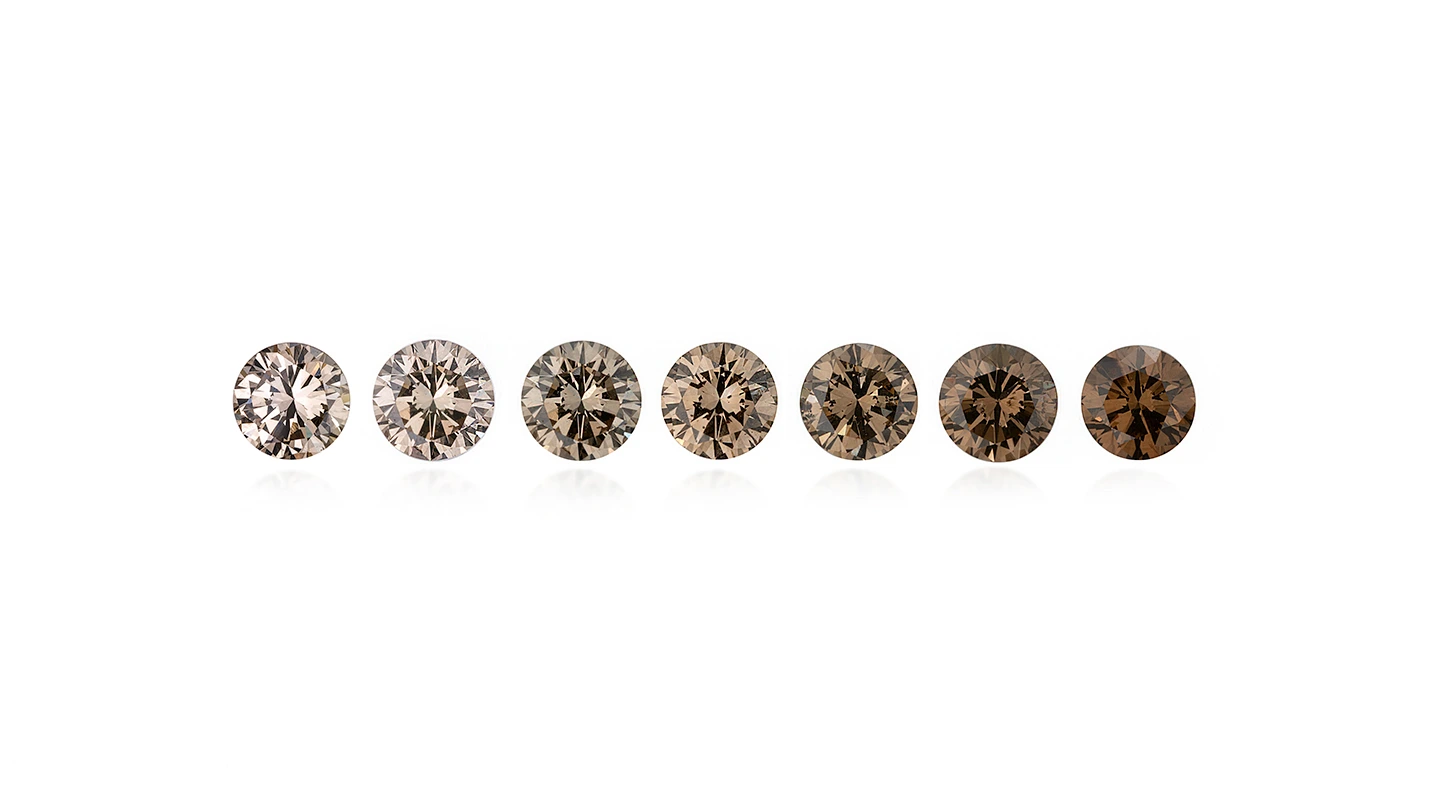
- Champagne diamonds: light brown on the D-to-Z scale
- Desert diamonds: earthy-toned stones
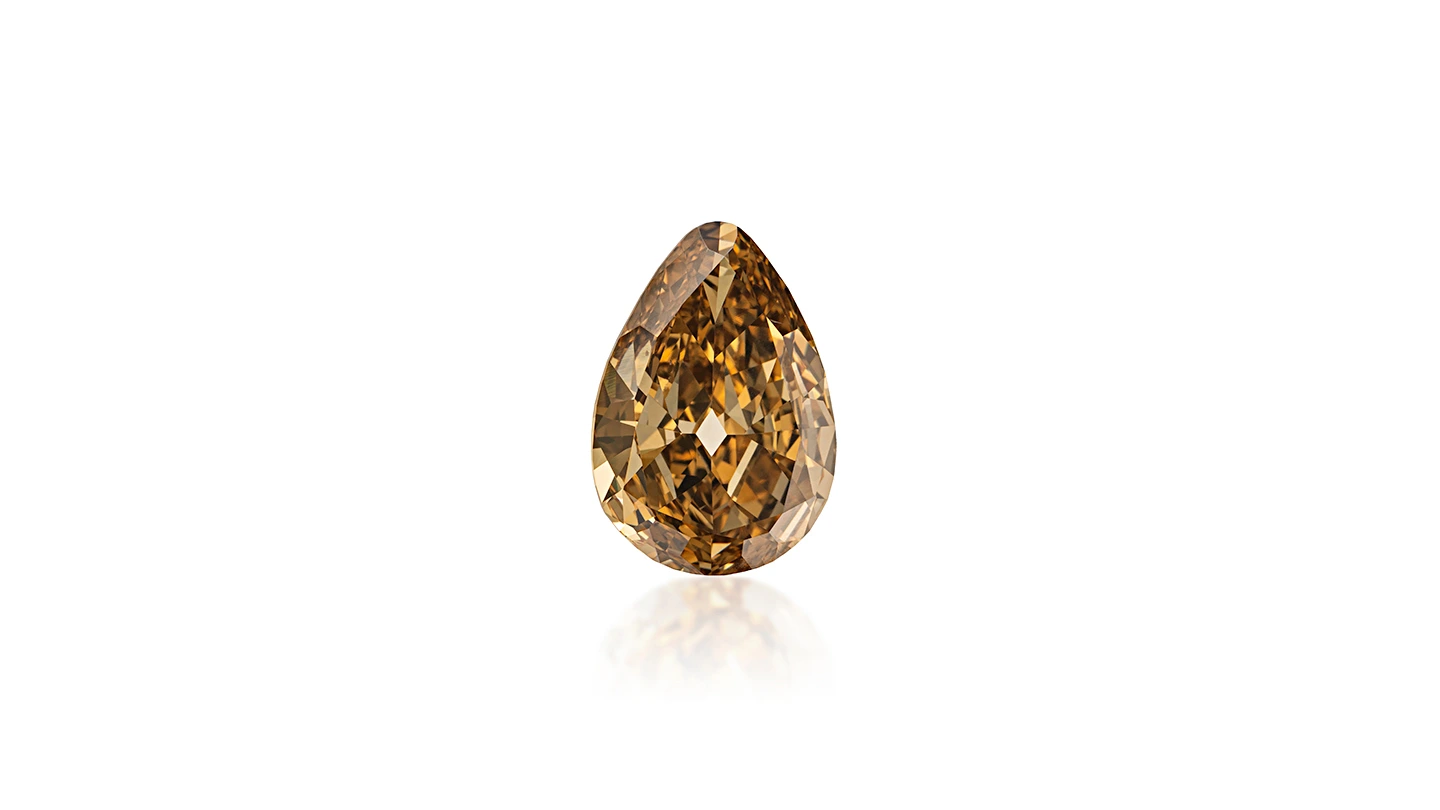
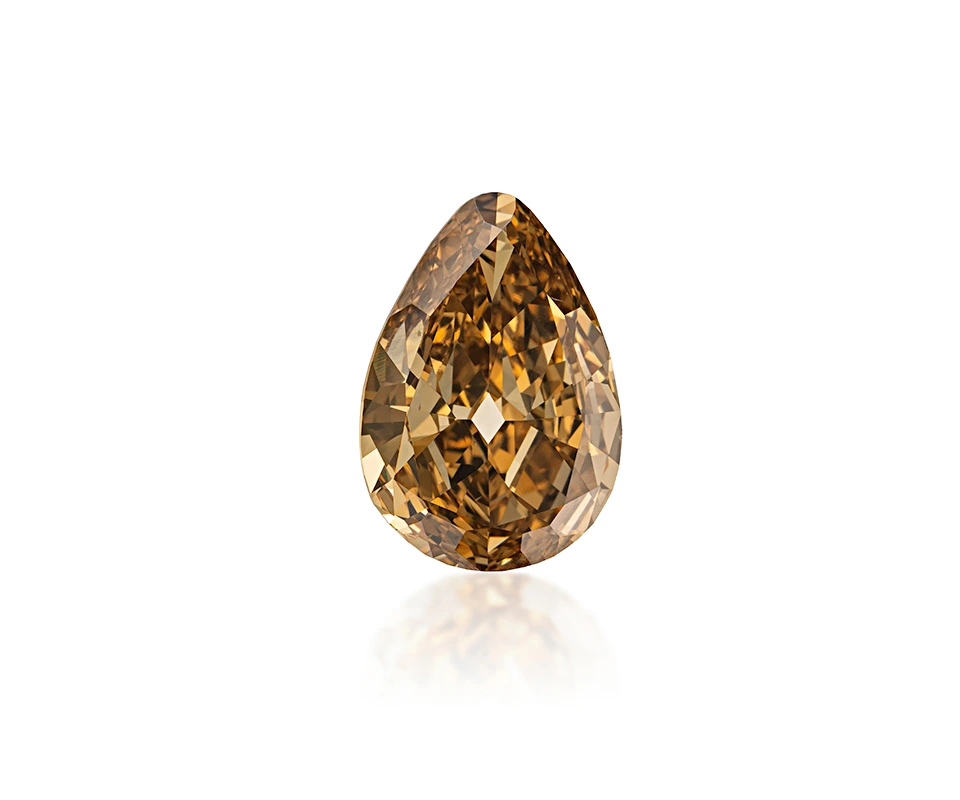
- Chocolate diamonds: Fancy Brown, Fancy Deep Brown or Fancy Dark Brown
- Cognac diamonds: amber to orange-brown
- Cape diamonds: an older trade term for yellow-tinted stones, typically K color or lower
- Antique-colored diamonds: diamonds with light yellow, champagne, or brownish tones resembling those commonly found in vintage and antique jewelry. Historically, diamonds were cut to emphasize fire and retain weight rather than maximize colorlessness.
How Much Do Warm Diamonds Cost?
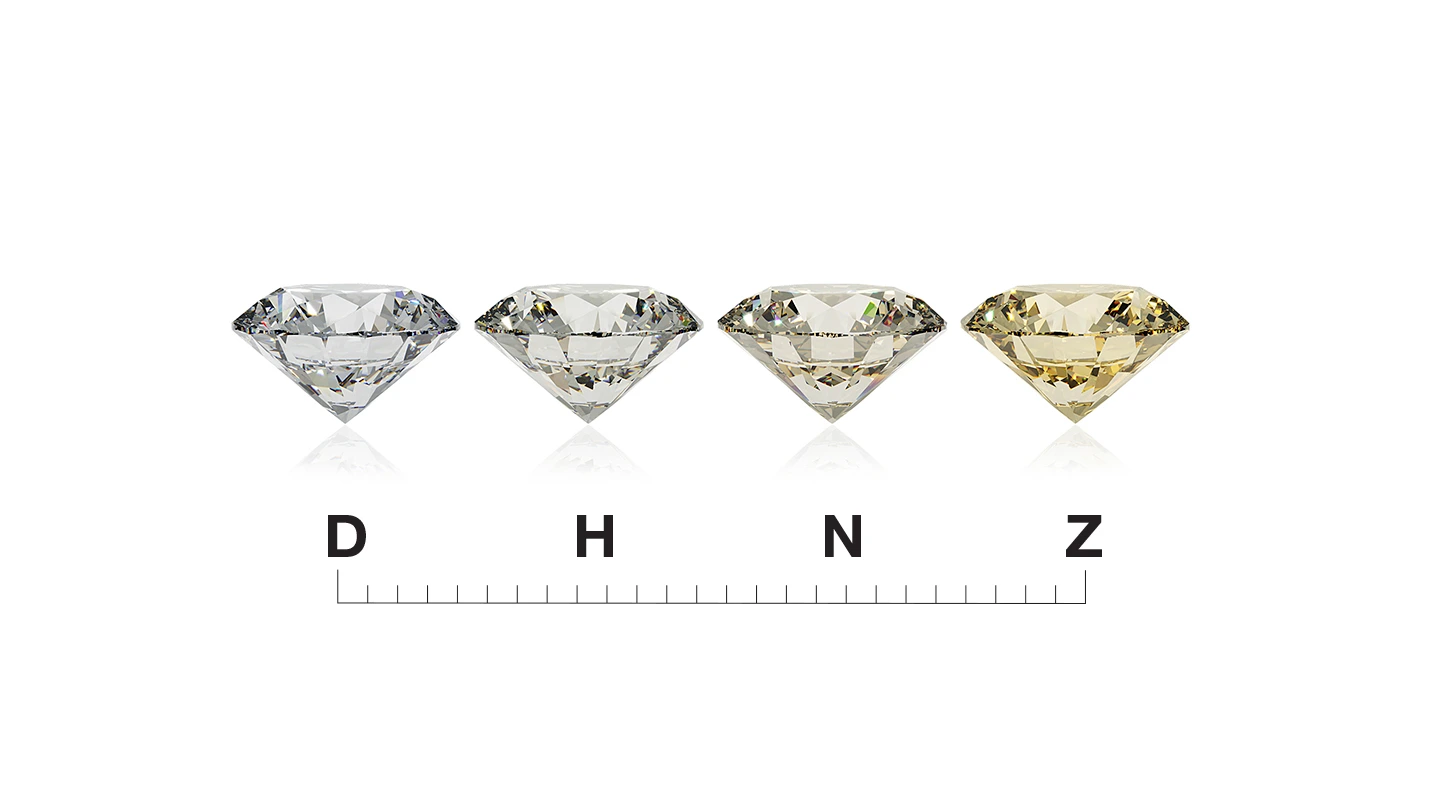
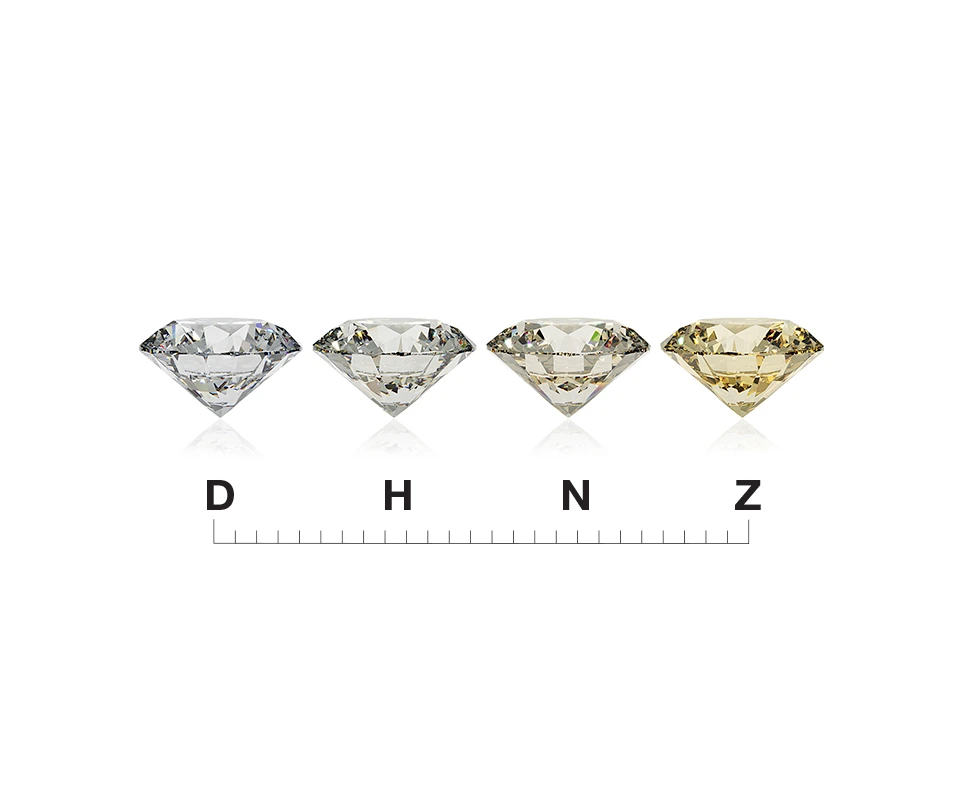
Most “white” diamonds are graded on the D-to-Z color scale, which consists of 23 letter grades—from D (colorless) to Z (light yellow or brown). The D-to-Z color scale measures the absence of yellow or brown body color.
Generally, colorless diamonds are the rarest and most desirable, with value decreasing as a diamond moves down the scale. If a diamond’s color is strong enough in hue and saturation to exceed that range, however, it is graded as a fancy color diamond on the fancy color scale. Unlike D-to-Z diamonds, fancy colors increase in value with higher saturation and are typically more valuable than those at the lower end of the D-to-Z scale.
This means a Fancy Light Yellow diamond may cost more than a Z color diamond—even if they appear similar—because it has crossed into the fancy color range.
Because many warm diamonds sit lower on the traditional color scale, they often offer an attractive balance of beauty and value—allowing buyers to prioritize size, cut quality or design while staying within their budget.
How Rare Are Warm Diamonds?
In terms of rarity, warm colored diamonds are much more common than colorless diamonds with D–F color grades. Brown diamonds are also relatively abundant compared to colorless stones or other fancy colored diamonds, such as Pinkamonds of any hue with even color, high clarity and good cut quality are still relatively rare.
How Do Warm Diamonds Form?
Like all diamonds, warm-colored diamonds form deep within the Earth under extreme heat and pressure. Their color is shaped by subtle variations in their crystal structure.
Pale Yellow Diamonds
Many pale yellow diamonds get their tint from nitrogen, the most common impurity in natural diamonds. Generally, when nitrogen atoms replace carbon atoms in the crystal lattice, they absorb blue light. With blue light reduced, the diamond appears yellow.
The amount and arrangement of nitrogen determine how noticeable the yellow color appears, creating shades from faint yellow to vivid golden yellow.
Brown Diamonds
Brown diamonds typically owe their color to crystal lattice distortion rather than impurities. Internal strain caused by geological forces alters how light travels through the stone, producing hues such as champagne, cognac or chocolate brown.
Warm color is the result of natural atomic-level variations—a reflection of each diamond’s geological journey millions-to-billions of years in the making.
Where Are Warm Diamonds Found?
Warm diamonds are found in many of the same regions that produce traditional colorless diamonds, including South Africa, Botswana, Australia, Russia and Canada.
Historically, Australia’s Argyle mine was known for producing large amounts of champagne and cognac diamonds, helping popularize brown diamonds in contemporary jewelry. However, the mine closed in 2020.
How to Choose a Warm Diamond
Choosing a warm diamond is about embracing character rather than chasing icy perfection. Understanding how size, cut and clarity influence diamond color will help you select a stone that feels intentional and balanced. When shopping for a warm diamond engagement ring, keep the following tips in mind.
Understand Color Grades of Warm Diamonds
Most “white” diamonds are graded on the D-to-Z color scale, which ranges from D (colorless) to Z (light yellow or brown). Diamonds at the top of the scale—D through F—are considered colorless and are typically the most valuable. G and H diamonds are near-colorless and often offer an appealing balance of colorless appearance and value. I and J diamonds may begin to show slight warmth, while diamonds K and lower display increasingly noticeable color.
In the past, these “warm” diamonds—those graded K and below—were often overlooked. Today, however, these diamonds are appreciated for their character, vintage charm and attractive value.
Decide How Much Warmth You Prefer
View the diamond in person, if possible, and determine how much warmth appeals to you. Some buyers gravitate toward the subtle glow of a K color diamond, while others prefer richer tones such as Fancy Light Yellow or Fancy Brown.
Observe the stone under different lighting conditions. Warm colored diamonds may appear softer in diffused daylight and richer under warm indoor lighting.
Keep in mind that size influences color visibility. Larger diamonds tend to show body color more clearly. A small J or K diamond may appear nearly colorless while a three-carat J or K diamond will have noticeable color.
Both cut grade and cut style play an important role in how a diamond looks once it is set and worn. Cut grade affects not only brilliance and sparkle, but also how color and clarity are perceived face-up. A bright, well-cut diamond can help make subtle warmth and minor inclusions less noticeable.
If you prefer a highly brilliant diamond with visible warmth, consider choosing a lower D-to-Z color grade or selecting a fancy-color diamond. Opting for a lower color grade within the D-to-Z scale can also offer meaningful cost savings.
Cut style also shapes a diamond’s overall appearance. Do you prefer the dazzling sparkle of a brilliant cut, the hall-of-mirrors effect of a step cut, or the softer glow and pronounced fire of an antique-cut diamond?
Understanding both cut grade (for round brilliant diamonds) and cut style will help you select a diamond that aligns with your aesthetic preferences.
Cut Quality Matters
Diamond cut quality and symmetry have the greatest influence on brilliance and overall light performance. For round brilliant diamonds, look for cut grades of Excellent or Very Good to ensure brightness and sparkle.
Fancy-shaped diamonds are not assigned an overall cut grade, but they do receive symmetry and polish grades, which are important indicators of craftsmanship and finish.
Keep in mind, however, that many vintage or antique diamonds were hand cut and may show slight asymmetry. In these stones, subtle irregularities are often considered part of their character and charm rather than imperfections.
Cut Grade vs. Cut Style
In addition to cut grade, cut style plays a significant role in how color is perceived. While cut grade evaluates how effectively a diamond’s proportions, symmetry and polish interact with light, cut style refers to the specific facet pattern and arrangement within a given shape.
Brilliant cuts feature numerous kite-shaped facets designed to maximize light return and sparkle. Their brightness can help mask subtle warmth, making a diamond appear more colorless than its grade might suggest.
Step cuts, by contrast, feature larger, open facets and are prized for their hall-of-mirrors effect rather than intense brilliance. Because they return less scintillation and have broader, more transparent facets, they tend to reveal body color more readily than a round brilliant of the same color grade.
Brilliant Cuts
- Round brilliant diamonds often appear the most colorless of all brilliant cuts due to their incredible light return.
- Other brilliant cuts—such as oval, pear, heart, radiant, princess and marquise—can appear more colorless than step cuts of the same color grade, though typically not as colorless as round brilliants. This is because their points and corners can concentrate color, making warmth slightly more noticeable.
Step Cuts
- Emerald and Asscher cuts tend to showcase body color more clearly because of their larger, open facets.
Vintage-inspired cuts are especially flattering for warm colors:
- Old Mine Cut and Old European Cut show color more than modern brilliant cuts. They give off broad flashes of light with strong fire.
- Rose cuts shimmer gently and display more color than brilliant cuts.
Choose a cut style that complements how prominently you want the color to show.
Clarity Considerations for Warm Diamonds
Diamond clarity may be somewhat less critical in warmer diamonds, especially brown diamonds, since stronger hue and saturation can help mask minor inclusions. can help mask minor inclusions.
Brilliant cuts, with their many small, reflective facets, are also generally better at disguising inclusions than step cuts, which have larger, open facets that make internal features easier to see.
The location of inclusions also matters. Inclusions positioned near a tip or corner, such as in a marquise cut, are far less noticeable than those located directly under the table facet. These inclusions are also more easily covered with settings and prongs.
Still, always avoid inclusions that create cloudiness, reduce transparency, or compromise durability.
Carat Weight and Proportions
As diamond carat weight increases, color becomes more noticeable. Larger diamonds allow more light to travel through the stone, which can make warmth easier to detect than in smaller diamonds of the same color grade. This effect is often more pronounced in diamonds weighing three carats or more and in step cuts, whose broad, open facets reveal body color more readily.
Best Metal Pairings for Warm Diamonds
Metal choice plays a significant role in how a diamond’s color is perceived. The surrounding metal can either amplify warmth or create contrast, subtly influencing the overall look of the piece. When designing a warm diamond engagement ring, selecting the right metal is just as important as choosing the stone itself.
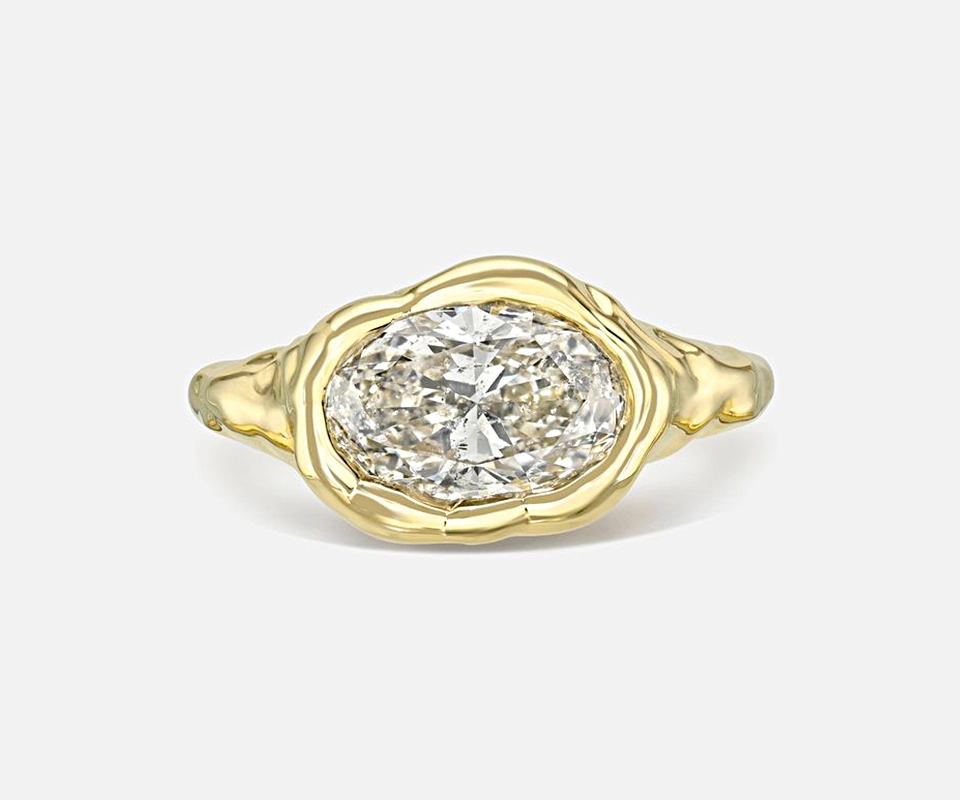
- Yellow gold can make icy, colorless diamonds appear more yellow, but they blend seamlessly with faint yellow diamonds and can soften their color by reducing contrast. In diamonds with rich gold tones, yellow gold can enhance the color. Yellow gold can also highlight honey undertones in brown diamonds.
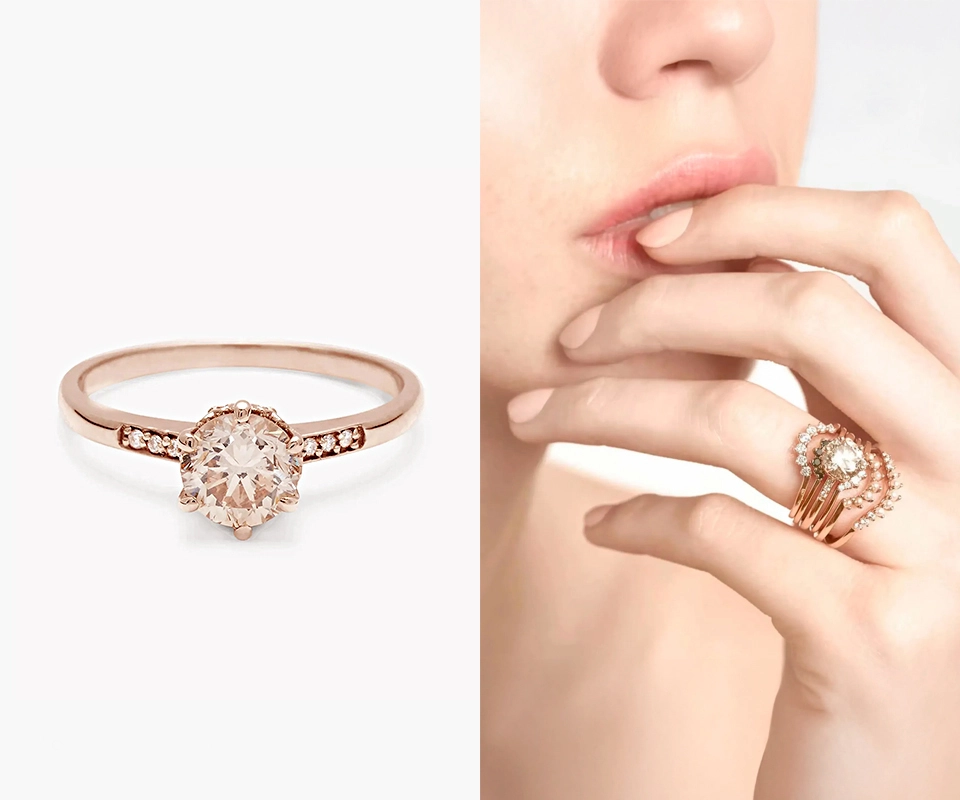
- Rose gold naturally complements warm diamonds because its pinkish hue harmonizes with the stone’s underlying tones. It can enhance brown hues and draw out subtle reddish, copper or cognac tones, creating a cohesive and romantic overall look. This pairing often feels soft, romantic and vintage-inspired, especially in warm diamond engagement ring designs.
- White gold or platinum creates stronger visual contrast with warm-colored diamonds. Their cool, silvery tone does not blend with warmth but instead sets it apart, making the diamond’s color more noticeable. This contrast can give the piece a crisp, contemporary aesthetic and a clean, tailored appearance.
Consider whether you want to amplify warmth or create refined contrast when choosing the best metal color for your warm diamond ring. for your warm diamond ring.
Benefits of Warm Diamonds
Warm diamonds offer an appealing alternative to traditional colorless stones. With the same durability and brilliance as colorless diamonds, their varied hues, distinctive character, design versatility and relative affordability make them an increasingly popular choice for those seeking something personal yet timeless.
Distinctive, Expressive Color:
Warm diamonds offer individuality and depth, with shades that feel organic and unique. Compared to traditional colorless diamonds, warm diamonds provide greater variety in hue and tone—from pale yellow and faint champagne to rich golden or cognac shades.
Exceptional Value:
Warm diamonds are generally more affordable and widely available than higher color-grade diamonds, allowing buyers to prioritize size, cut or setting without sacrificing beauty.
Versatility in Design:
Warm diamonds pair beautifully with vintage-inspired, minimalist and contemporary settings. They also complement a wide range of metal colors, including yellow gold, rose gold, platinum and white gold, making them highly adaptable in engagement rings and fine jewelry.
Softer, Organic Aesthetic:
A warm diamond’s glow feels natural and earthy rather than sharp and dazzling, offering a gentler alternative to the crisp brightness of colorless stones.
A Unique Take on Tradition:
Warm diamonds reinterpret classic diamond jewelry while maintaining the durability and brilliance that make diamonds enduring symbols of love and commitment.
Importance of Purchasing a Warm Diamond with a GIA Grading Report
From vintage-inspired settings to modern solitaires, warm diamonds bring depth and individuality to any design.
Because subtle differences in tone and saturation can significantly affect value, it is important to purchase a warm diamond with an independent grading report from the Gemological Institute of America (GIA).
A GIA report provides an objective assessment of the diamond’s 4Cs—color, clarity, cut and carat weight—giving buyers confidence in what they are purchasing.
For diamonds within the D-to-Z range, a GIA Diamond Grading Report documents the precise letter grade and discloses whether the color is natural or the result of treatment, helping buyers understand where the diamond falls on the color scale and how it compares to other stones. For diamonds that qualify as fancy color, a GIA Colored Diamond Grading Report assigns a color grade based on the diamond’s hue, tone and saturation. These reports also disclose whether a diamond is natural or laboratory-grown—an important distinction, as growth methods and treatments affect value and rarity dramatically.
Many consumers are drawn specifically to natural warm diamonds for their unique character and geological history. Formed deep within the Earth over millions-to-billions of years, each natural diamond carries a story shaped by heat, pressure and natural elements. A GIA grading report helps preserve and communicate that story by clearly documenting the diamond’s identity and origin.
Warm diamonds prove that brilliance doesn’t have to be colorless to be captivating, inviting consumers to see diamond beauty in a new light.