What is a Ring Setting?
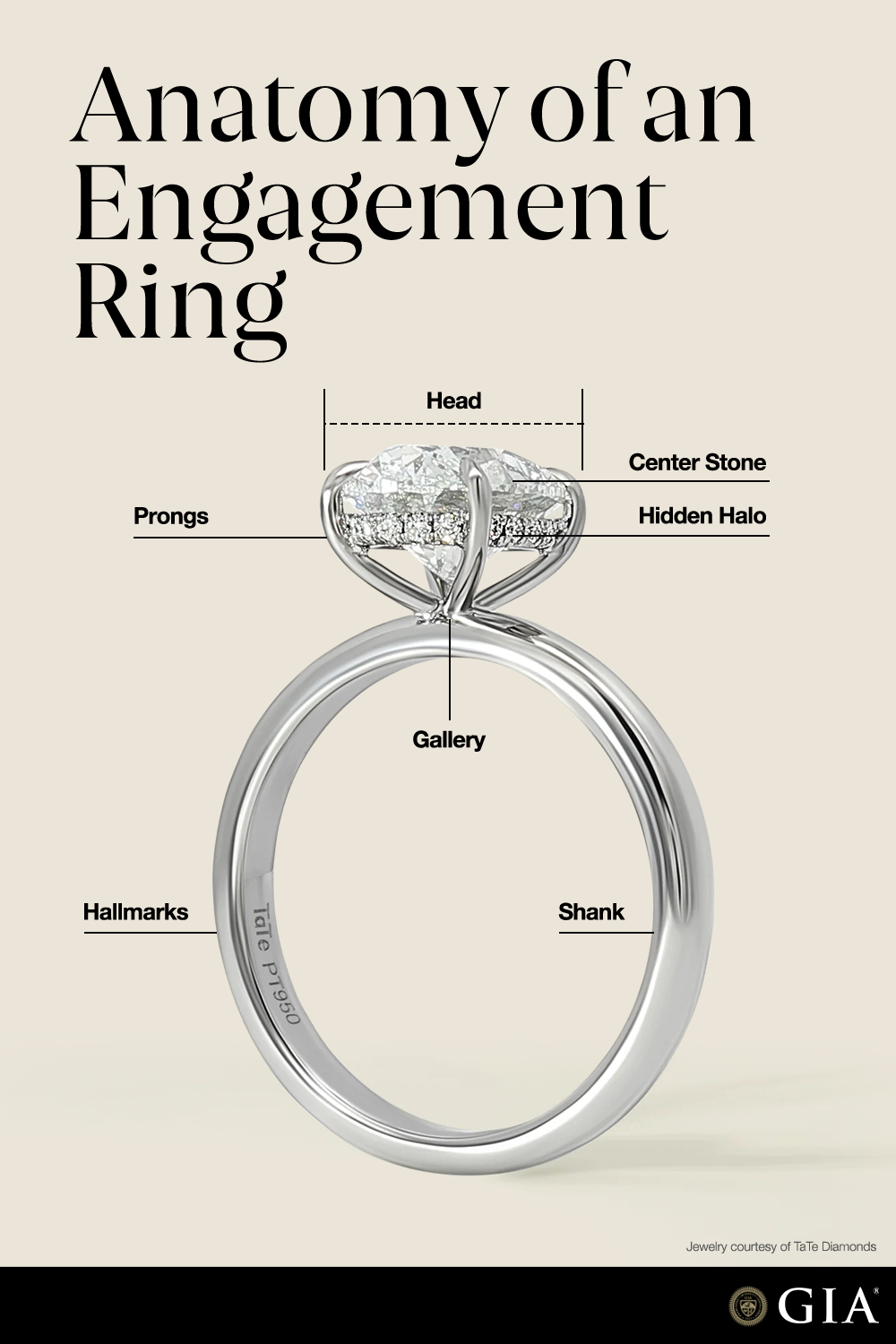
A ring setting refers to the metal mounting of a ring. It includes the parts that hold the gemstone in place as well as the band that wraps around the finger.
A typical ring setting has three main components:
- Head – The top portion of the setting that holds the gemstone in place. It includes the structure that secures the stone, such as prongs or a bezel.
- Shoulders – The areas on either side of the head where the band rises or transitions toward the gemstone.
- Shank – The circular part of the ring that wraps around the finger (commonly called the band).
While a ring setting includes both the stone-holding structure and the band, this guide focuses mainly on the head, where the gemstone is secured. The design of the head affects how the stone looks, how much light enters it, and how well it is protected during everyday wear. The shank also plays an important role in the ring’s overall appearance and comfort, so it’s worth exploring different shank styles when buying or designing a ring.
Types of Engagement Ring Settings
Engagement ring settings determine how a gemstone is held in place. Here are some of the most popular engagement ring settings:
Prong Setting
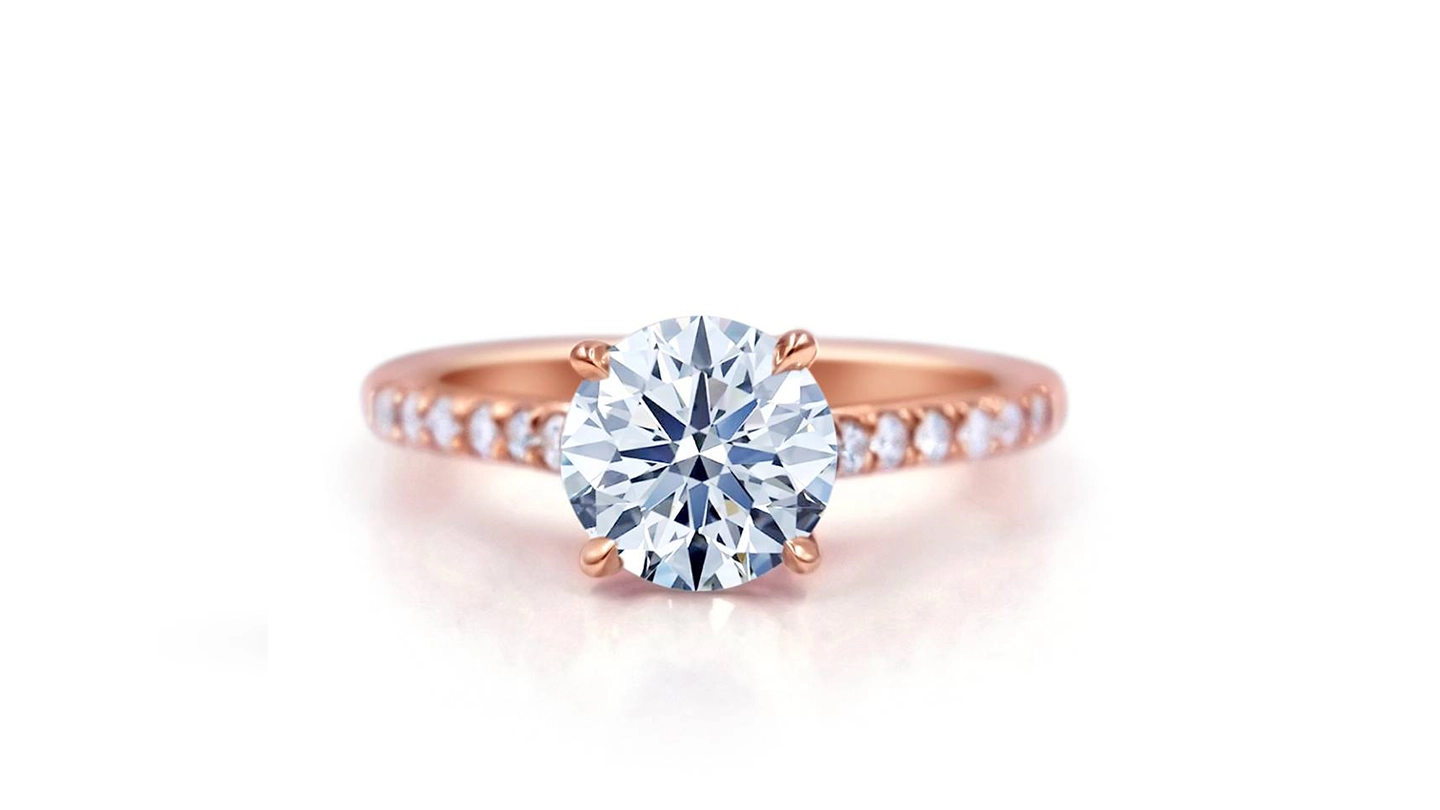
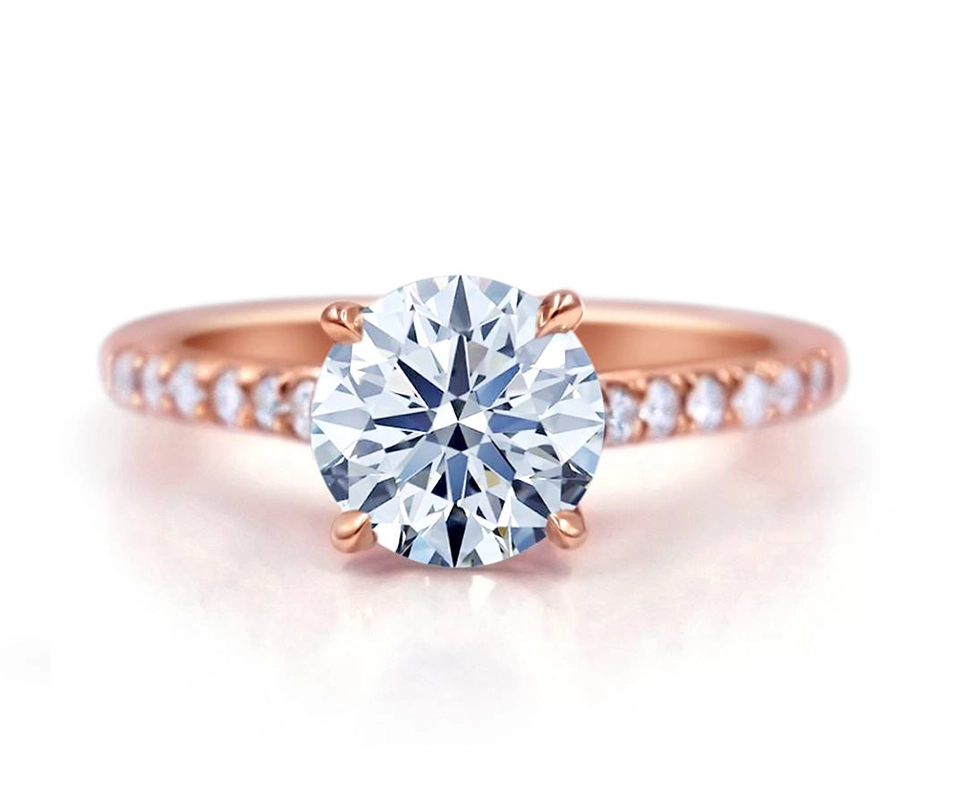
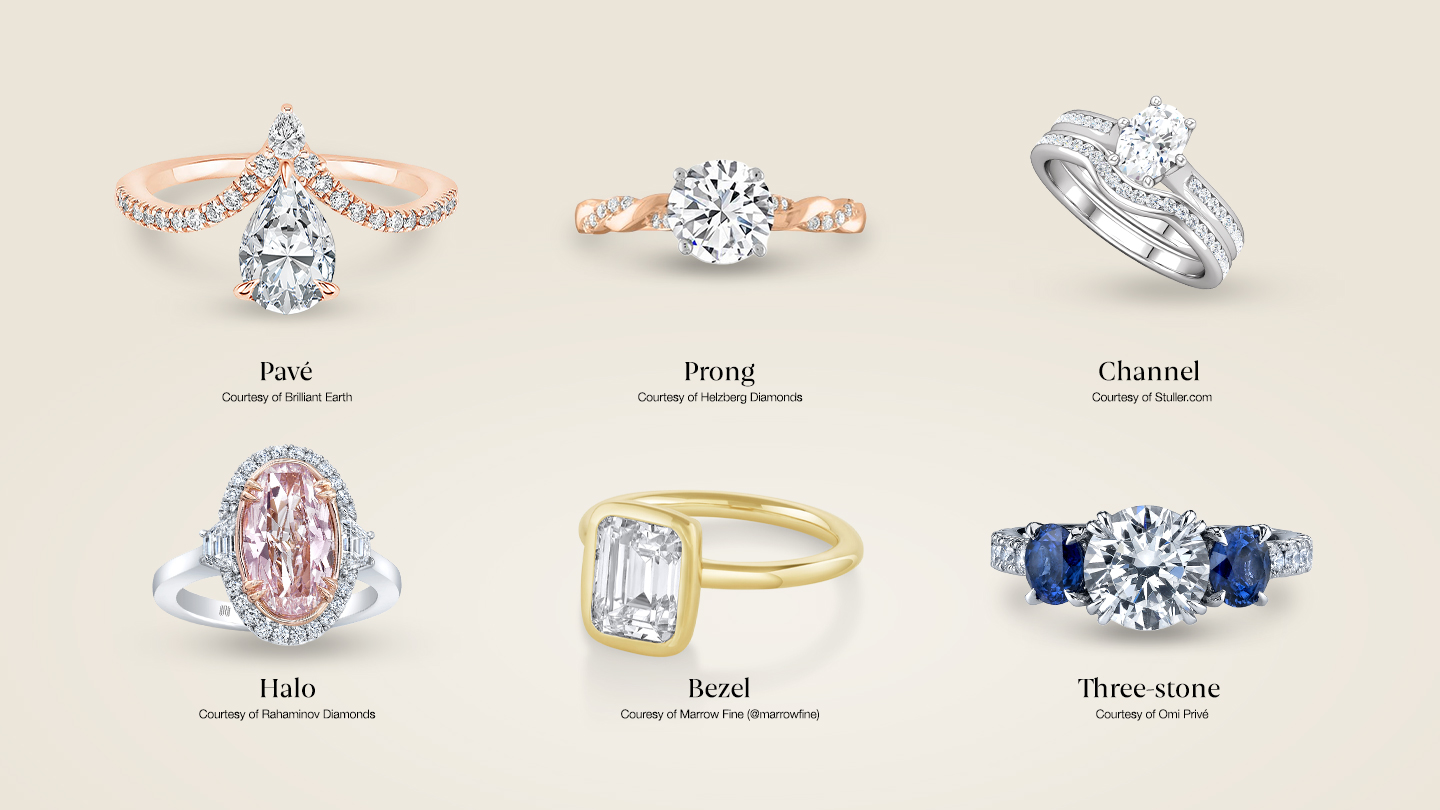
The prong setting is one of the most widely used engagement ring settings because it holds a gemstone securely while allowing maximum light to enter the stone. This open structure enhances brightness and sparkle while keeping most of the gemstone visible.
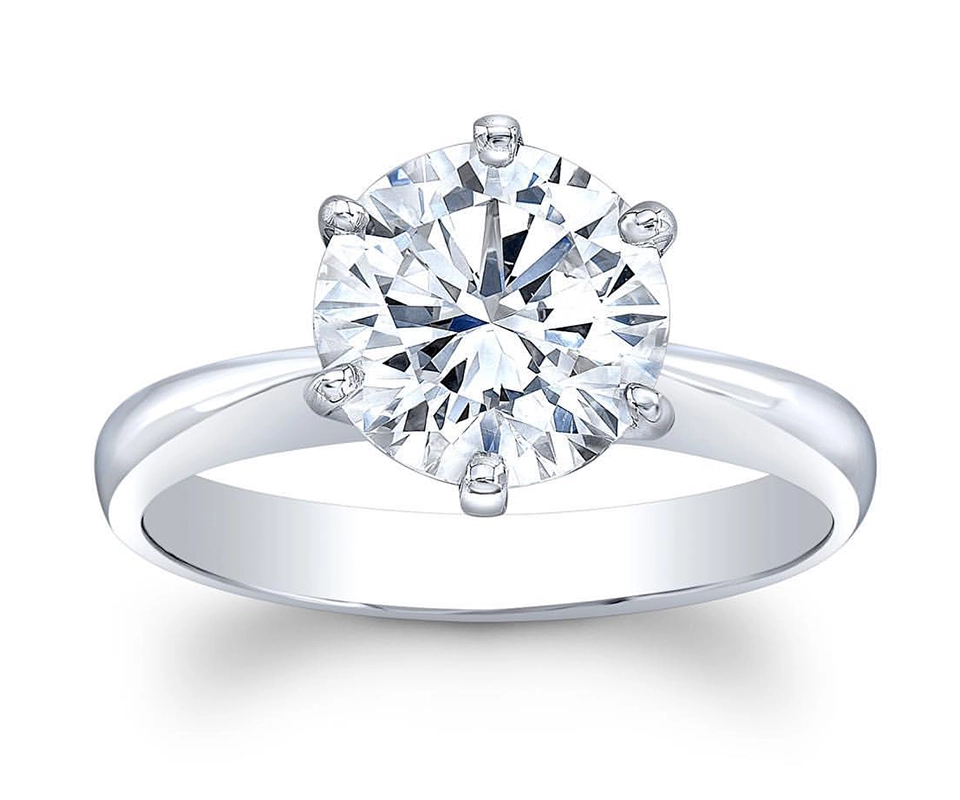
Prongs are narrow strips of metal that extend upward from the base of the setting and bend over the edges of the gemstone to hold it in place. Most round brilliant diamond rings use four or six prongs, depending on the size of the stone. The larger the stone, the more prongs it needs. Fewer prongs expose more of the gemstone, while additional prongs provide extra security.
Because prong settings leave most of the gemstone exposed, they showcase the stone’s shape and brilliance particularly well. However, prongs should be checked occasionally to ensure they remain secure, and their raised edges can sometimes catch on fabrics.
Prong Styles
Prongs come in several shapes and styles, including rounded, claw and V-shaped.
Rounded prongs have smooth, rounded tips and offer a classic look. They occupy the least visual space around the gemstone, allowing the stone to speak for itself with minimal distraction. Rounded prongs are commonly used in timeless designs where the focus remains on the gemstone rather than the setting.
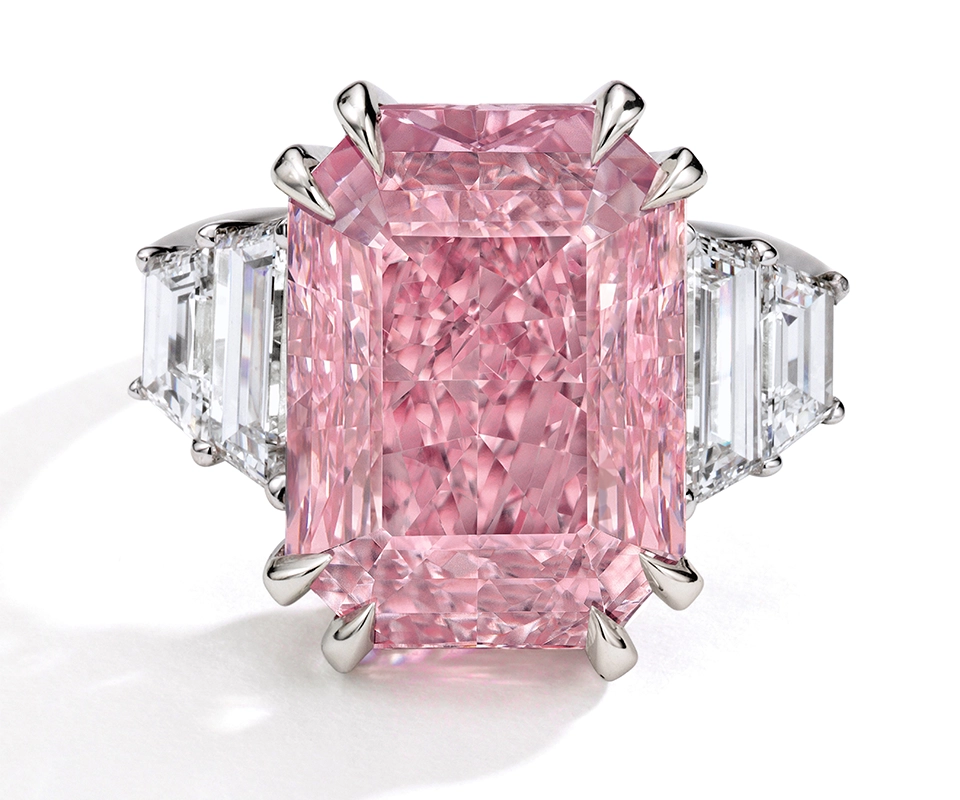
Claw prongs taper to fine points and have a sharper, more defined outline. Inspired by antique jewelry—particularly Georgian- and Victorian-era designs—claw prongs are often used for larger gemstones and high jewelry pieces where they add refinement, edge and drama. Because claw prongs are visually prominent, they work best with gemstones that can hold their own as a focal point.
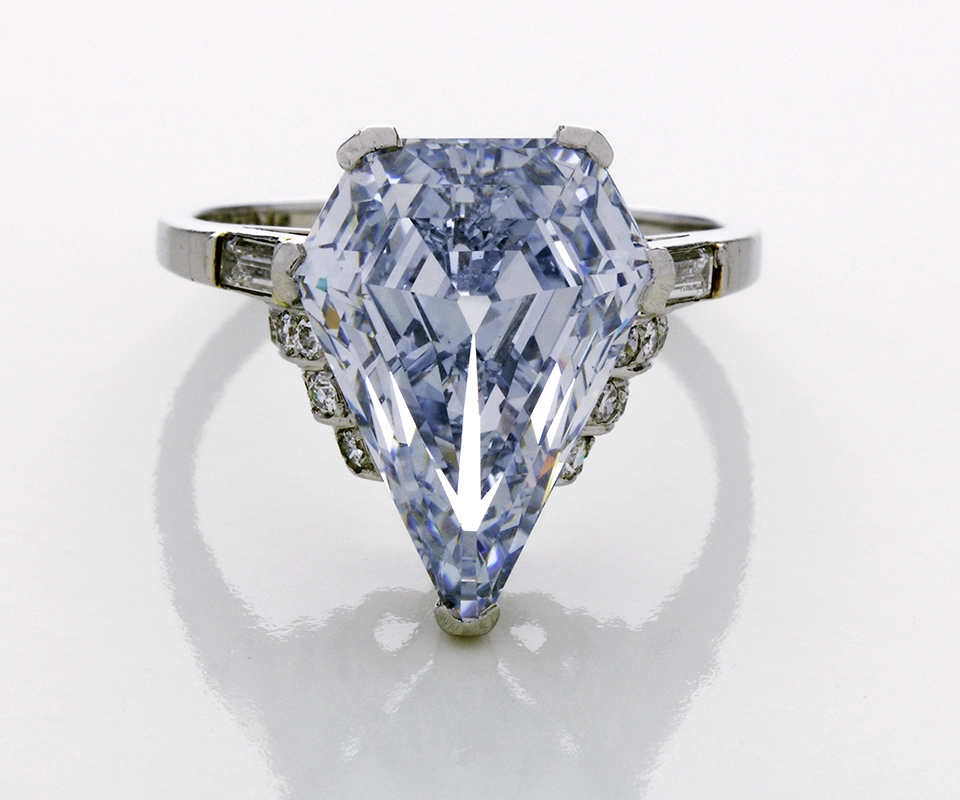
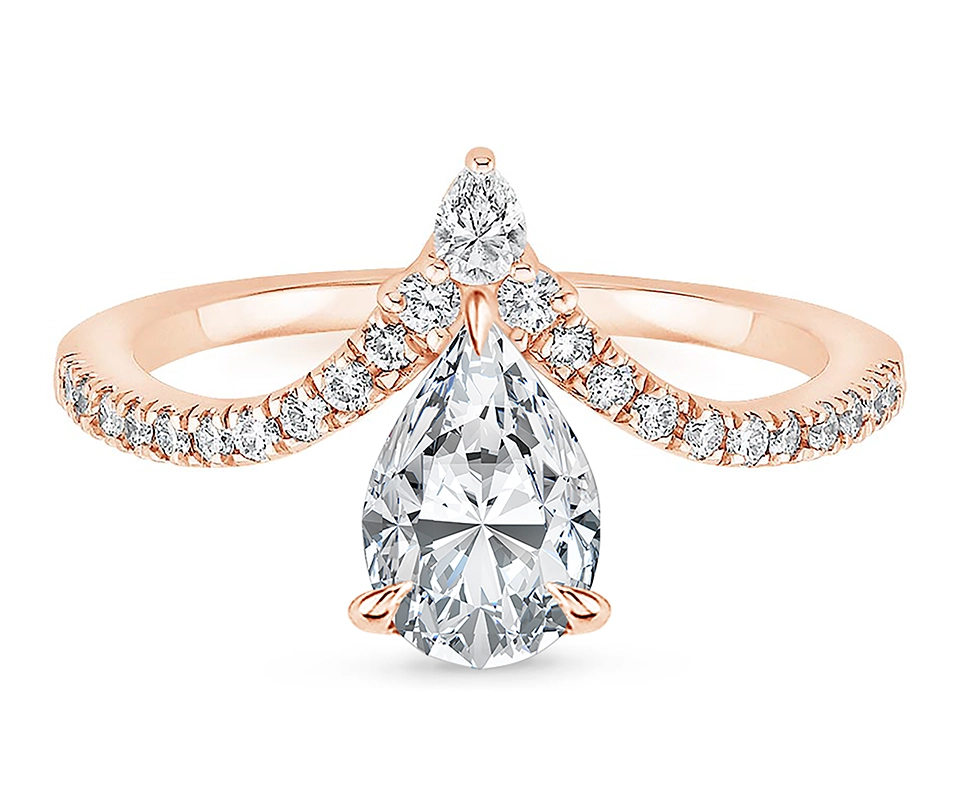
V-shaped prongs are designed to protect pointed corners and are commonly used for shapes such as heart, princess, pear and marquise cuts. By wrapping around vulnerable points, V-prongs help reduce the risk of chipping while keeping the gemstone secure.
Bezel Setting
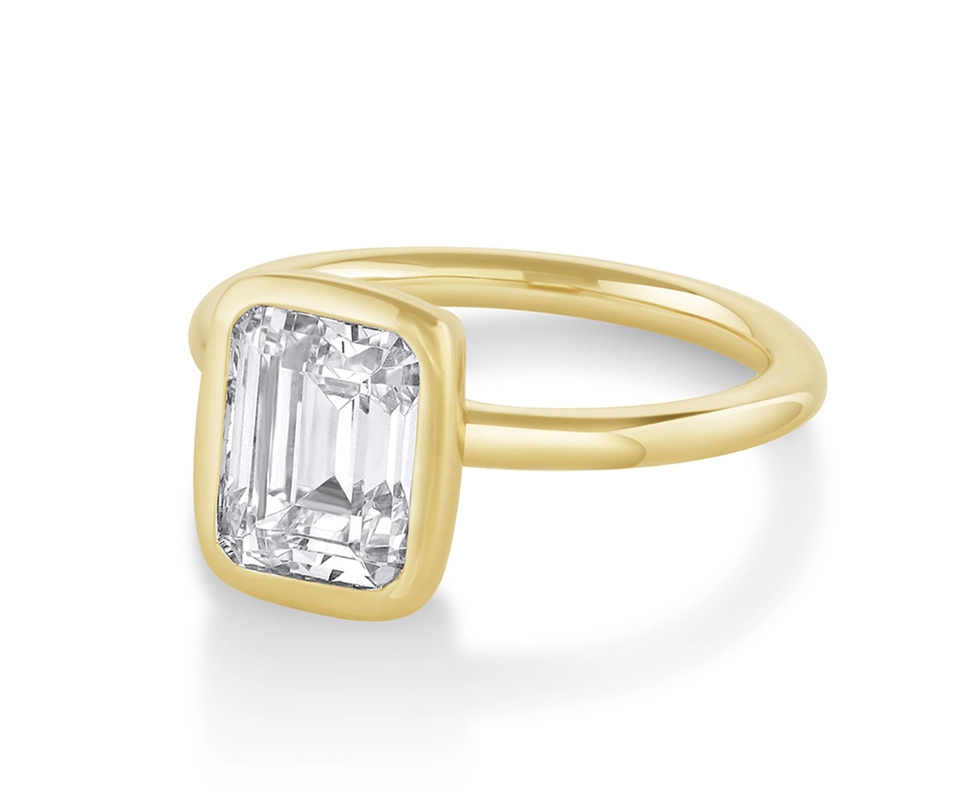
The bezel setting secures a gemstone with a thin rim of metal that surrounds the stone’s edge and holds it firmly in place. The metal rises from the base of the setting and wraps around the gemstone’s girdle, creating a smooth, protective border.
In a full bezel setting, the metal completely encircles the gemstone’s edge for maximum protection. A partial bezel setting leaves sections of the stone exposed while still providing added security. Partial bezels are often used in contemporary designs because they balance visibility and protection.
Because the stone is protected around its perimeter, bezel settings offer excellent resistance to chips and everyday wear. The smooth edges are less likely to catch on clothing or gloves, making bezel settings a practical choice for people who work with their hands, such as nurses, or anyone with an active lifestyle.
Compared with prong settings, bezel settings cover more of the gemstone’s edge and allow slightly less light to enter the stone. However, they offer a clean, modern look that highlights the outline of the gemstone. Their combination of durability and streamlined design makes bezel settings a popular choice for everyday rings.
Flush Setting
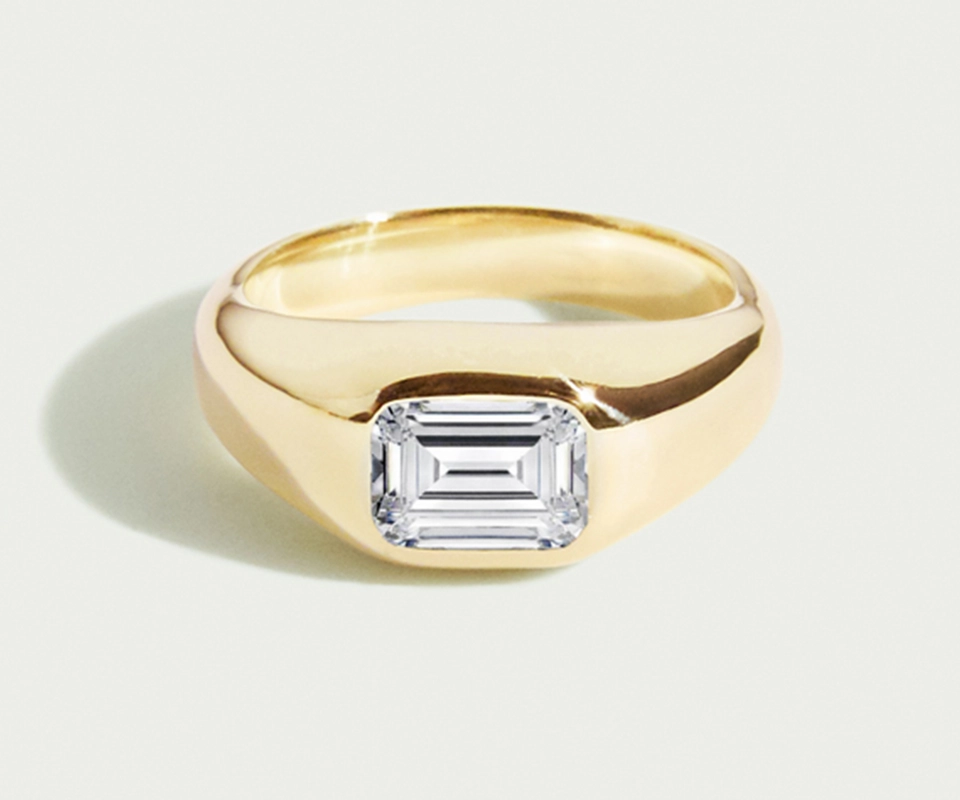
The flush setting secures a gemstone by setting it directly into the metal so that the top of the stone sits level with the surface of the band. The metal is shaped tightly around the gemstone, creating a smooth, low-profile finish.
Unlike a bezel setting, which surrounds the gemstone with a raised metal rim, a flush setting embeds the stone within the band itself. Because the gemstone sits inside the metal band, flush-set rings usually require wider and thicker shanks to safely accommodate the size and depth of the stone. As a result, flush settings often use more metal and have a more substantial appearance than raised settings.
The stone’s low profile makes flush settings highly durable and unlikely to catch on clothing or gloves, making them a practical choice for people who work with their hands or prefer a ring that sits close to the finger. Flush settings allow less light to enter the stone than bezel or prong settings, however, which can result in somewhat less brightness and sparkle.
Flush settings are often seen in signet-style rings and wide or “chubby” bands, where the additional metal provides both protection and a bold, streamlined look.
Channel Setting
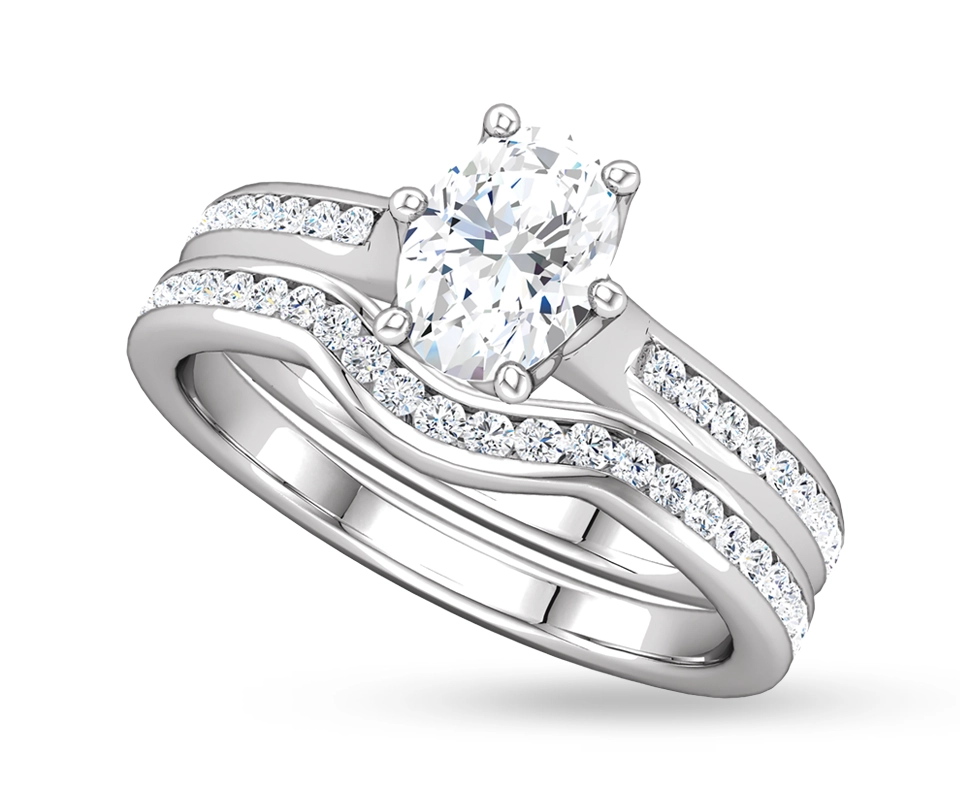
The channel setting secures a row of gemstones within a narrow groove in the metal, so that the stones sit between two parallel metal walls. The gemstones are set side by side with little or no space between them, creating a smooth line of continuous sparkle.
Channel settings are commonly used for wedding bands and accent stones in engagement rings, where they add brilliance without competing with the center stone. Because the stones are protected by the surrounding metal, channel settings are durable and well-suited for everyday wear.
Channel-set rings can be difficult to resize, however, especially if the stones extend far around the band.
Compared with prong-set accent stones, channel-set stones are less exposed and less likely to catch on clothing. Their clean lines and structured appearance give channel settings a polished, contemporary look.
Tension Setting
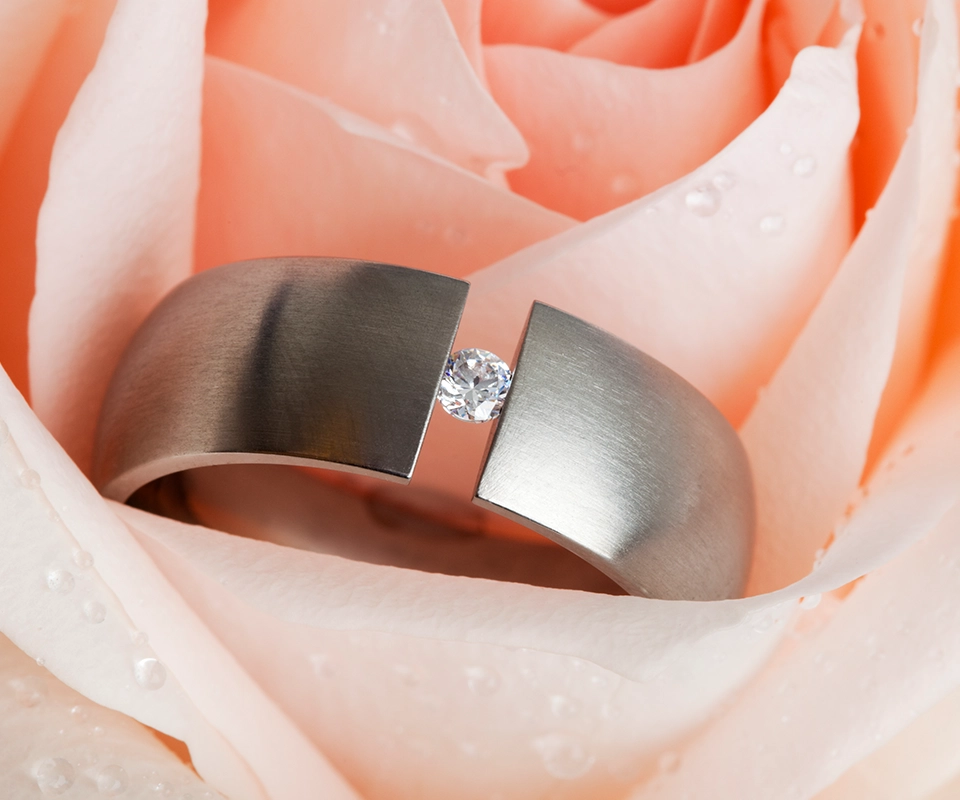
The tension setting suspends a gemstone between the open ends of a metal band, using carefully engineered pressure to hold the stone firmly in place. This design creates the striking illusion that the gemstone is floating.
Tension settings are known for their clean, modern appearance and architectural design. Because much of the gemstone remains exposed, this setting allows plenty of light to enter the stone and clearly showcases the stone’s shape.
Tension settings are most often used with harder gemstones such as diamonds and sapphires, which are better suited to the pressure required to hold the stone securely. The open structure leaves the gemstone more exposed than in bezel or channel settings, so careful wear is recommended. A hard blow can potentially shift or loosen the stone.
Another consideration is that tension-set rings can be very difficult—and sometimes impossible—to resize.
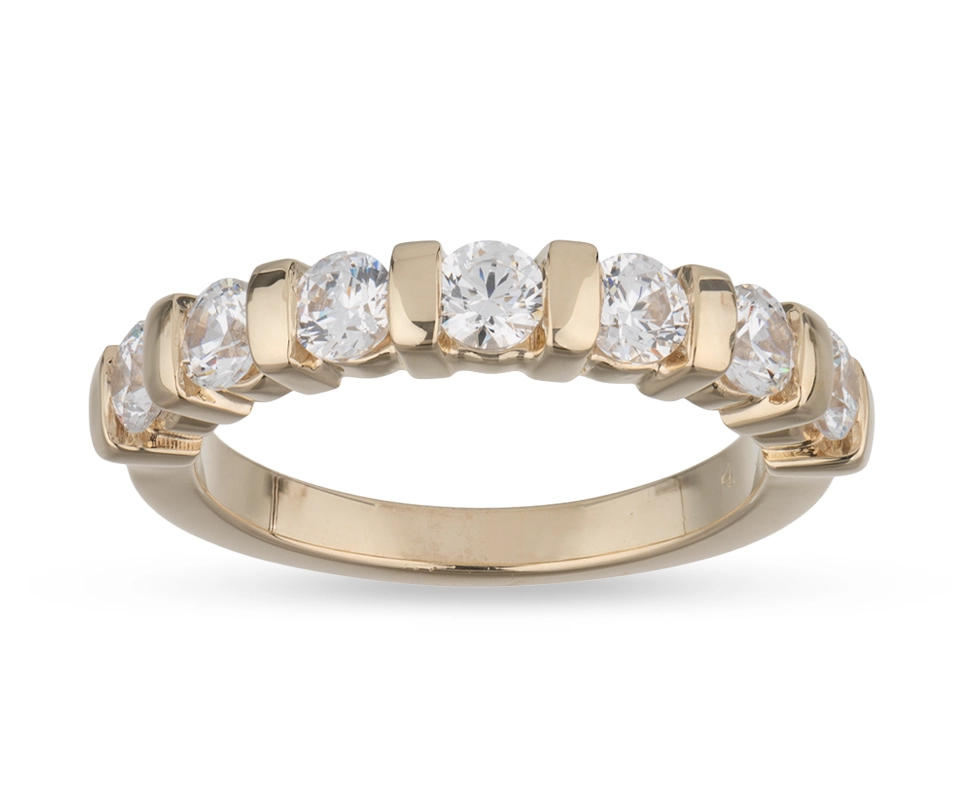
Bar Setting
The bar setting secures gemstones between vertical metal bars that rise from the band. Bar settings are commonly used for three-stone rings and wedding bands. This design allows light to enter from the sides of the diamond while clearly revealing the shape of each gemstone.
Compared with channel settings, bar-set stones are more exposed and may be slightly more vulnerable to impact or chipping, although the metal bars still provide good security, especially if they extend higher than the diameter of the diamond.
Bar settings offer a balance between the protection of channel settings and the openness of prong settings. Like channel-set rings, bar-set rings can be more difficult to resize, especially if the stones extend far around the band.
Basket Setting
The basket setting is a type of prong setting in which horizontal supports connect the prongs, forming a basket-like structure beneath the gemstone. While not visible from the top, this framework helps stabilize the prongs and provides additional support for the stone.
Basket settings are often used for larger or deeper gemstones, where extra structural support is needed to keep the stone secure. The reinforced design helps prevent the prongs from bending or spreading over time.
Basket settings are a good choice for those who like the open look of a prong setting but want additional strength and stability.
Engagement Ring Setting Styles
While ring settings describe how a gemstone is secured, setting styles refer to the overall arrangement of the stones in a ring. Popular styles, such as solitaire, halo and three-stone designs, create very different looks even when the same type of setting is used.
The following setting styles are among the most popular choices for engagement rings.
Solitaire Setting Style
The solitaire setting style features a single center gemstone with little or no additional decoration. The simplicity of the design places full visual emphasis on the stone, allowing its shape, size and quality to stand out.
Solitaire rings are often paired with prong or bezel settings, but the style can be adapted to many different mounting types.
Solitaire setting styles are valued for their clean, timeless appearance and versatility. Their simple design pairs easily with a wide range of wedding bands and suits both traditional and contemporary tastes.
Halo Setting Style
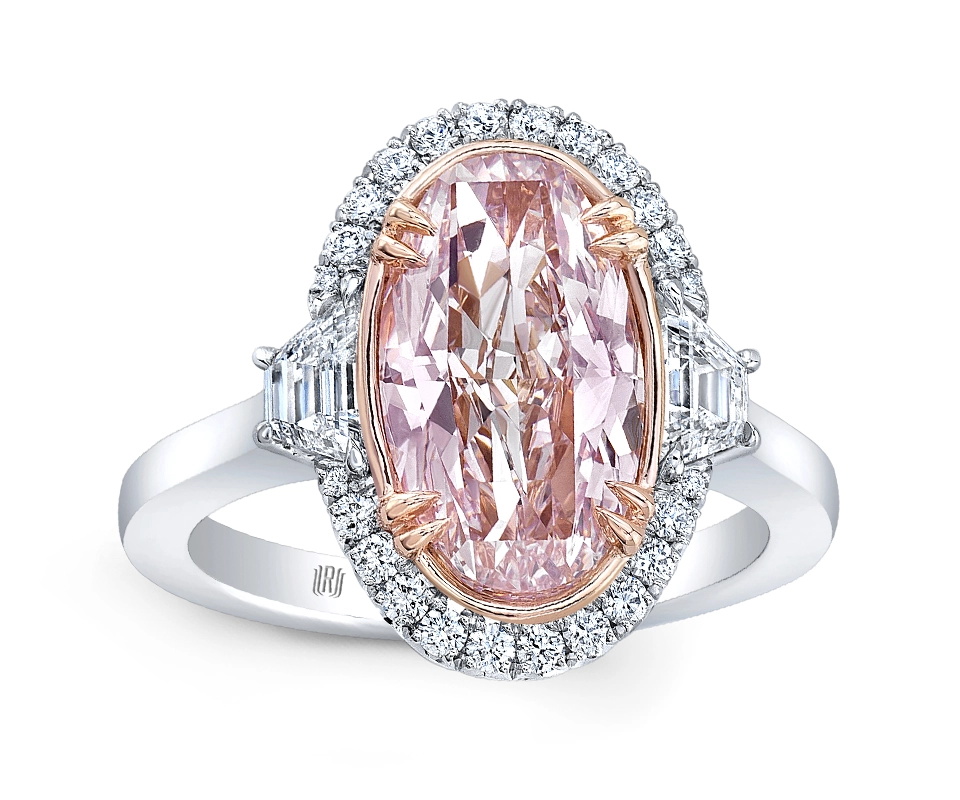
The halo setting style features a prong or bezel set center gemstone surrounded by a ring of smaller accent stones. This arrangement adds extra sparkle and creates a visual frame around the center stone, which can make it appear larger.
In addition to colorless diamonds, halos can incorporate colored gemstones or fancy-color diamonds. A halo of pink diamonds, sapphires or other colored stones can intensify the perceived color of a center gemstone or contrast with it to create a bold, dramatic effect. Designers sometimes use color strategically to enhance a fancy-color diamond or to highlight the shape of the center stone.
Halo designs vary in scale. Some feature a subtle, delicate frame, while others use a larger halo that significantly increases the ring’s overall footprint. In certain designs, the halo itself can form decorative outlines—including heart-shaped or floral silhouettes—adding a more expressive or symbolic element to the ring.
Because halo rings contain many small stones, they may require more maintenance to ensure the stones remain secure and clean.
Three-Stone Setting Style
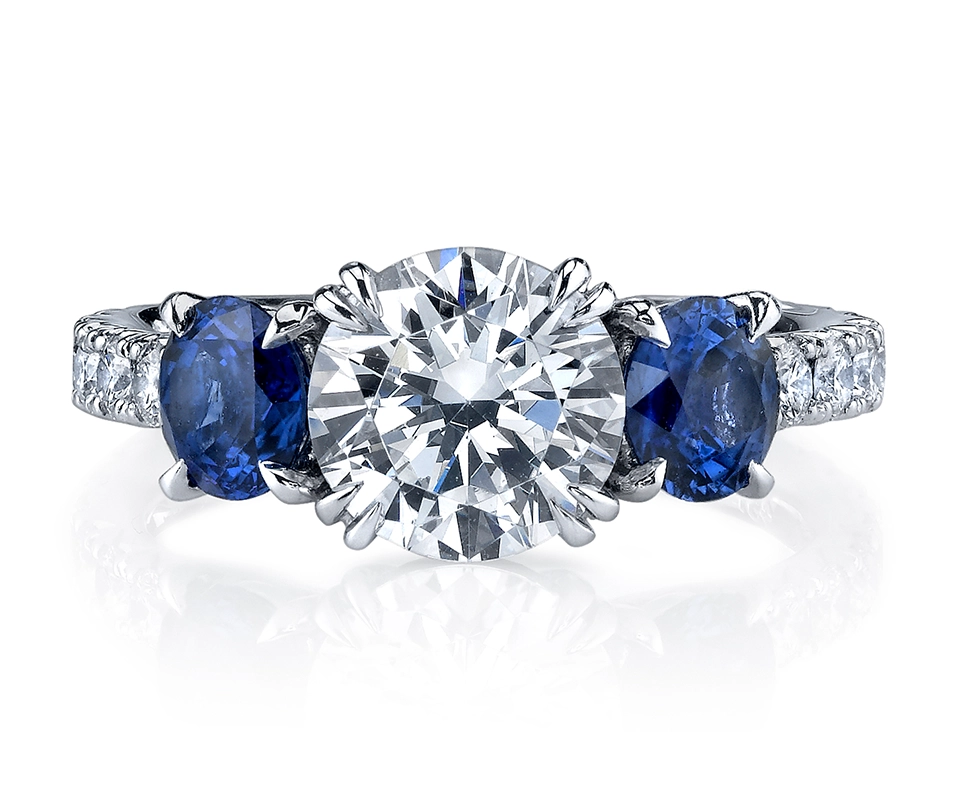
The three-stone setting style features a center gemstone flanked by two smaller side stones. The side stones may match the center stone in gem type and cut style to create a cohesive look and add visual width, or they may be different shapes or colors that complement or contrast with the center stone.
If you are choosing an all-diamond three-stone ring, the color grades of the side stones should typically be within about two color grades of the center stone. Side stones that are significantly more colorless can make the center diamond appear more yellow by comparison, while noticeably warmer side stones can reduce the overall impression of colorlessness.
Three-stone rings are said to symbolize a couple’s past, present and future. The balanced appearance of this design makes it popular in both traditional and contemporary rings.
Toi et Moi Setting Style
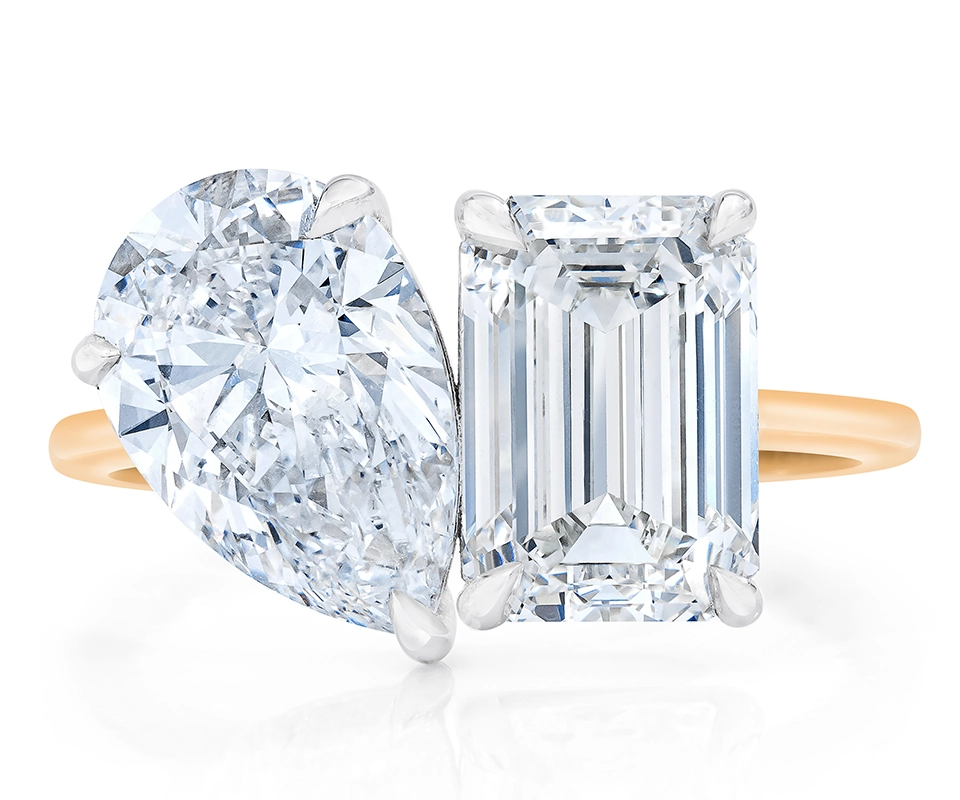
The toi et moi setting style features two gemstones set side by side, typically symbolizing two souls coming together. The name toi et moi, meaning “you and me” in French, reflects the romantic meaning associated with this design. The style was famously popularized in the early 19th century when Napoleon Bonaparte gave his first wife Joséphine a toi et moi ring set with a pear-shaped diamond and a pear-shaped sapphire.
In a toi et moi ring, the two stones may match or contrast in shape, size or color, creating a personalized and distinctive look. Toi et moi rings are often set with prongs or bezels and can incorporate diamonds, colored gemstones or a combination of both.
This expressive style remains popular in both antique-inspired and contemporary engagement rings.
Pavé Setting
The pavé setting features small gemstones set closely together to create a continuous surface of sparkle. The stones are typically secured with tiny beads or prongs of metal, allowing the band or halo to appear covered with diamonds or other gemstones.
Pavé settings are commonly used along the band or in halo designs around a center stone, where they add extra brilliance and a delicate, decorative effect.
Rings with pavé settings may require occasional maintenance to ensure the stones remain secure. Pavé-set bands can also be more difficult to resize, since adjusting the ring may disturb the small stones.
Cathedral Setting Style
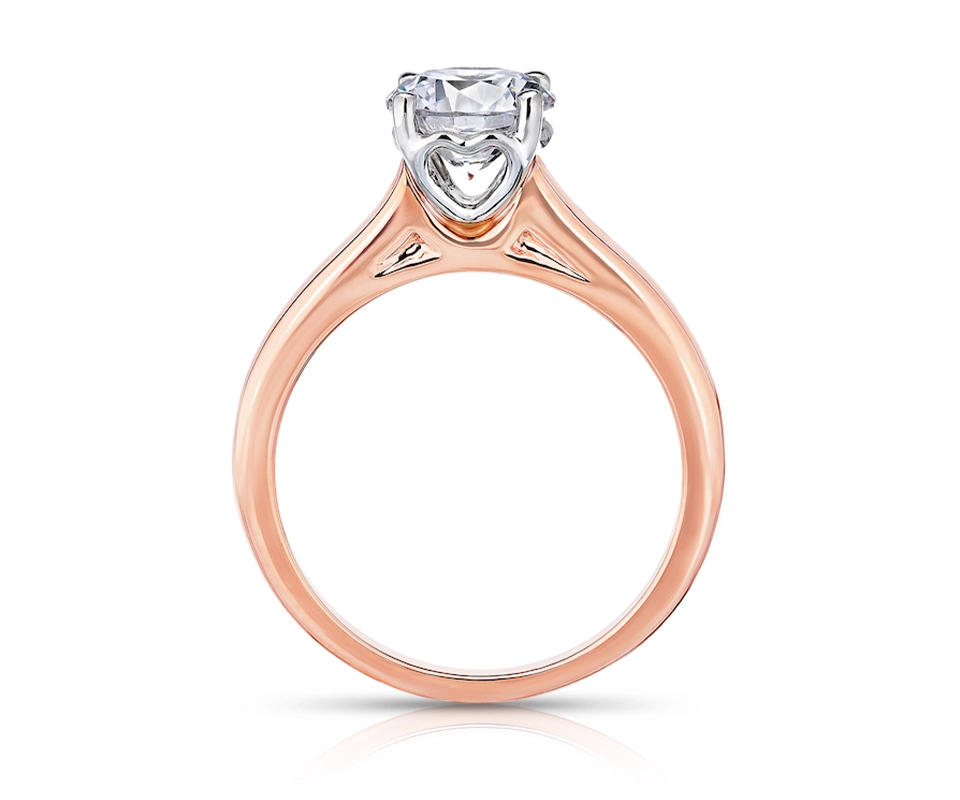
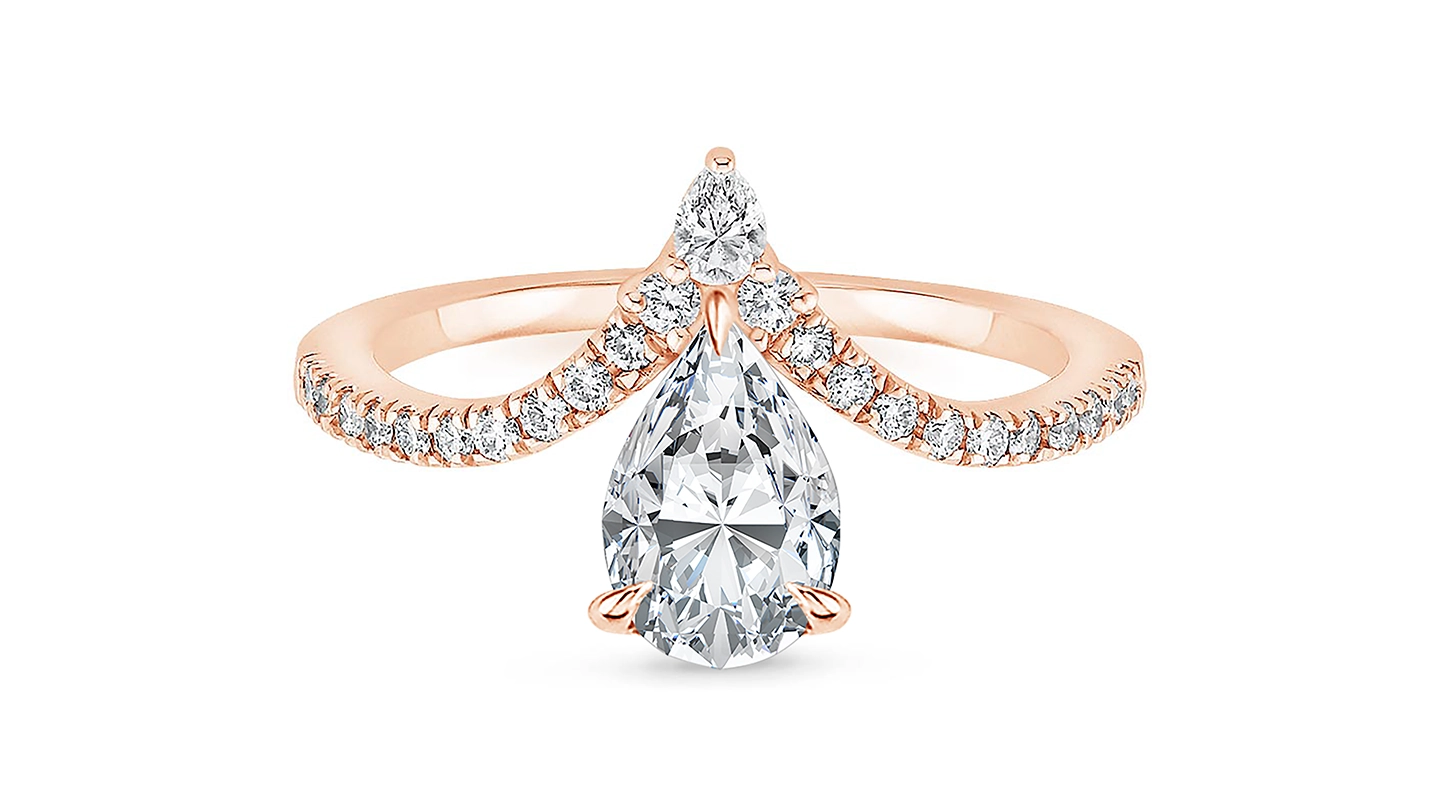
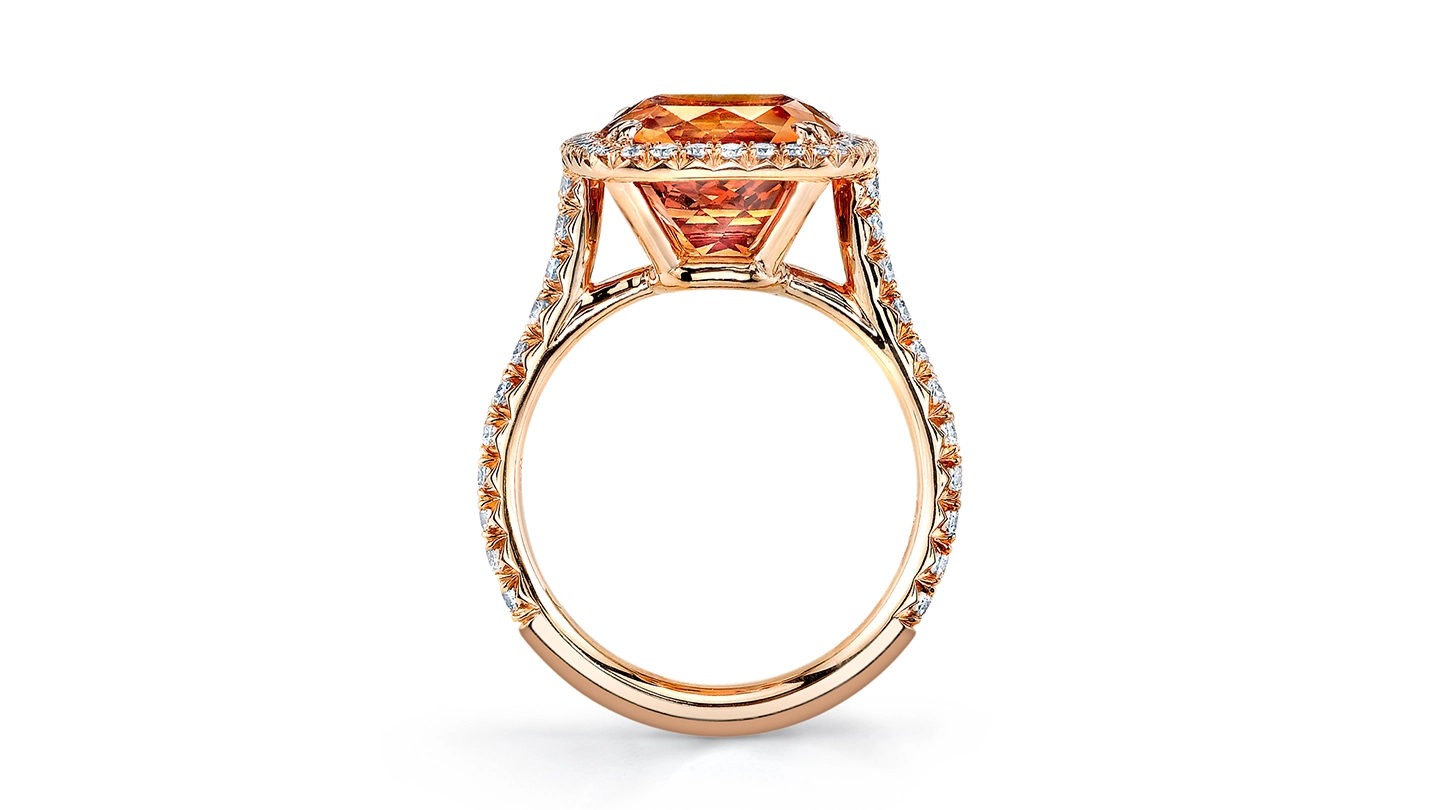
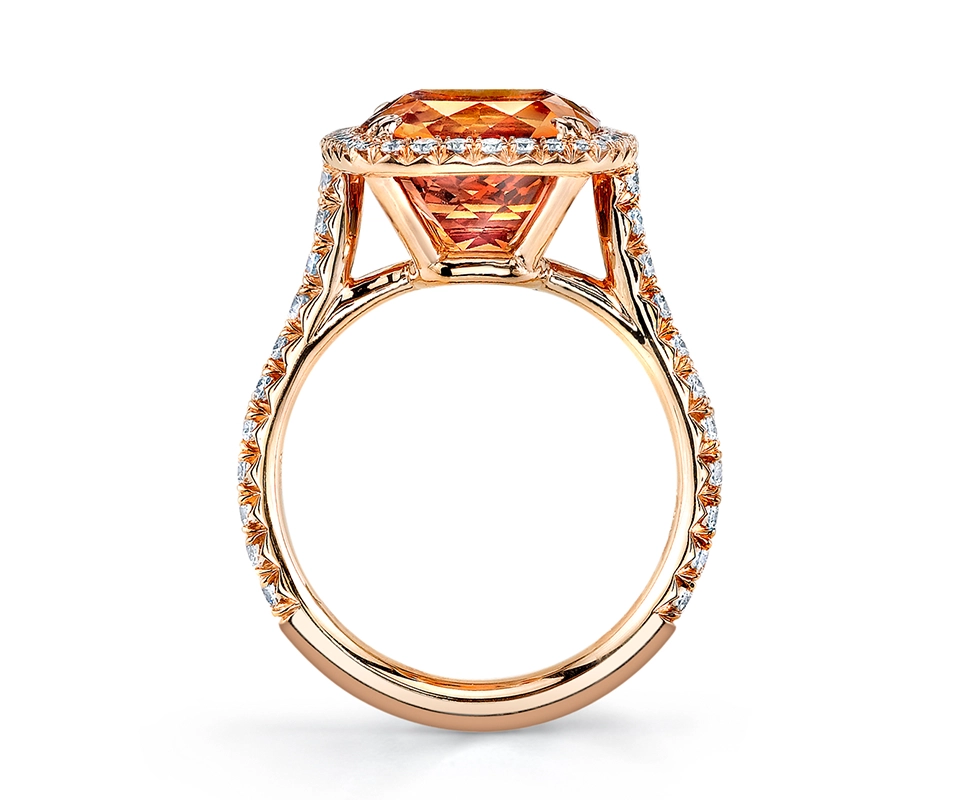
The cathedral setting style features arches of metal that rise from the shank to support the center setting. These upward curves or “shoulders” frame the gemstone and raise it above the band, creating a more prominent and structured appearance.
Cathedral settings are popular because they emphasize the center stone while adding visual height and elegance. The elevated design allows the gemstone to stand out and can make the ring appear more substantial while maintaining a classic look.
The open space beneath the center stone can also accommodate decorative details or hidden design elements, adding interest when the ring is viewed from the side.
Because cathedral settings often raise the center stone higher above the band, they tend to create a more dramatic appearance. The elevated structure may also be more likely to catch on clothing or objects, although the arched supports can provide additional stability for the center setting.
Cathedral styles are a popular choice for those who want a design that feels both refined and distinctive while keeping the focus on the center gemstone.
Cluster Setting Style
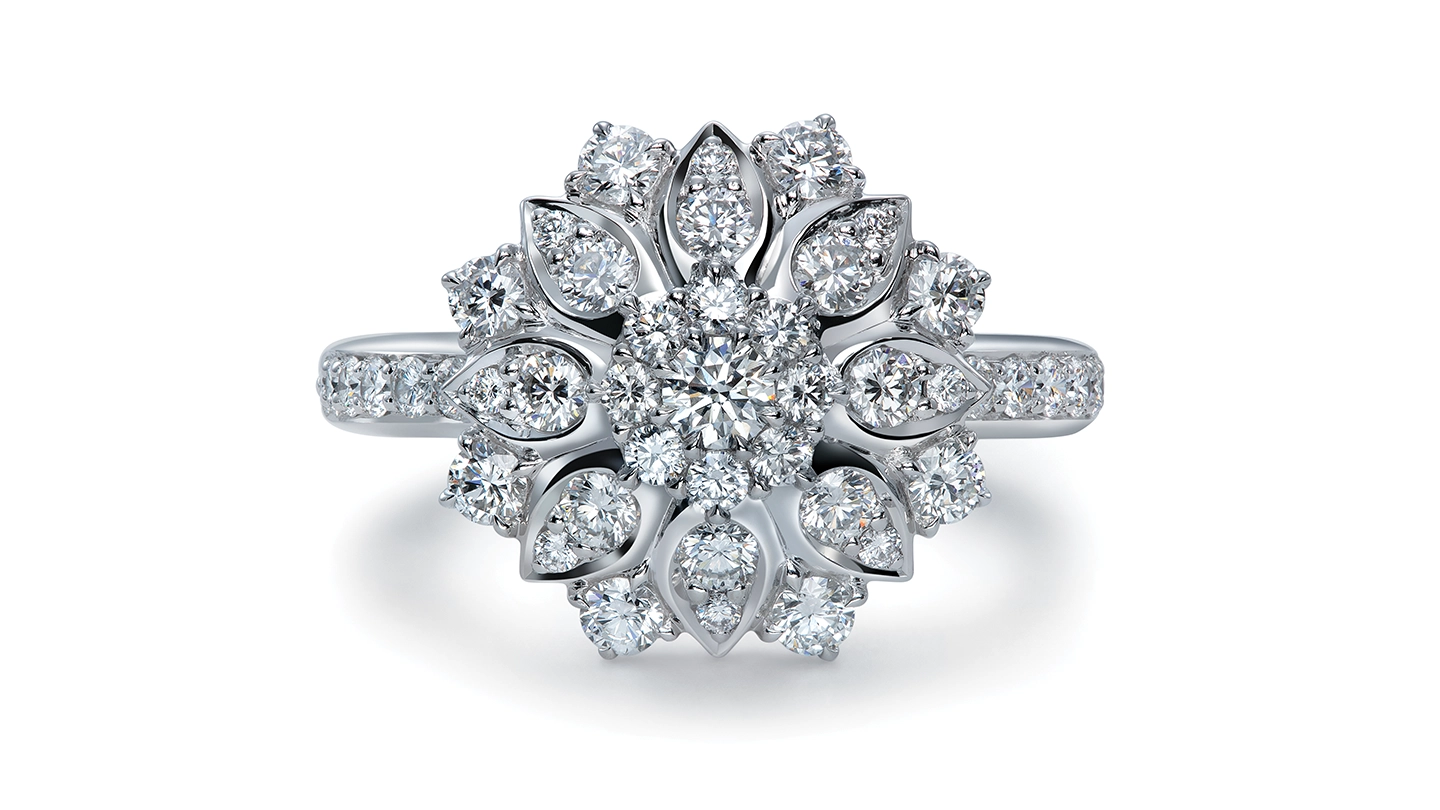
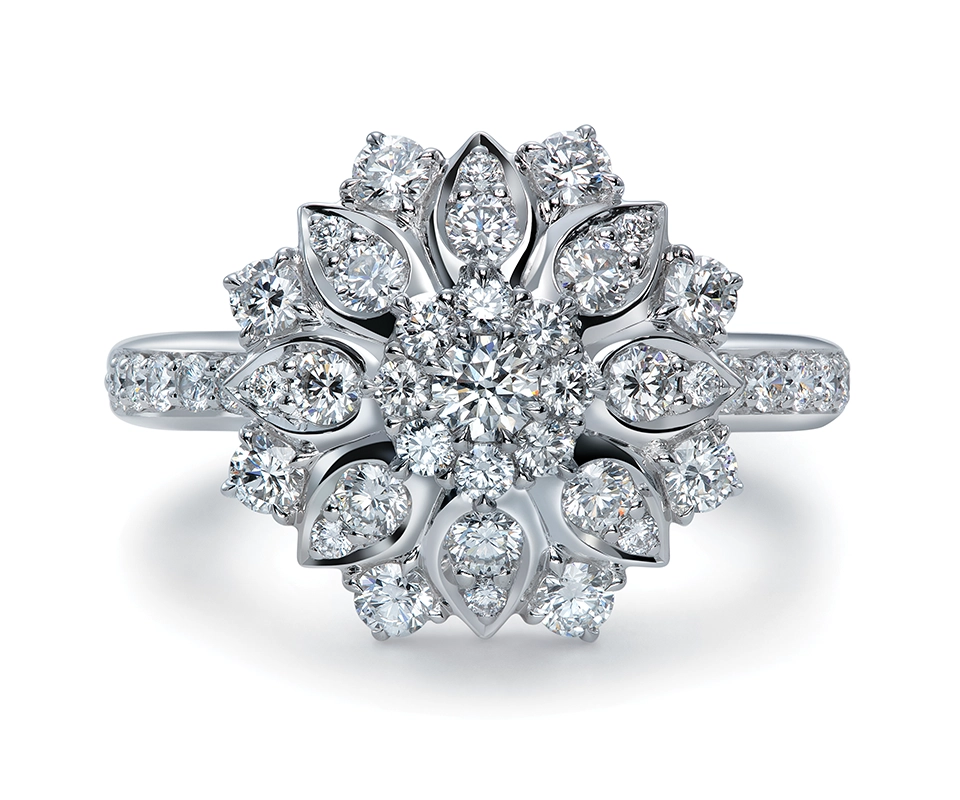
The cluster style features multiple small gemstones grouped together to create a single design. The stones are arranged to form a larger visual effect, sometimes resembling a single gemstone or creating decorative shapes such as flowers or geometric patterns.
Cluster designs allow smaller stones to produce a bold overall appearance and offer a wide range of creative possibilities. This style is often chosen for its distinctive look and ability to combine different stone shapes, sizes or colors within one ring while maintaining a relatively affordable price point.
Trellis Setting Style
The trellis style features prongs that cross over one another along the sides of the gemstone, forming an interwoven, X-shaped or lattice-like pattern that is most visible from the side of the ring. This structure supports the gemstone from below while maintaining the open appearance of a traditional prong setting.
Trellis settings can be used for a single center stone and are also popular for rows of gemstones of similar size and shape, where the interwoven prongs create a continuous, flowing design.
Because trellis settings include overlapping metalwork and open spaces, they may require more frequent cleaning to keep the design looking its best. Trellis styles are a good choice for those who want a classic setting with subtle architectural detail.
Considerations For Choosing An Engagement Ring Setting
Daily Wear and Durability
When choosing a ring setting, consider how well it will hold up with everyday wear. Some typically require less upkeep, making them good choices for active lifestyles or for those who prefer minimal maintenance.
Over time, most ring settings will need occasional care. Prongs may require re-tipping—the process of rebuilding worn prong tips by adding metal—to keep gemstones securely in place. Stones may also need tightening, which jewelers accomplish by adjusting prongs, beads or metal walls depending on the type of setting. Metal surfaces may also benefit from periodic polishing or recoating to restore their finish.
More open or delicate designs—such as prong and pavé settings—usually benefit from periodic inspection to ensure the stones remain secure.
The durability of a ring depends not only on the setting style, but also on the quality of its construction. GIA-trained Graduate Jewelers are trained to identify and correct prongs that may catch or snag on clothing or hair, helping ensure both security and comfort.
Well-executed settings—particularly prongs—should be properly shaped, finished, and positioned to minimize snagging while securely holding the gemstone. While the design of a ring plays a key role in its durability, the skill of the jeweler and the quality standards of the store are equally important.
In the end, a ring’s longevity is not determined by design alone. The combination of thoughtful design, precise craftsmanship, and high-quality finishing is what allows a ring to be worn comfortably and last for generations.
Cleaning And Maintenance
Regular cleaning helps keep an engagement ring looking its best. Settings with many small details—such as halo or pavé designs—can collect dirt more easily and may require more frequent cleaning than simpler styles.
Most rings can be cleaned at home using warm water, mild soap and a soft brush. Periodic professional cleaning is also recommended, especially for rings with intricate settings.
Ultrasonic cleaners can sometimes dislodge stones that are already loose, so rings should be carefully inspected to ensure all stones are secure before undergoing ultrasonic cleaning.
Set Yourself Up for Engagement Ring Success
Working with a GIA-trained jeweler can provide valuable guidance as you compare designs and evaluate practical considerations such as durability, appearance and maintenance. An experienced professional can help you explore a range of options—from classic designs to custom styles—and ensure your ring is both beautiful and well-constructed.
Choosing the right diamond is just as important as selecting the setting. A GIA Diamond Report verifies the diamond’s identity and quality, so you can feel confident in the beauty and authenticity of the gem at the heart of your engagement ring.
With the right knowledge and expert guidance, you can choose a ring you’ll treasure for years to come.