How Do Yellow Diamonds Form?
Natural Yellow Diamonds
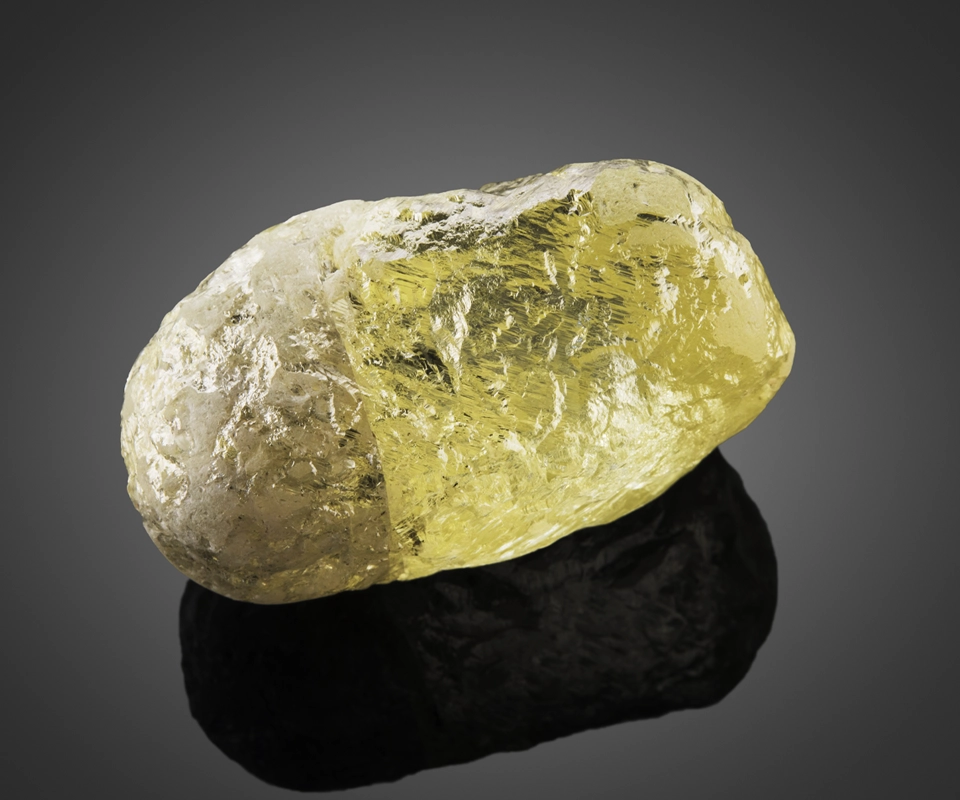
Natural yellow diamonds form deep within the Earth’s mantle, where temperatures exceed 1,000°C (1,800°F) and pressure reaches around 45 to 60 kilobars. Under these extreme conditions, carbon atoms bond in a crystal structure that becomes diamond. These diamonds can acquire yellow coloring if trace amounts of nitrogen enter their crystal lattice during growth, absorbing blue light and allowing yellow color to shine through.
When nitrogen atoms are spread evenly (called isolated nitrogen) inside the crystal, the yellow color appears strong and vibrant, often resulting in fancy yellow stones. When they cluster together (called aggregated nitrogen), the color is softer or lighter—like the pale “Cape” diamonds found in South Africa.
If these diamonds are very pale, they are graded on the D-to-Z color scale rather than considered fancy yellow diamonds. Fancy yellow diamonds, especially those with vibrant, intense color are much rarer and more valuable than pale yellow diamonds.
Treated Yellow Diamonds
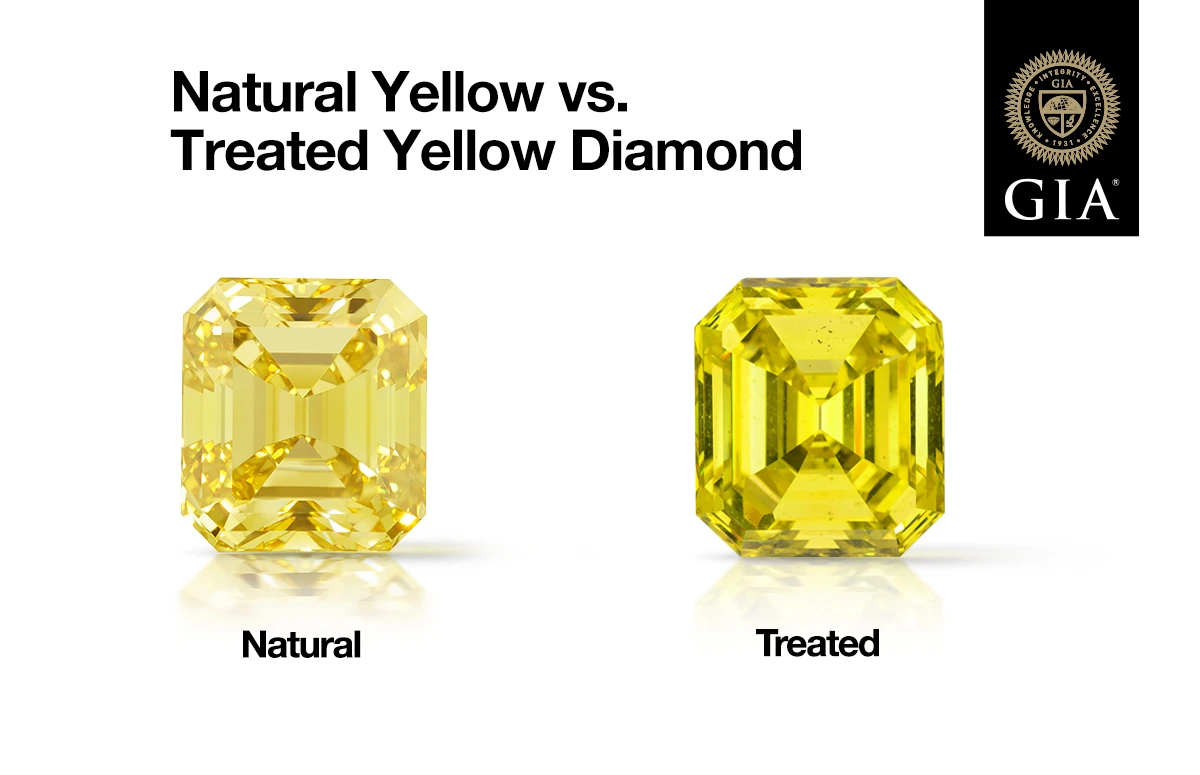
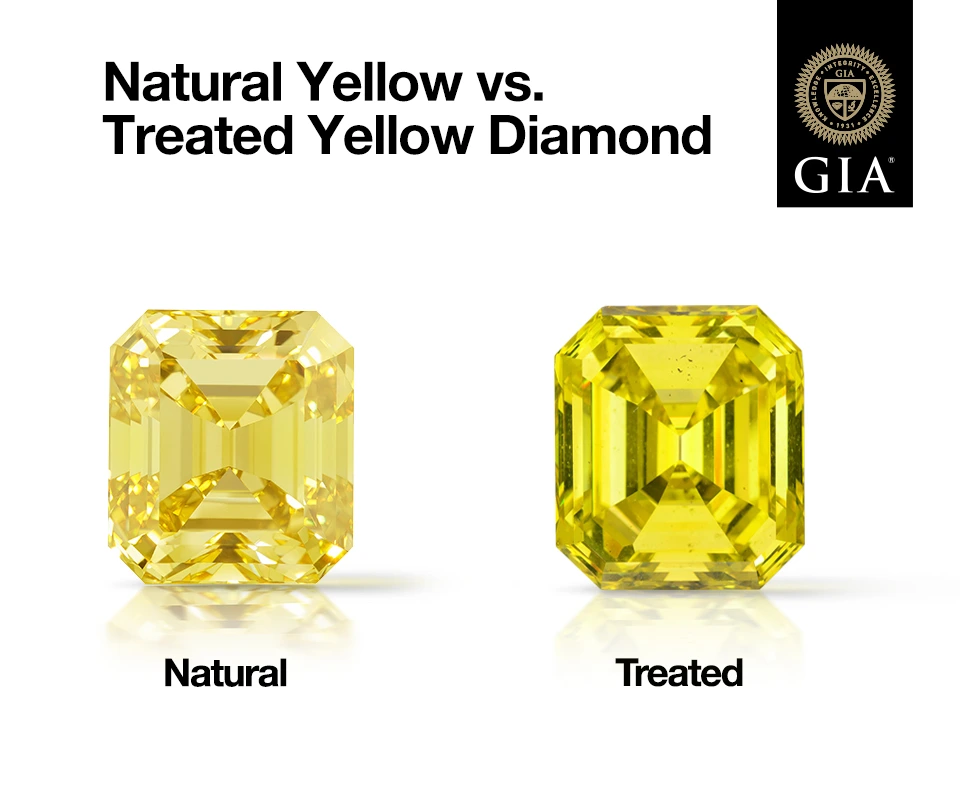
Some natural diamonds can also have their color enhanced or changed through treatment. Techniques such as HPHT (High Pressure, High Temperature), irradiation, annealing and coating can bring out or modify a diamond’s hue.
- HPHT can turn some brownish diamonds yellow, greenish yellow or even green.
- Irradiation can produce blue, green, yellow, brown, black and other colors.
- Annealing, a controlled heating and cooling process, is often combined with irradiation or HPHT to create shades of yellow, orange, pink or red.
- Coatings can also create colors like yellow, pink, blue or violet, but they may wear off over time or be damaged by heat and chemicals.
Diamonds that have been irradiated or annealed can be sensitive to heat, so jewelers should be informed before performing repairs. Coated diamonds should be handled with care and cannot be repolished. Always let your jeweler know if your diamond is treated to ensure proper care.
GIA’s Colored Diamond Grading Reports can be a helpful resource because they clearly indicate whether a diamond’s color is natural or treated.
Laboratory-Grown Yellow Diamonds
Lab-grown yellow diamonds are manufactured using two primary methods: HPHT (High Pressure, High Temperature) and CVD (Chemical Vapor Deposition).
HPHT-grown diamonds form under high pressure and temperature, often resulting in stronger, more saturated yellow color. CVD-grown diamonds are created using the Chemical Vapor Deposition process, where carbon-rich gas is broken down in a chamber and carbon atoms layer onto a diamond seed.
In both methods, nitrogen is introduced during the diamond’s growth to produce a yellow hue. CVD diamonds often appear lighter when first grown but can develop a more even, consistent yellow after post-growth treatments, such as HPHT or annealing.
How Rare Are Fancy Yellow Diamonds?
Natural yellow color diamonds are extremely rare, with only one out of approximately 10,000 carats mined being a natural fancy color diamond. However, out of fancy color diamonds, yellows are the most common, making up around 60% of fancy color diamonds.
If you’re looking for the individuality of a fancy color diamond ring, yellow diamonds are an excellent choice. They offer vibrant color and distinctive character while being the most affordable of all the fancy color diamond varieties.
Where Are Yellow Diamonds Found?
Yellow diamonds are found in several regions worldwide, each with its own geological story.
South Africa is a historic source, famed for its light yellow to yellow “Cape diamonds.” The country has also produced some of the world’s most celebrated fancy yellow diamonds, including the 128.54-carat Tiffany Diamond. South Africa’s Cullinan Mine continues to yield exceptional Fancy Intense and Fancy Vivid Yellow diamonds, prized for their rich color, clarity and impressive size.
Western Australia’s Ellendale Mine gained international recognition for producing more than half of the world’s vivid yellow diamonds before its closure in 2015. The mine’s gems were especially prized by luxury brands for their rich golden hues, exceptional brilliance and consistent color quality.
Canada’s Northwest Territories have also produced occasional fine yellow stones, including a 71.26-carat Fancy Vivid Yellow recovered from the Ekati Mine in 2022.
Other notable yellow diamond producing countries include Sierra Leone, Botswana and Russia. Together, these regions highlight the global diversity of geological conditions that create yellow diamonds of exceptional beauty.
How Are Yellow Diamonds Graded?
Like colorless diamonds, yellow diamonds are evaluated using the 4Cs—color, clarity, cut and carat weight—but color is the most important factor in determining beauty and value.
Color
In the past, jewelers used descriptive terms like butter yellow, lemon or golden to describe diamond color. To bring greater accuracy and consistency to grading, the Gemological Institute of America (GIA) developed the Colored Diamond Color Grading System. This system introduced standardized terminology and precise methods for evaluating fancy-color diamonds—standards that remain the global benchmark today.
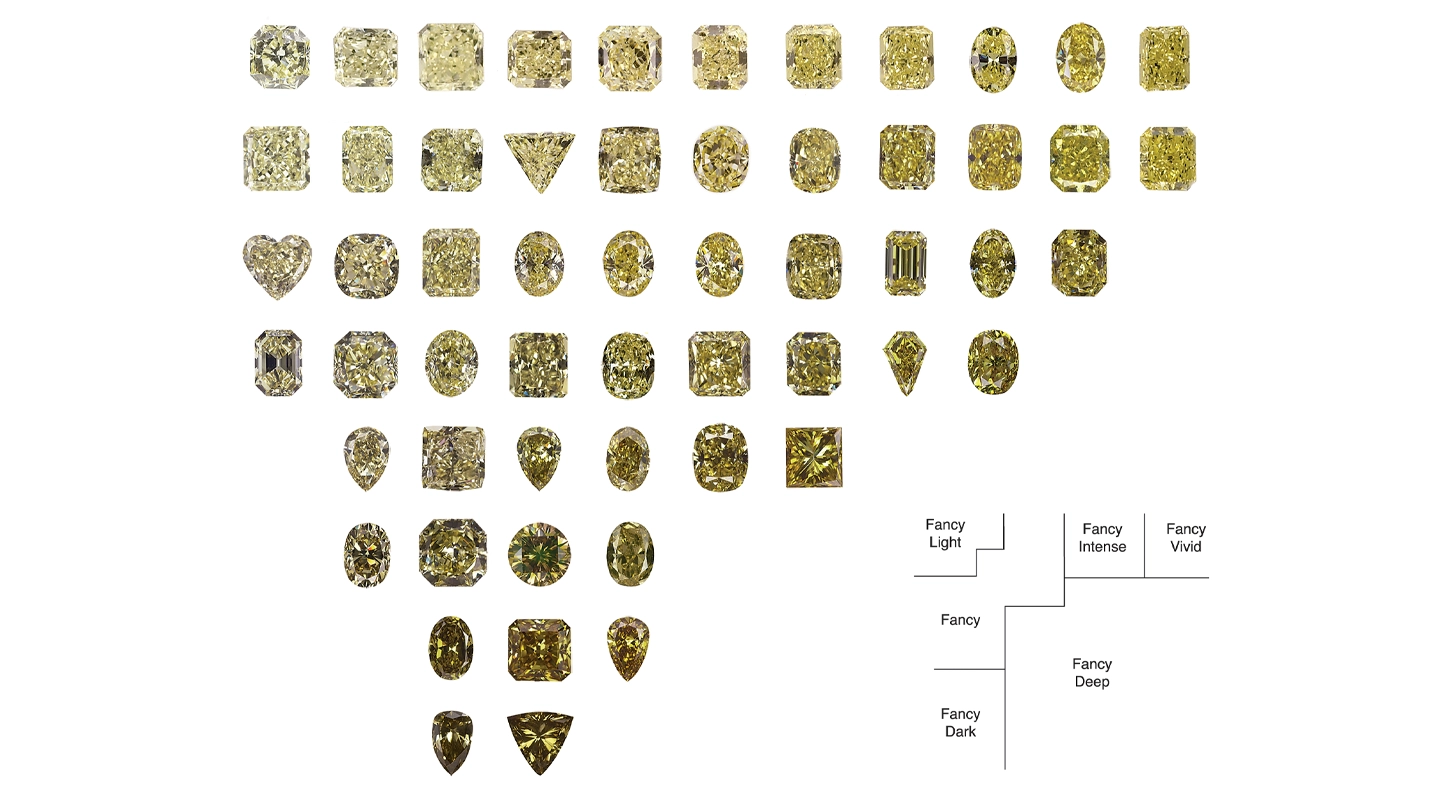
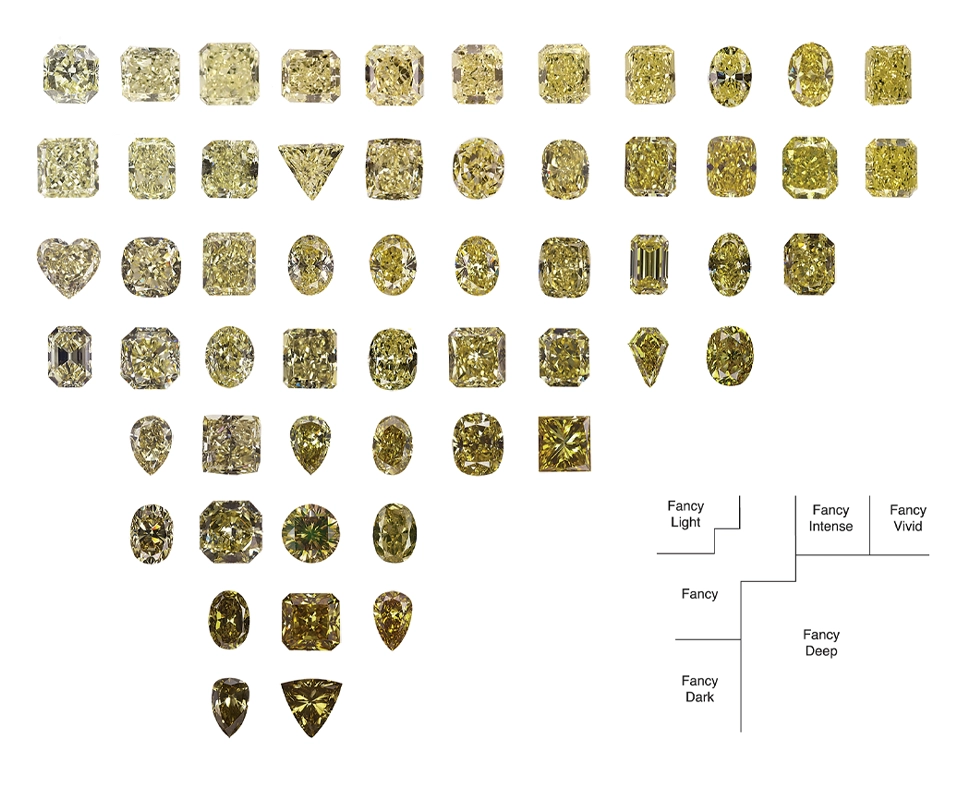
GIA grades yellow diamonds by the intensity and purity of their hue. The colored diamond scale includes 9 categories:
- Faint
- Very Light
- Light
- Fancy Light
- Fancy
- Fancy Intense
- Fancy Vivid
- Fancy Dark
- Fancy Deep
Yellow diamonds typically begin at Fancy Light, since paler yellows below this range are graded on the D-to-Z scale used for near-colorless diamonds.
Most yellow diamonds used in jewelry are graded Fancy Light, Fancy, Fancy Intense or Fancy Vivid. In general, the stronger and more saturated the color, the higher the value, with Fancy Vivid diamonds being the most prized.
Hue purity also matters—pure yellow diamonds are rarer and more desirable than those with brownish or greenish modifiers, though a hint of orange can sometimes enhance warmth and value.
While clarity and cut influence a diamond’s brilliance and price, for yellow diamonds it’s the depth and beauty of the color that truly capture the eye and the market.
Clarity
Like all diamonds, yellow diamonds are evaluated for clarity, which refers to the absence of internal inclusions and external blemishes. Clarity affects both a diamond’s appearance and its overall value, though color plays a much larger role in determining price for fancy color diamonds.
Diamonds that exhibit both high clarity grades such as Flawless (FL) or Internally Flawless (IF) and rich, saturated color are exceptionally rare and command premium prices.
Most yellow diamonds on the market fall within the VS (Very Slightly Included) to SI (Slightly Included) range where inclusions are often minor and difficult to see without magnification. Because yellow diamonds naturally mask inclusions better than colorless diamonds—their rich hue and light dispersion can disguise tiny internal features—diamonds with slightly lower clarity grades may still appear eye clean.
Clarity begins to noticeably affect a yellow diamond’s appearance and value when inclusions are visible to the naked eye or interfere with transparency and light return, typically in the I1, I2 and I3 grades. At that point inclusions may dull the diamond’s sparkle or create cloudy areas that detract from its brilliance.
For many buyers, a combination of vivid color and good clarity offers the best value. Since color contributes most to a yellow diamond’s charm, a Fancy Intense or Fancy Vivid Yellow with a VS2 or SI clarity grade can appear more stunning than a paler diamond with higher clarity.
Cut
The way a yellow diamond is cut plays a major role in how its color appears to the eye. Unlike colorless diamonds, which are typically cut to maximize brilliance and light return, yellow diamonds are cut to enhance color intensity. A skilled cutter carefully studies each rough crystal to determine the angles and proportions that will bring out the richest, most even yellow color possible.
Fancy shapes, such as radiant, cushion, pear, oval and emerald cuts, are especially popular for yellow diamonds. These shapes tend to retain more body color than traditional round brilliants because their facet arrangements allow light to reflect internally and deepen the hue.
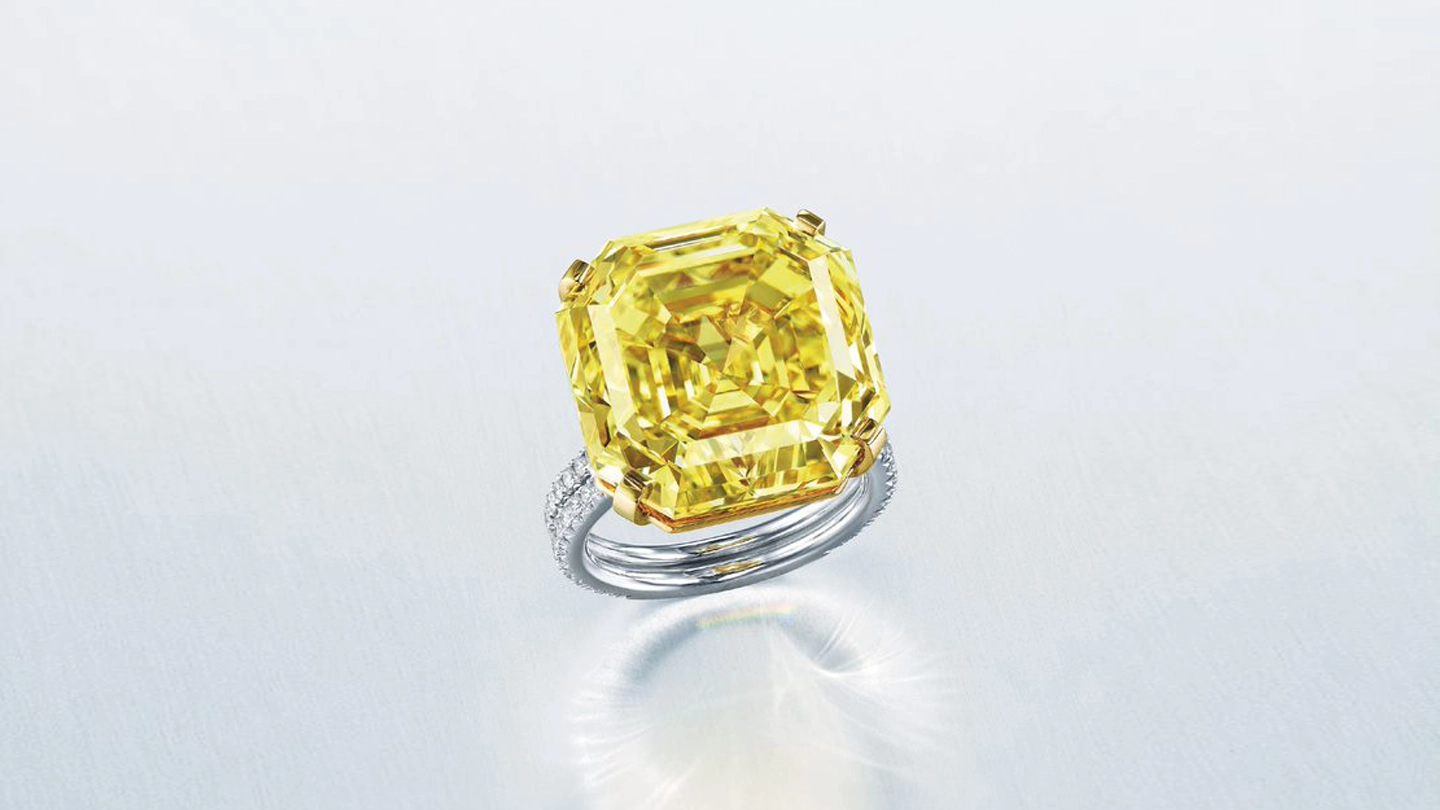
The radiant cut, in particular, is highly favored for yellow diamonds—it combines the sparkle of a brilliant cut with the depth of a step cut, intensifying the color while maintaining lively brilliance.
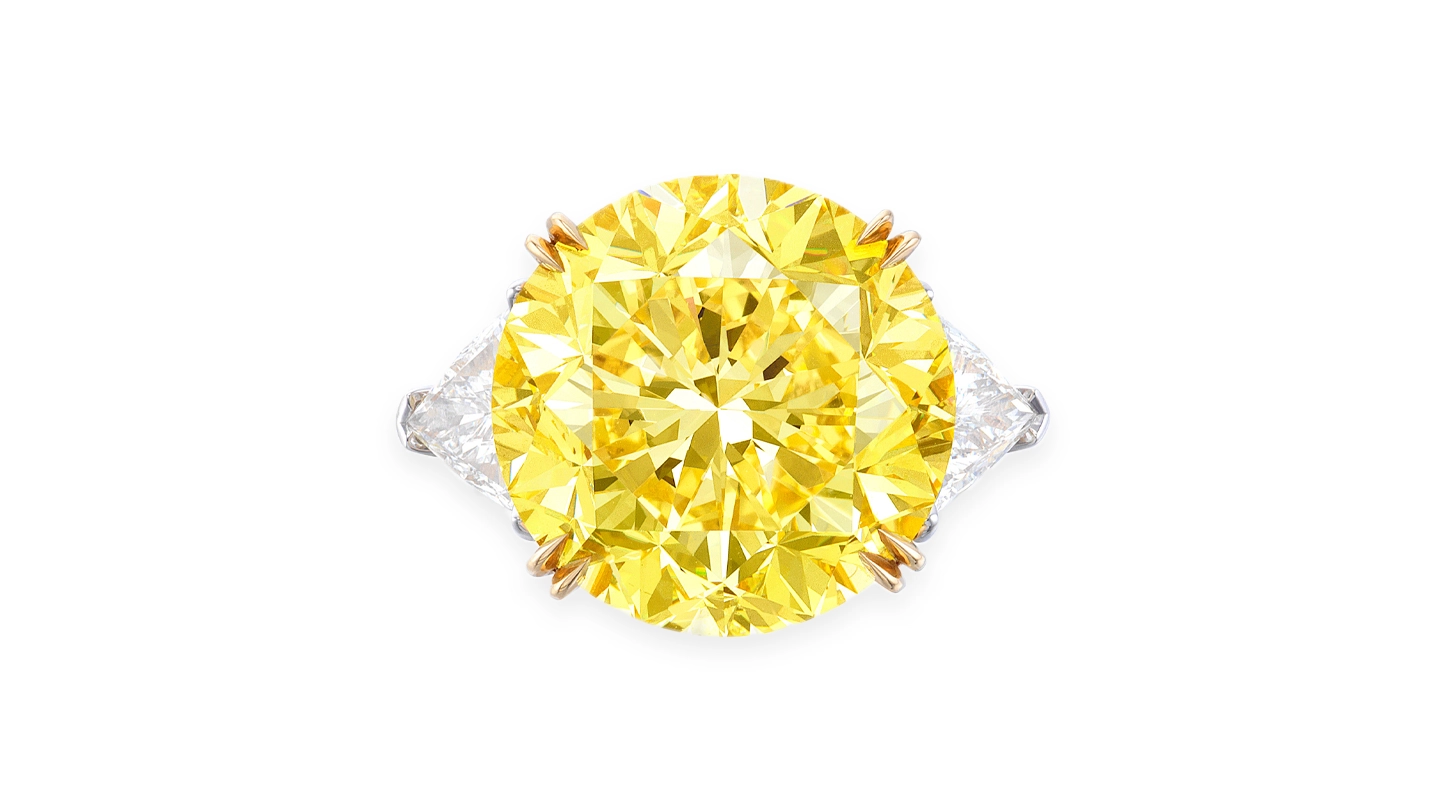
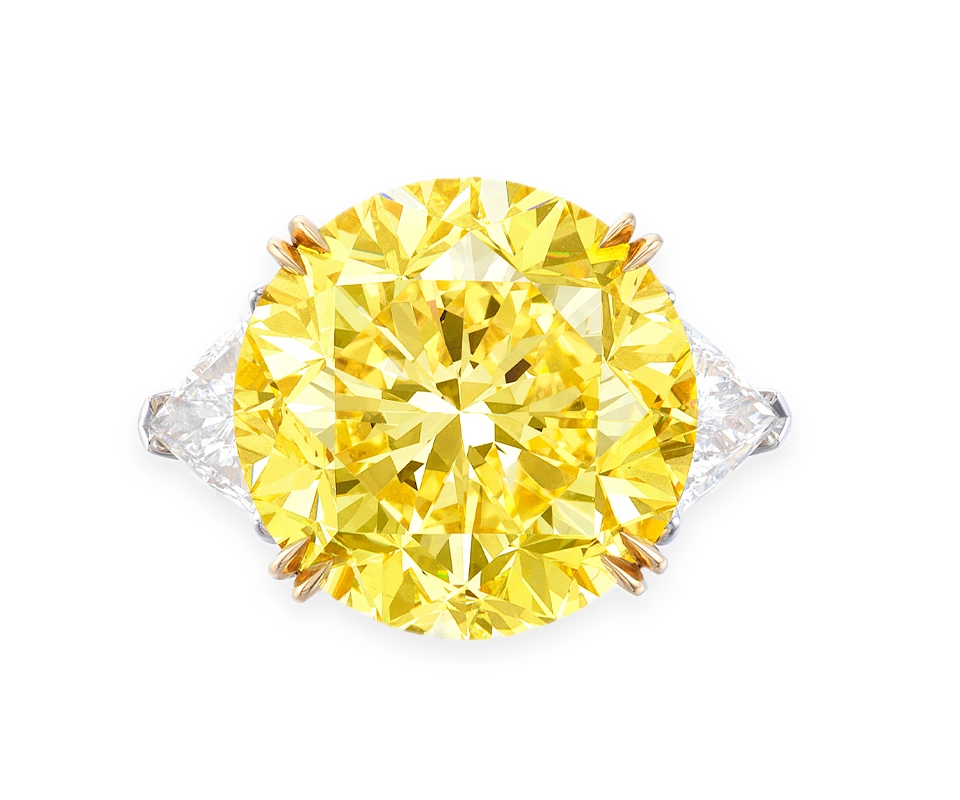
Round brilliant cuts are less common for yellow diamonds because their high light return can sometimes dilute the body color, making it appear lighter. However, when a diamond possesses strong natural saturation—such as Fancy Intense or Fancy Vivid grades—a round cut can beautifully balance sparkle and color.
The choice of setting also affects how a yellow diamond’s color is perceived. Mounting a yellow diamond in yellow gold or with a yellow gold cup beneath the stone can make the color appear deeper and warmer, while white metals like platinum or white gold may emphasize contrast and brightness.
Ultimately, the cut of a yellow diamond is a delicate balance between brilliance, color and carat weight—a combination that, when done right, brings out the full radiance and individuality of one of nature’s most cheerful and captivating gems.
Carat Weight
Carat weight measures a diamond’s weight, with one carat equal to 0.2 grams. Larger yellow diamonds are rare in nature and their value rises sharply with size, especially when combined with rich color saturation and high clarity.
Smaller yellow diamonds under one carat are more widely available than larger stones, but gems above two carats with even color distribution and good clarity become increasingly scarce. Yellow diamonds over five carats are considered very rare, particularly in Fancy Intense or Fancy Vivid grades with high clarity. At 10 carats and above, they are exceptionally rare, often only seen in high jewelry collections.
As carat weight increases, a diamond’s color can appear deeper and more vibrant. This helps make large yellow diamonds some of the most coveted gems in the world.
Yellow Diamond Alternatives
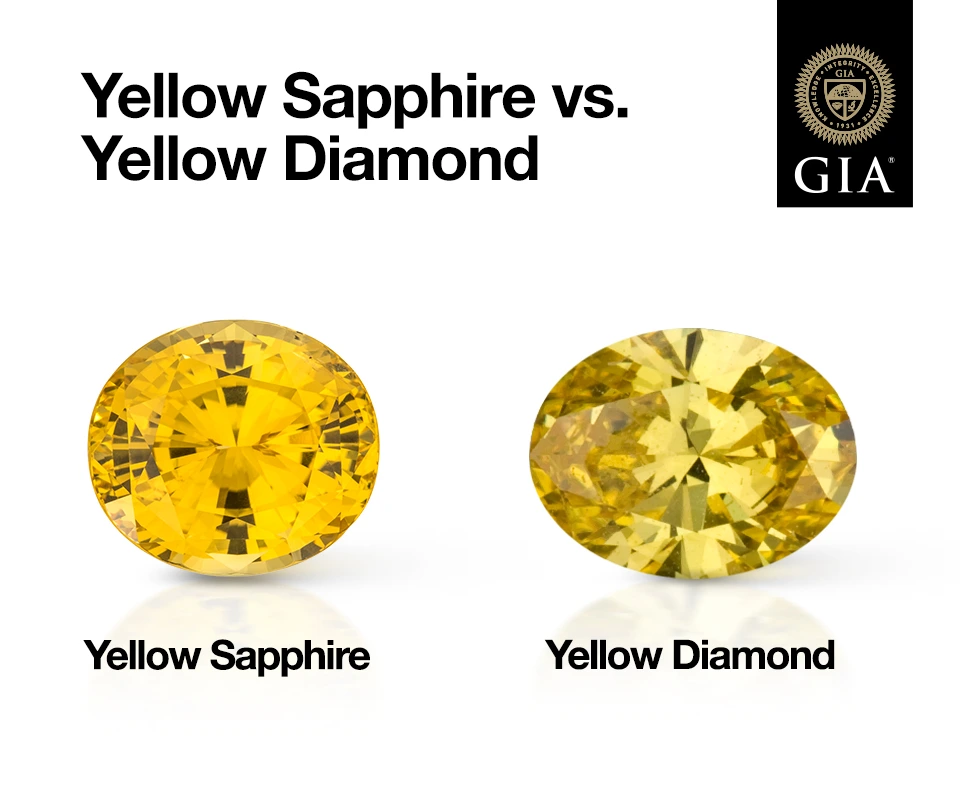
Yellow Sapphire
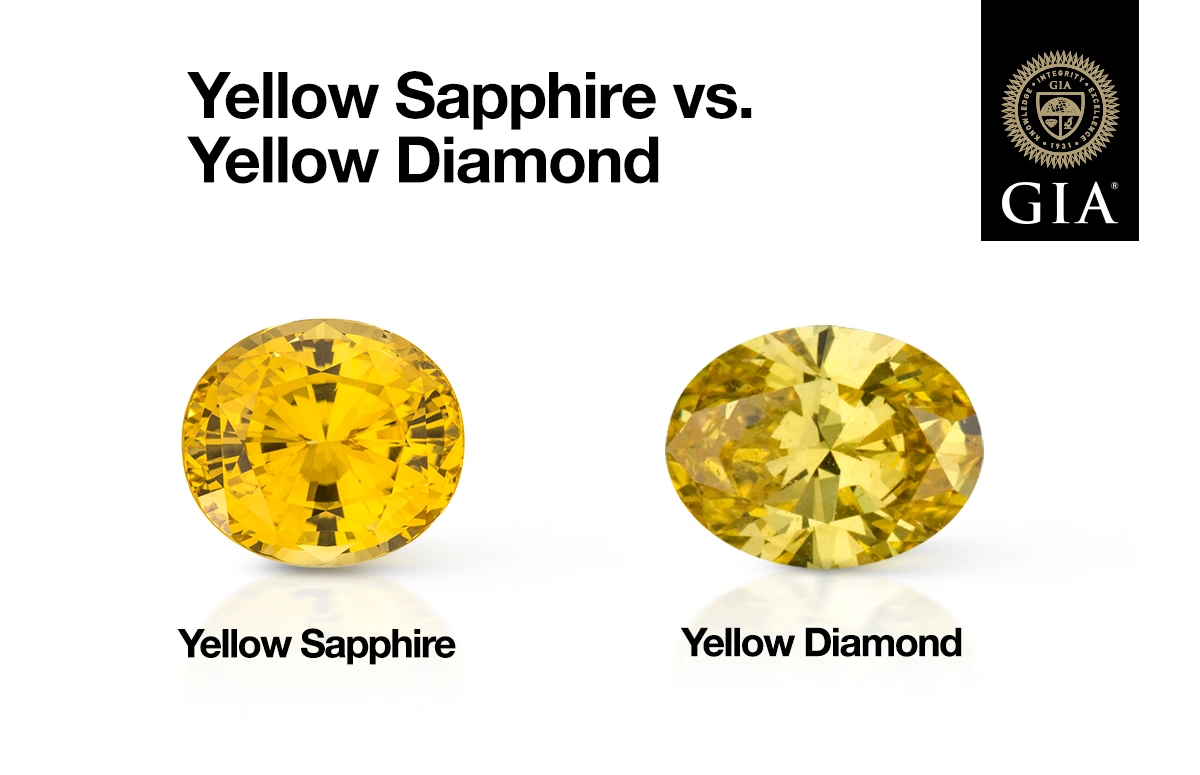
Yellow sapphires can range from pale lemon to deep golden yellow, offering a natural and more affordable alternative to yellow diamonds. Belonging to the corundum family, which also includes sapphire and ruby, yellow sapphire owes its color to trace amounts of iron within its crystal structure.
While less hard than diamond, it still ranks 9 on the Mohs scale, meaning it is highly durable and suitable for everyday wear. However, yellow sapphires exhibit less brilliance and fire than diamonds due to their lower refractive index, resulting in a softer, more velvety glow rather than a sharp sparkle.
Their warmth, durability and relative affordability make yellow sapphires a popular choice for engagement rings, earrings and pendants. For those drawn to the cheerful radiance of yellow diamonds but seeking a more accessible option, yellow sapphires beautifully capture the same sunshine-inspired appeal.
Yellow Topaz
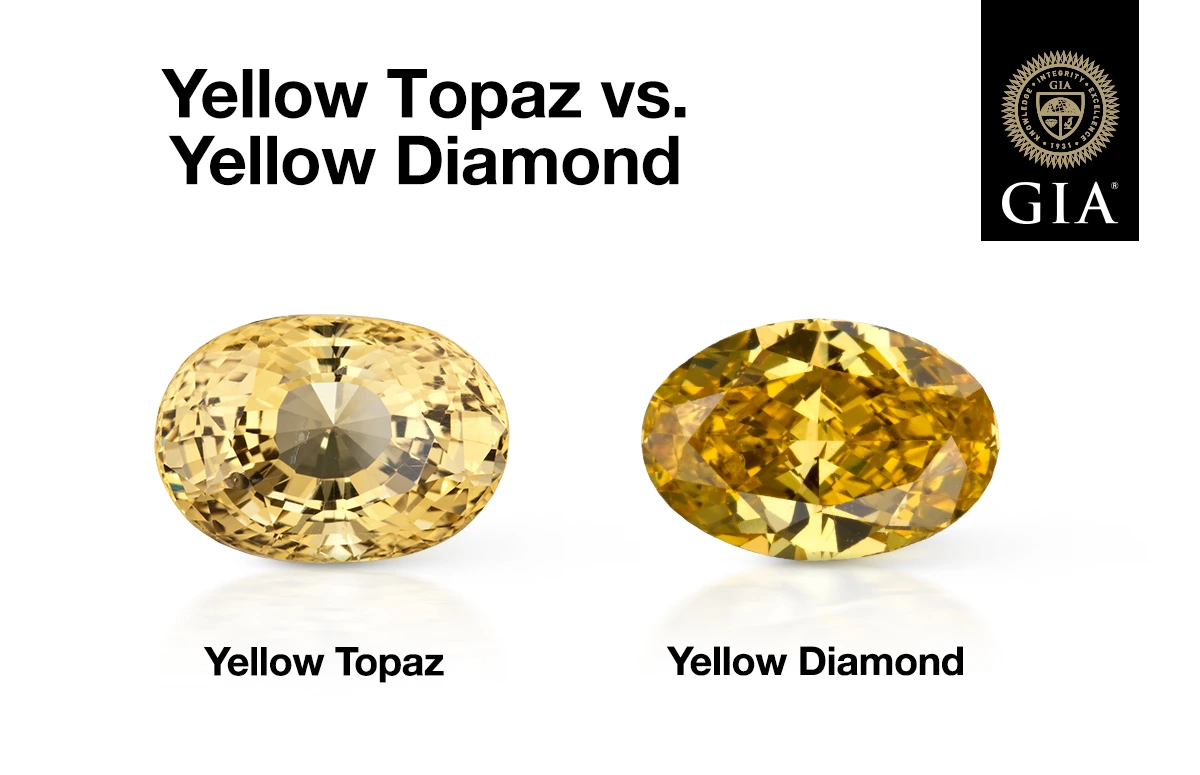
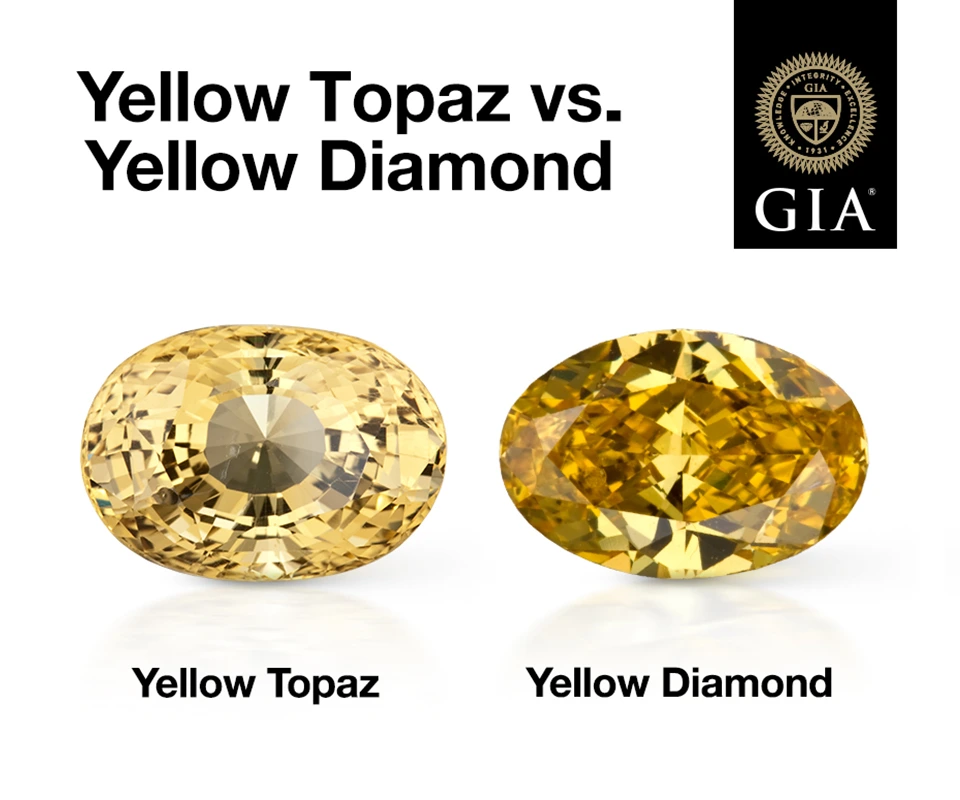
Yellow topaz displays a range of warm hues, from soft lemon yellow to deep golden and amber, with richly saturated stones commonly referred to as precious topaz. Its color is caused primarily by trace amounts of iron, and the stone typically shows a bright, glass-like luster with high transparency.
With a hardness of 8 on the Mohs scale, yellow topaz is durable enough for everyday wear, though it should be handled carefully because of its natural cleavage, which means it can split cleanly if struck in the wrong direction.
While it lacks the intense fire and brilliance of a yellow diamond, precious topaz is a highly sought-after variety of topaz. Its balance of color, clarity and affordability makes it a popular choice for jewelry, including engagement rings—offering the golden radiance of fine yellow gems at a more accessible price than diamond or sapphire.
Citrine
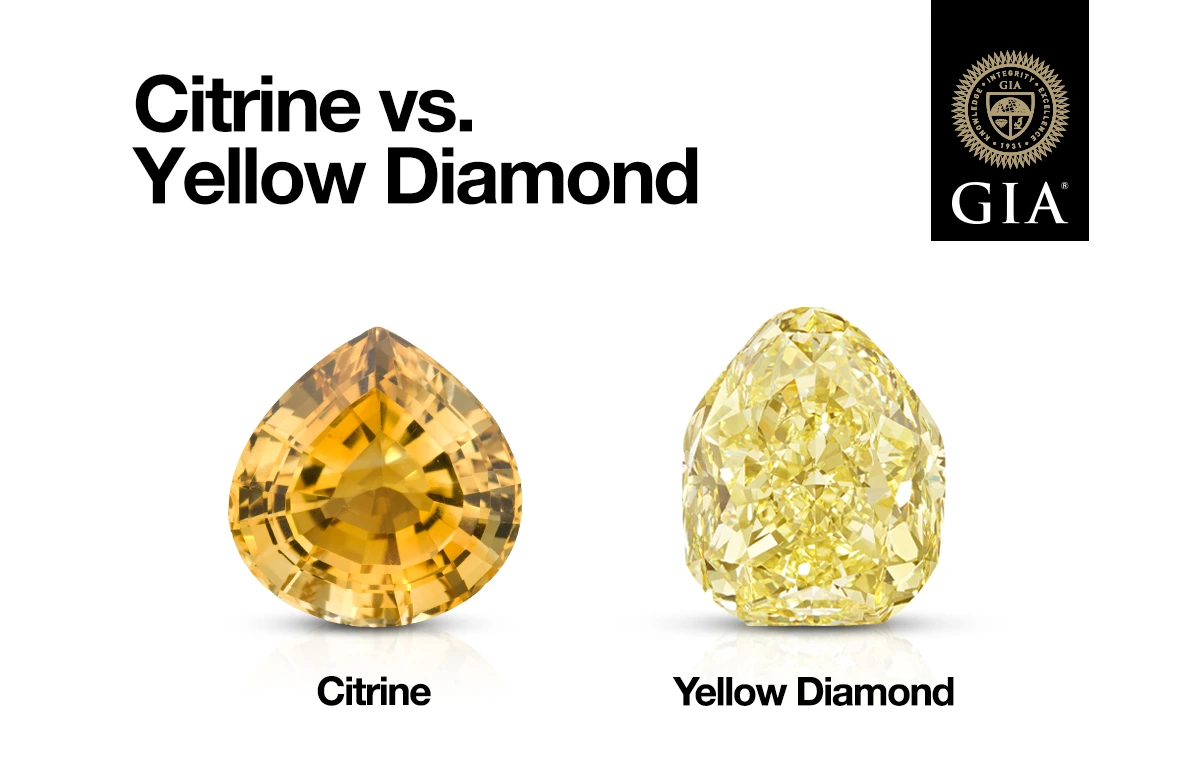
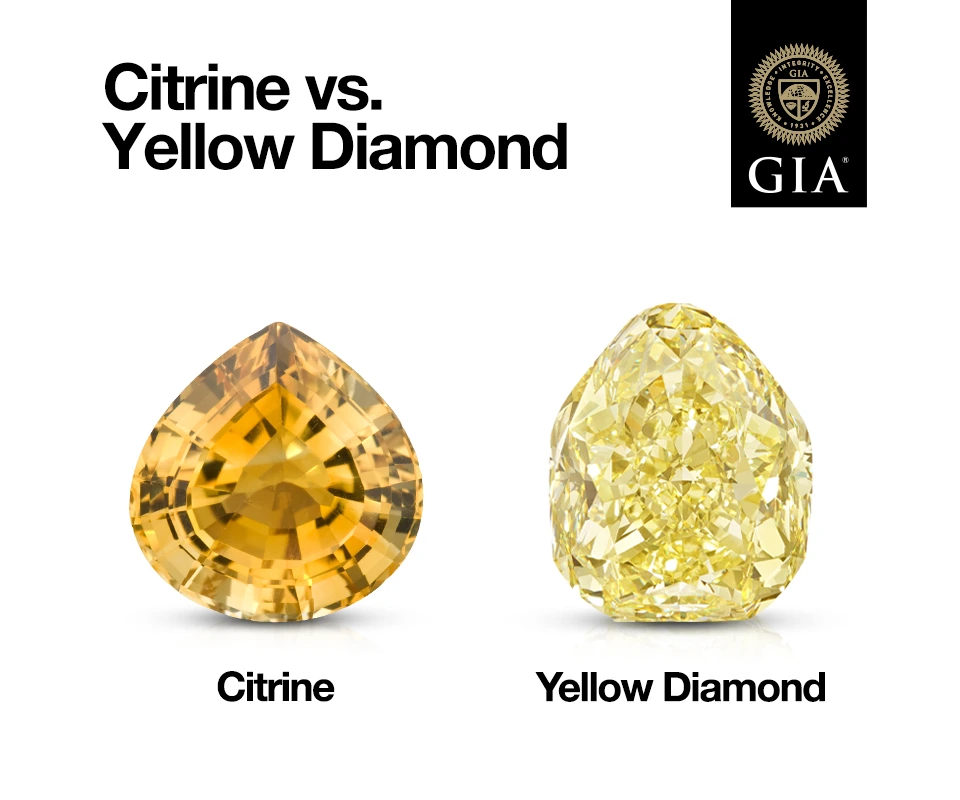
Citrine, a yellow to reddish orange variety of quartz, is the most affordable natural alternative to yellow diamonds. Its name comes from the French citron, meaning “lemon,” perfectly describing its sunny, cheerful hue. Natural color citrine is rare. Most citrine on the market are created by heat-treating amethyst or smoky quartz. It has a warm, glowing luster rather than the fiery brilliance of a diamond..
With a hardness of 7 on the Mohs scale, citrine is durable enough for everyday jewelry but benefits from extra care when worn as a ring. Its moderate toughness means it should be set in a protective mounting and removed before physical activity to prevent scratches or impacts. While suitable for daily wear in pendants and earrings, citrine is often best reserved for occasional use when set in rings.
Because of its availability, large crystal sizes and inviting color, citrine is a popular choice for statement jewelry and creative fantasy cuts. Its golden tones symbolize joy and abundance, making it a fun and accessible option for those who love the warmth of yellow gemstones.
Yellow Cubic Zirconia
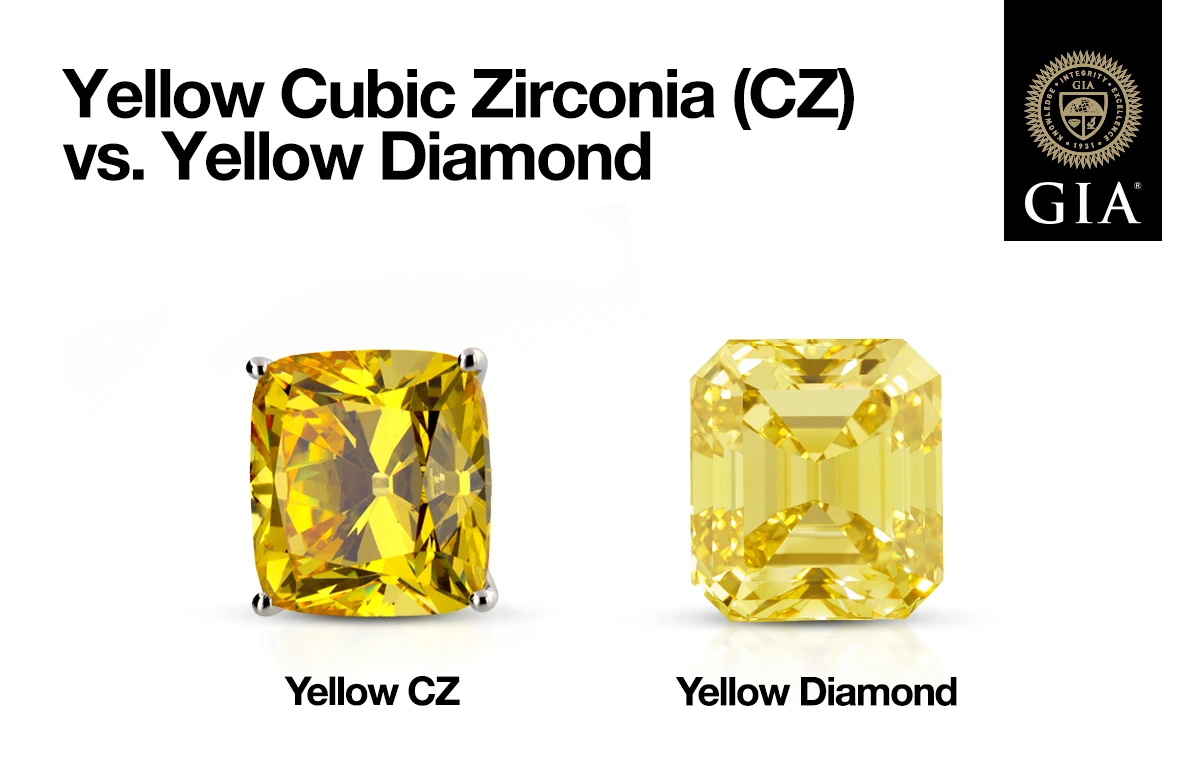
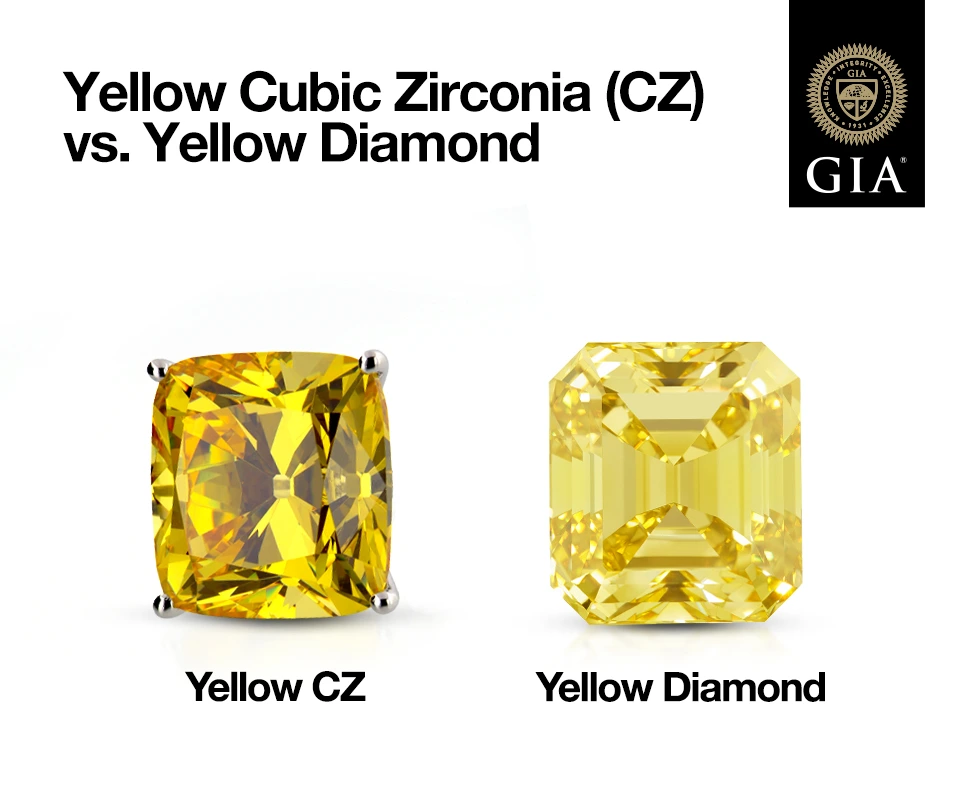
Yellow cubic zirconia (CZ) is an incredibly affordable lab-grown alternative to yellow diamonds, capturing a similar brilliance and sunny hue at just a fraction of the cost. These lab-created gemstones are made from zirconium dioxide and are prized for their sparkle, fire, clarity and vibrant color, which can be produced in a wide range of golden to canary shades.
With a hardness of about 8 to 8.5 on the Mohs scale, CZ is durable enough for everyday wear, though it is softer and less scratch-resistant than diamond or sapphire. The most affordable out of all the yellow diamond alternatives, it is a popular choice for fashion jewelry, allowing anyone to enjoy a sparkling yellow gem at a minimal cost.
Yellow Diamond History
Yellow diamonds, often called canary or fancy yellow diamonds, have been admired for centuries for their radiant color and rarity. Some of the earliest known yellow diamonds were discovered in India’s historic Golconda mines during the 14th century, a region famous for producing some of the world’s most legendary gems.
As diamond mining expanded to Brazil and later to South Africa in the 18th and 19th centuries, yellow diamonds became increasingly recognized and sought after by royalty and collectors.
Today, yellow diamonds remain symbols of prestige and individuality prized by collectors and jewelry houses around the world.
Famous Yellow Diamonds
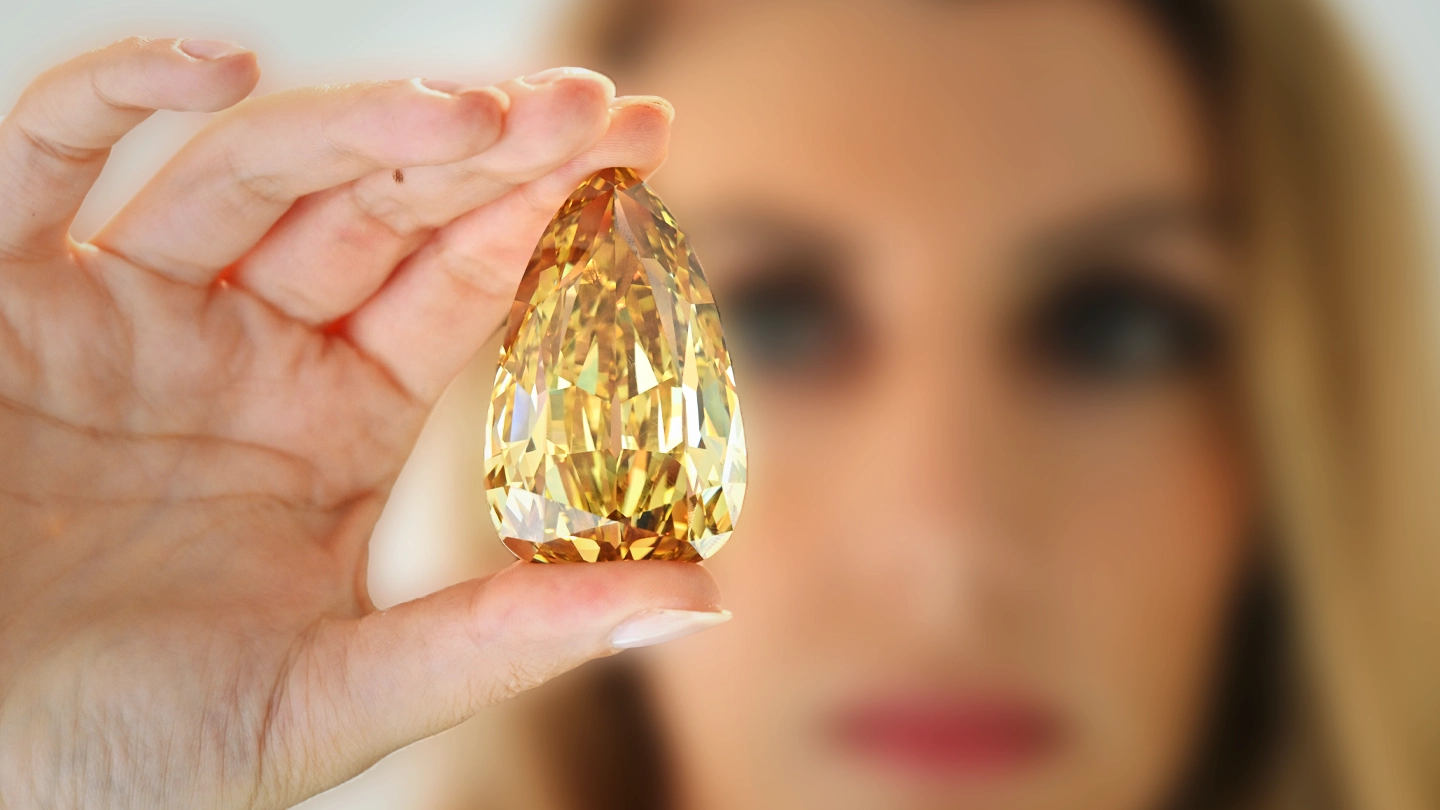
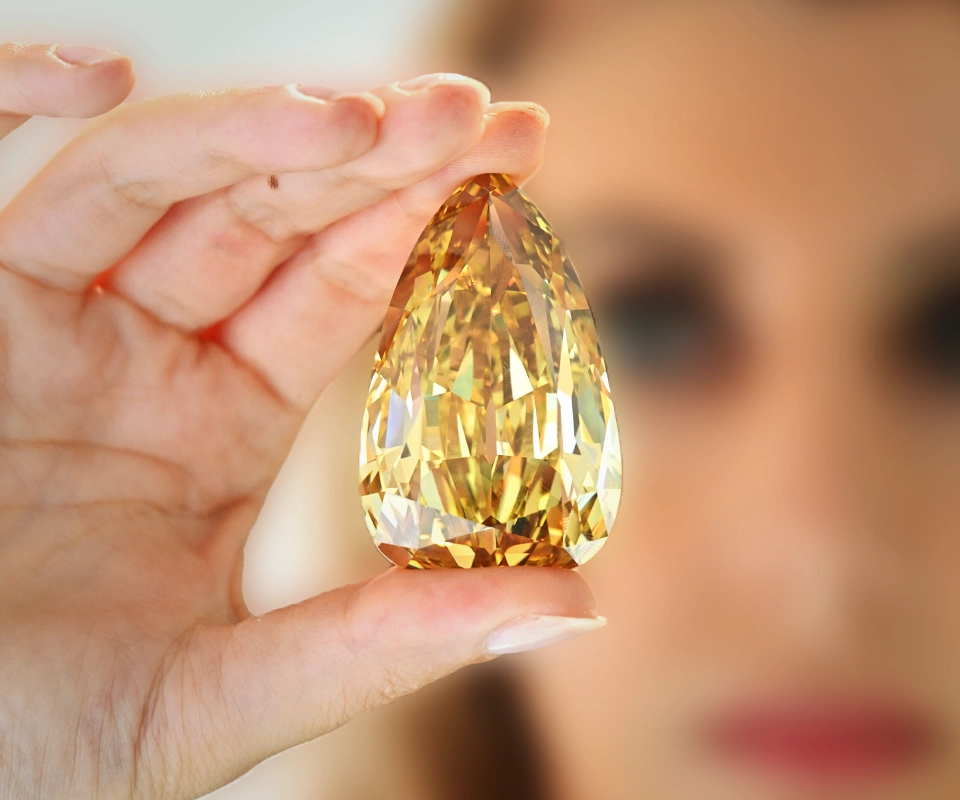
Among the most famous examples is the 128.54-carat cushion-shaped Tiffany Yellow Diamond, discovered in South Africa in 1877 and graded Fancy Yellow by GIA. The Incomparable Diamond, originally a 407.48-carat brownish-yellow diamond found in the Democratic Republic of Congo, was recut to improve its color and shape, resulting in the 303.10-carat Golden Canary, graded Fancy Deep Brownish Yellow by GIA and recognized as the world’s largest Internally Flawless yellow diamond. The Cora Sun-Drop Diamond, discovered in Africa, is the largest known pear-shaped yellow diamond, weighing 110.3 carats and graded Fancy Vivid Yellow by GIA.
Other notable stones include the Allnatt Diamond, a 101.29-carat Fancy Vivid Yellow gem and the Florentine Diamond, a 137.27-carat light yellow, double rose-cut stone once owned by the Medici family.
Tiffany Yellow Diamond
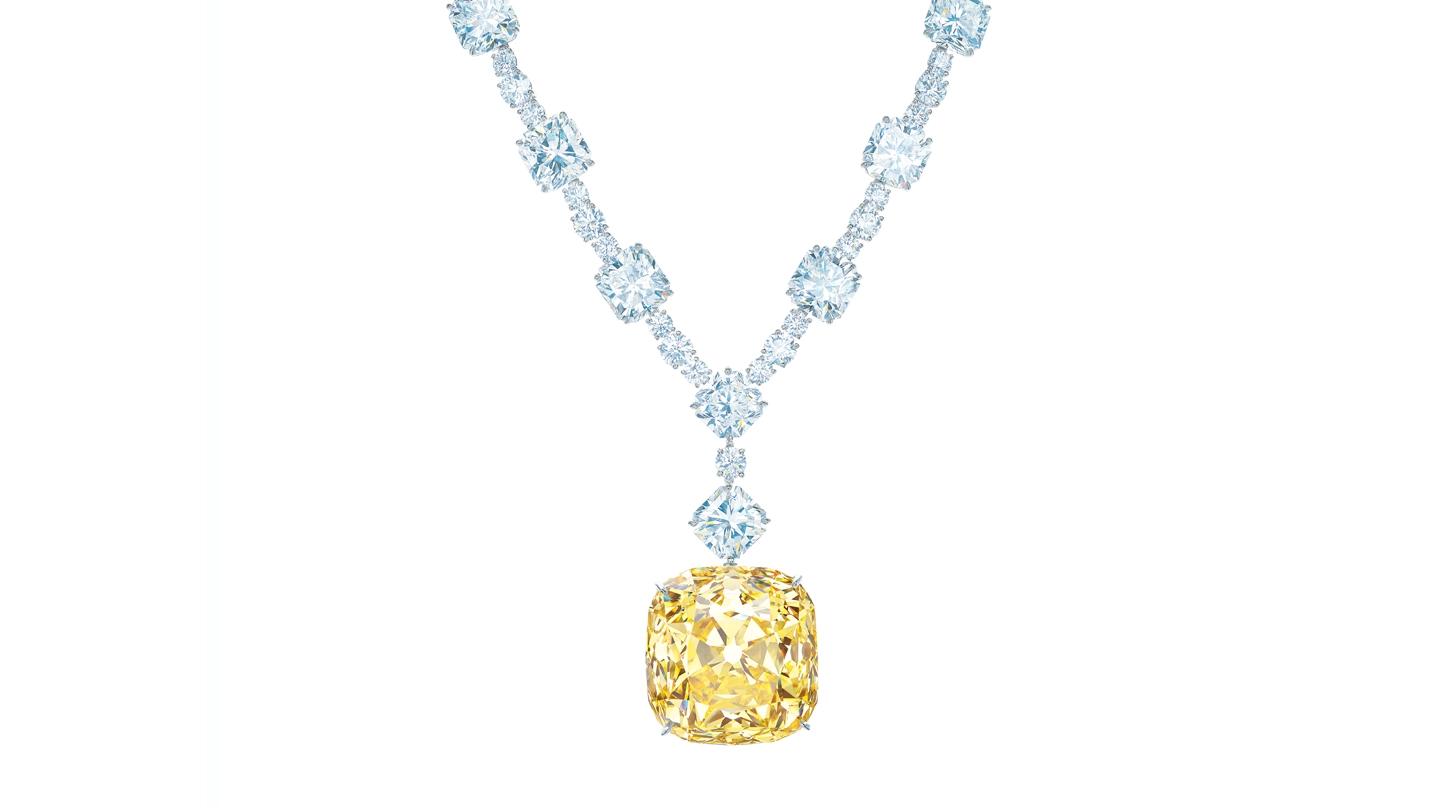
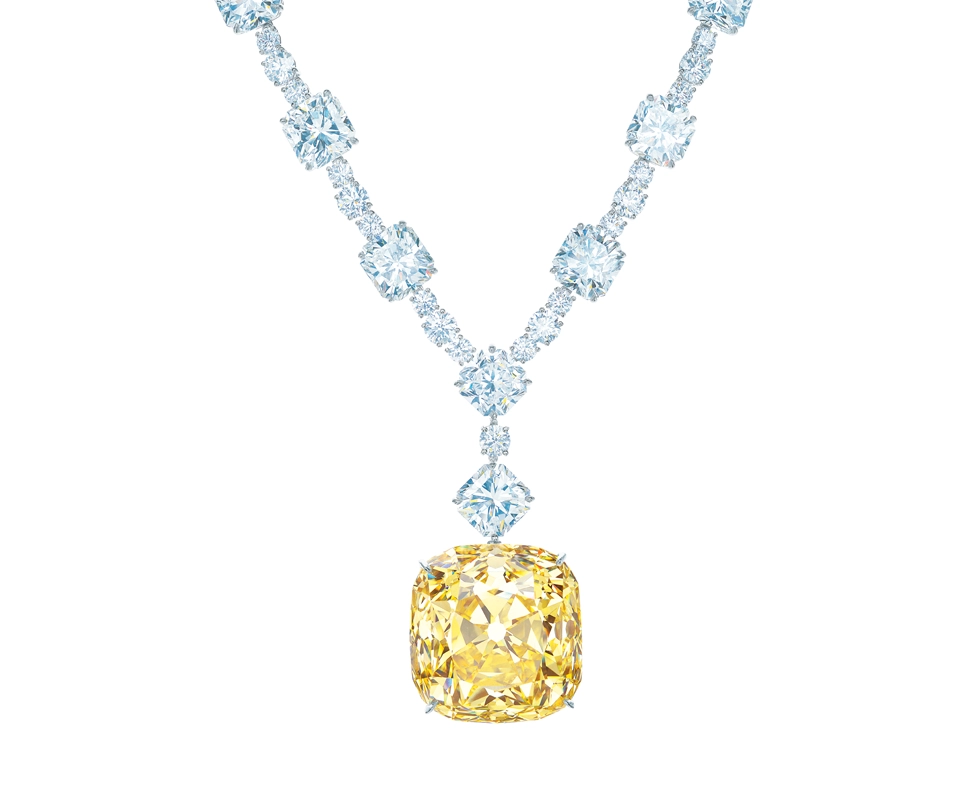
The Tiffany Diamond is one of the world’s most famous gemstones, celebrated for its extraordinary size, color and brilliance. Discovered in 1877 at South Africa’s Kimberley Mine, the 287.42-carat rough was purchased by Charles Lewis Tiffany and cut under gemologist George Frederick Kunz into a 128.54-carat cushion-shaped brilliant. Graded Fancy Yellow by GIA, it became the ultimate symbol of Tiffany & Co.’s craftsmanship and prestige.
First displayed at the 1893 Chicago World’s Fair, the diamond has rarely been worn, emphasizing its museum-level rarity. Only four women have had that honor: Mrs. E. Sheldon Whitehouse in 1957, Audrey Hepburn in 1961 for Breakfast at Tiffany’s, Lady Gaga at the 2019 Academy Awards and Beyoncé in a 2021 Tiffany campaign.
Now set in a modern necklace accented with over 100 carats of colorless diamonds, the Tiffany Diamond remains a global emblem of elegance and the enduring allure of natural color diamonds.
The Golden Canary Diamond
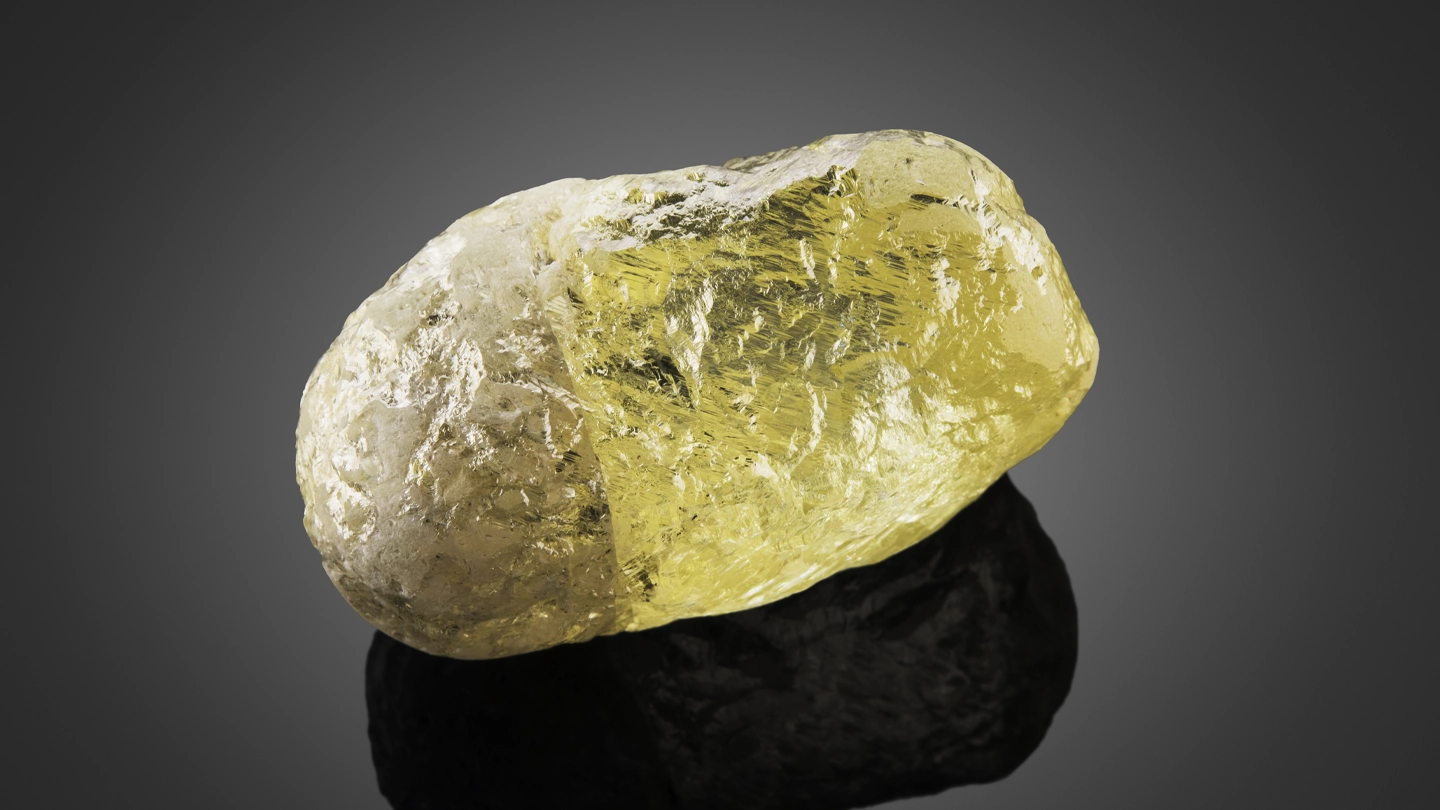
The Golden Canary Diamond, originally known as the Incomparable Diamond, is one of the most remarkable yellow diamonds ever discovered. The rough crystal, weighing about 890 carats, was found in the 1980s in the Democratic Republic of the Congo by a young girl playing near discarded mining rubble.
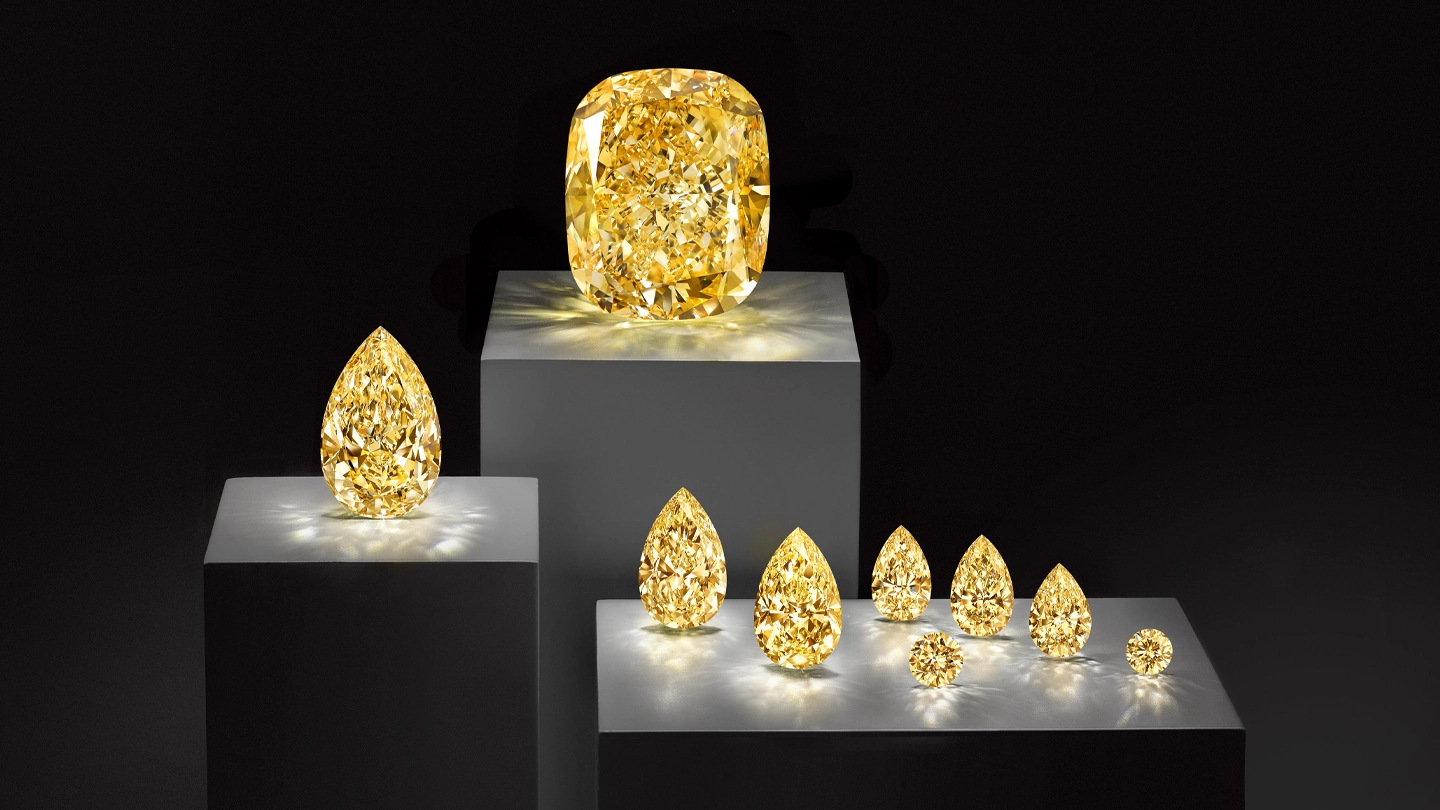
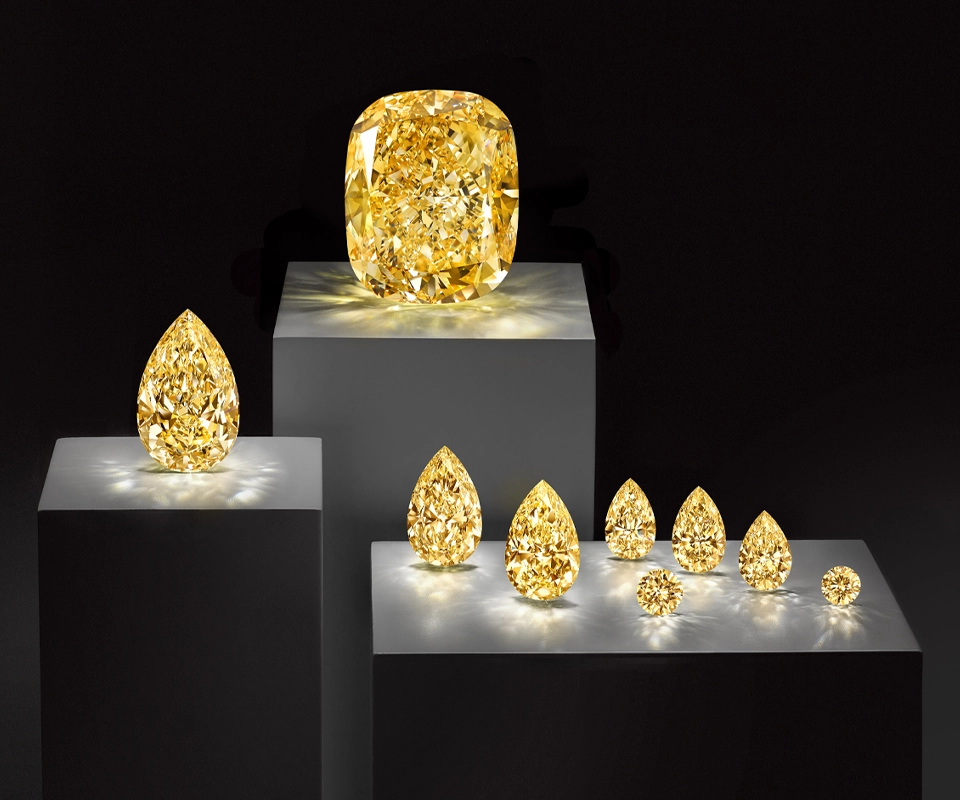
Experts studied the rough diamond for years before cutting it into a 407.48-carat shield-shaped step cut, graded Fancy Deep Brownish Yellow, Internally Flawless by GIA—making it one of the largest internally flawless diamonds in history. In 2022, it was recut to improve symmetry and brilliance, becoming the 303.10-carat Golden Canary, graded the same Fancy Deep Brownish Yellow, Internally Flawless by GIA.
That same year, the Golden Canary sold at Sotheby’s for $12.4 million. From a child’s chance discovery in the Congo to a masterpiece, its story reflects both the wonder of nature and the skill of human craftsmanship.
Delaire Sunrise Diamond
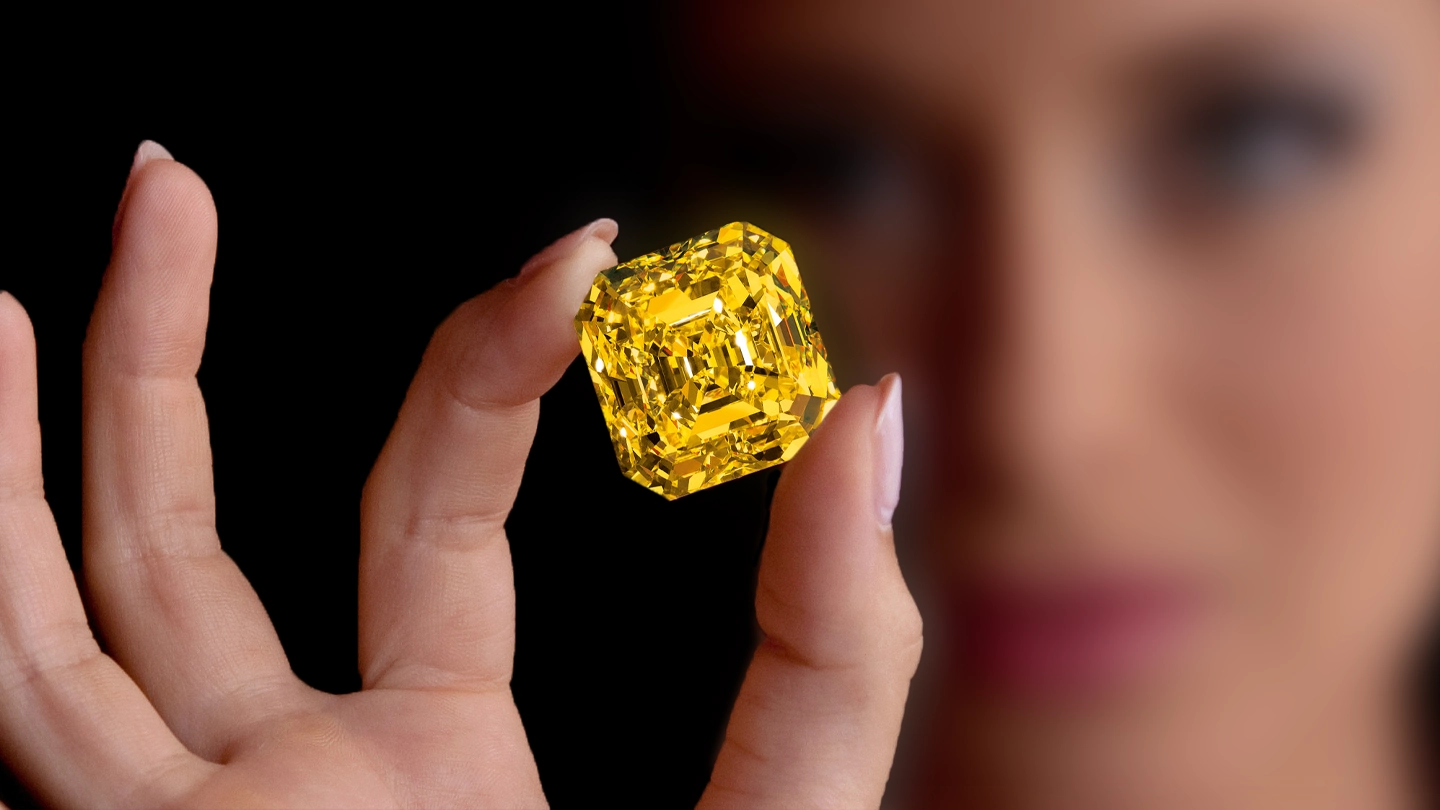
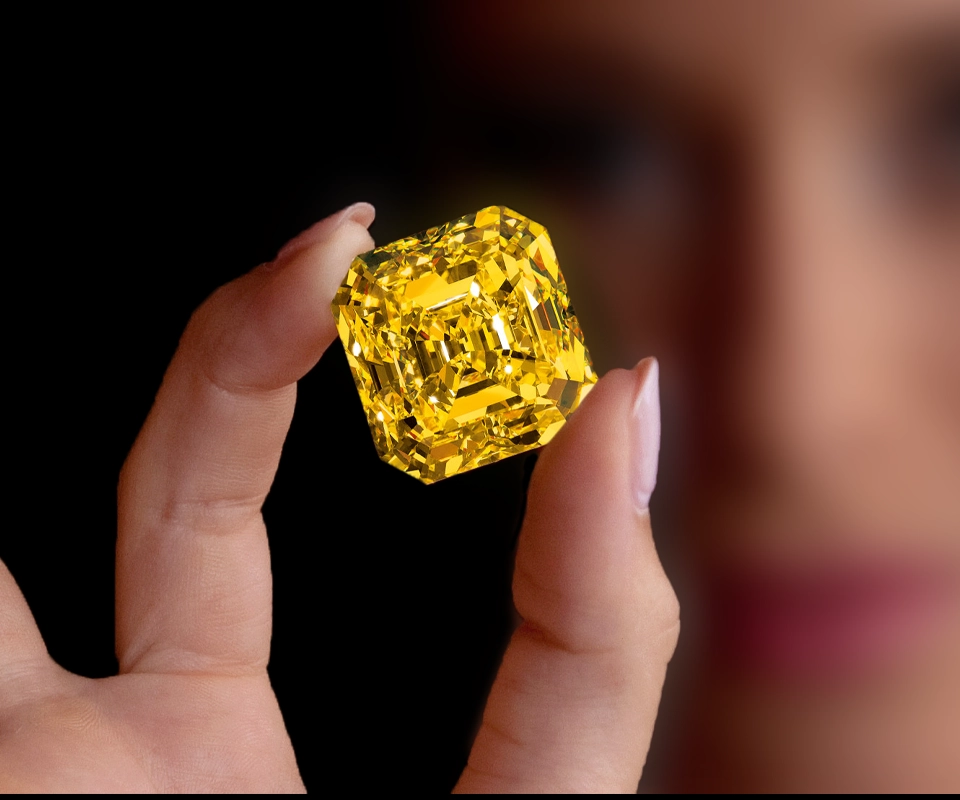
The Delaire Sunrise Diamond is one of the most celebrated yellow diamonds of the modern era, admired for its exceptional color and craftsmanship. Discovered in South Africa and cut by Graff Diamonds, the stone weighs 118.08 carats and is the largest diamond of its cut and color grade.
Named after Delaire Graff Estate in Stellenbosch, South Africa—Laurence Graff’s wine and art estate where the gem is displayed—the diamond was graded Fancy Vivid Yellow by the Gemological Institute of America (GIA) and shows a rich, saturated golden hue.
With precise symmetry and step-cut facets, the Delaire Sunrise highlights the intensity of its color, standing as a striking example of South Africa’s diamond heritage and one of the finest vivid yellow diamonds known.
The Importance of Buying a Diamond with a GIA Report
When you’re purchasing a yellow diamond for an engagement ring or jewelry piece, it’s essential to choose a diamond that has been graded by an independent, reputable laboratory like the Gemological Institute of America (GIA). A GIA Diamond Grading Report provides an unbiased, science-based evaluation that verifies a diamond’s identity and quality, ensuring confidence in your purchase.
GIA’s meticulous grading process begins by determining whether a diamond is natural or lab-grown and identifying any treatments used to alter or enhance its color or clarity. This is especially important because a diamond’s color grade and whether it’s natural or treated can dramatically affect its price.
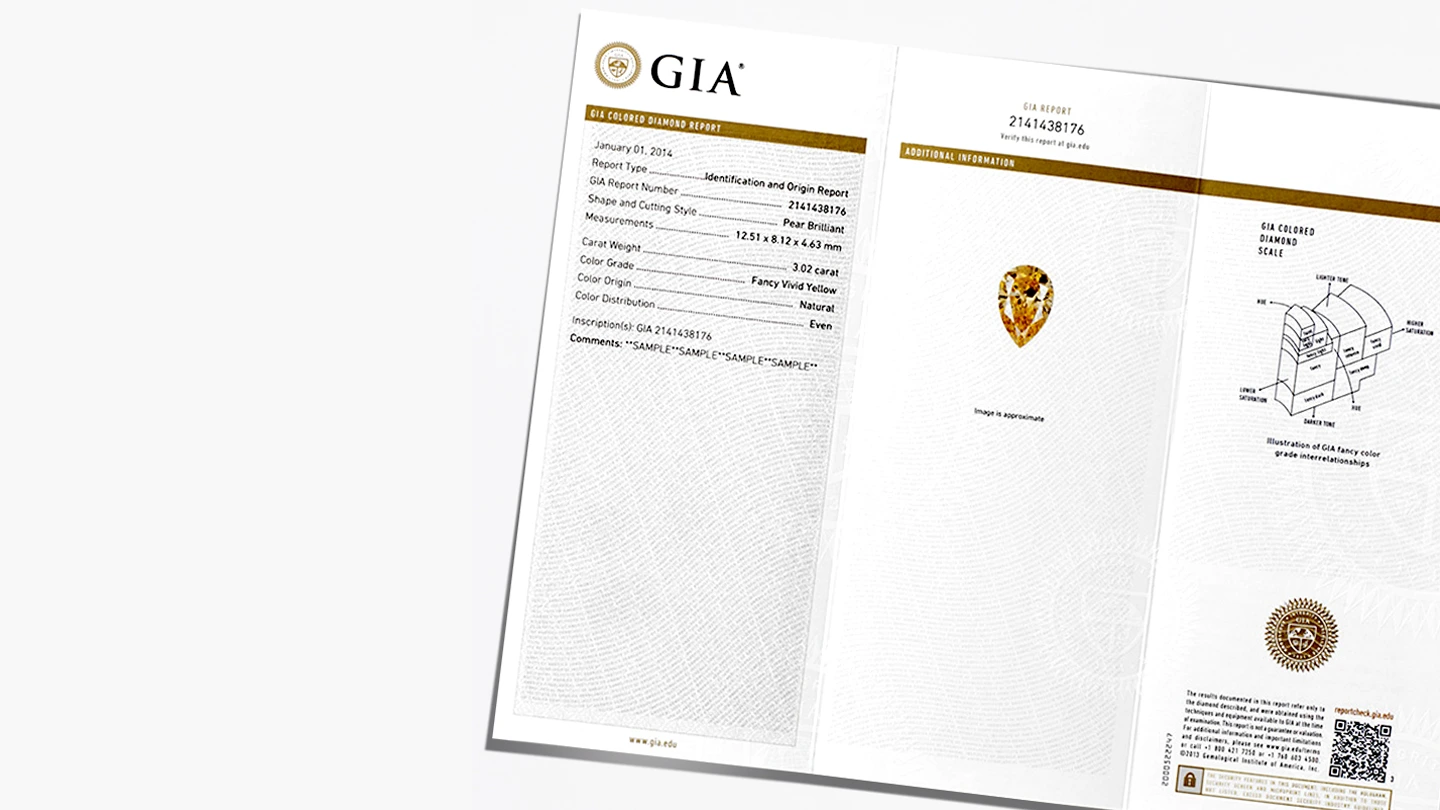
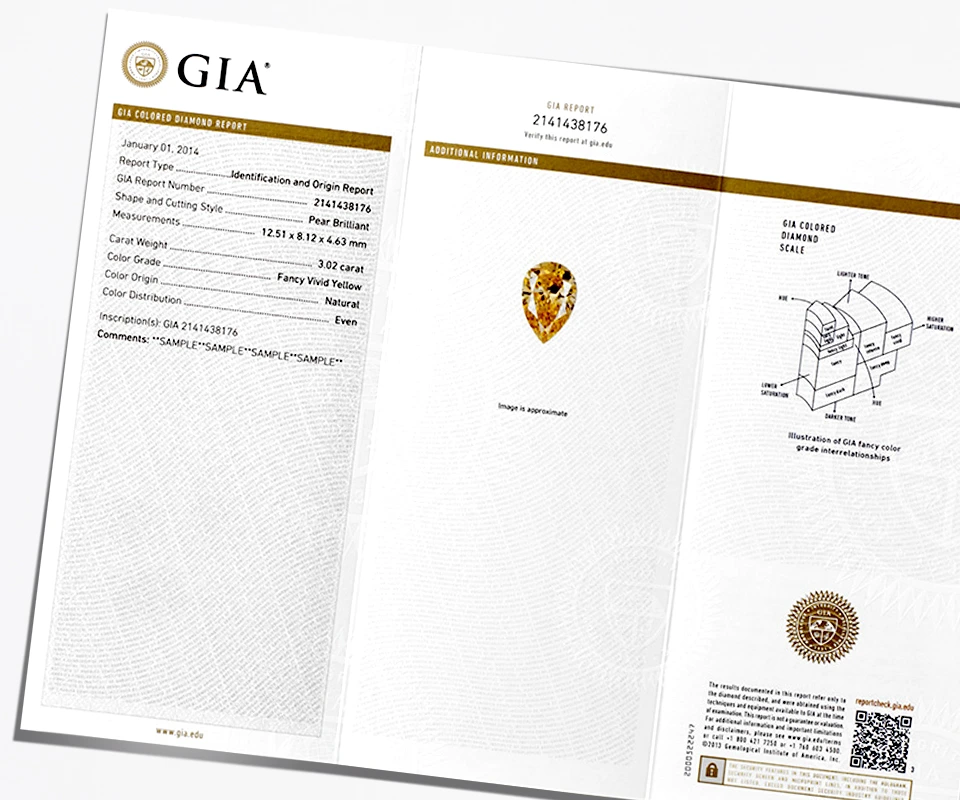
A GIA Colored Diamond Grading Report or a GIA Colored Diamond Identification and Origin Report clearly states both the diamond’s color grade and its origin, empowering buyers to make informed decisions.
In addition to key details such as color grade and color origin, GIA Diamond Grading Reports also include clarity, carat weight and a plotting diagram of internal features. Beyond stating its identity, the report supplies a verified record of your diamond’s attributes—information essential for insurance or resale.
Whether chosen to symbolize love, achievement or personal expression, a yellow diamond accompanied by a GIA report ensures transparency and trust. For added support, GIA’s Retailer Lookup tool can help you find jewelers who sell GIA-graded diamonds or have GIA-trained staff.
As the most affordable of all the natural fancy color diamonds, yellow diamonds allow collectors and couples to own a rare colored diamond without going over their budget. For those who appreciate radiance, individuality and refined elegance, yellow diamonds offer enduring brilliance and a touch of sunshine-infused luxury.