Please ensure Javascript is enabled for purposes of website accessibility.
Search
Search
Search

GIA 4Cs Diamond Blog

GIA 4Cs Diamond Blog

December Birthstone: What You Need to Know About Tanzanite, Turquoise and Zircon

If you had to pick one December birthstone, which would it be: tanzanite, turquoise or zircon? From the blue to bluish purple of tanzanite, to the intense blue and green of turquoise, to the rainbow varieties of zircon, there’s a color for you. We help you pick one.

In this blog, we cover:

Tanzanite: The Newest December Birthstone
Gemological properties of tanzanite
Tanzanite history & lore
Where tanzanite comes from
Qualities to look for in tanzanite
Tanzanite treatments, care & cleaning

Turquoise: The Historic December Birthstone
Gemological properties of turquoise
Turquoise history and lore
Where turquoise comes from
Qualities to look for in turquoise
Turquoise treatments, care & cleaning

Zircon: The Colorful December Birthstone
Gemological properties of zircon
Zircon history & lore
Where zircon comes from
Qualities to look for in zircon
Zircon treatments, care & cleaning

TANZANITE: THE NEWEST DECEMBER BIRTHSTONE
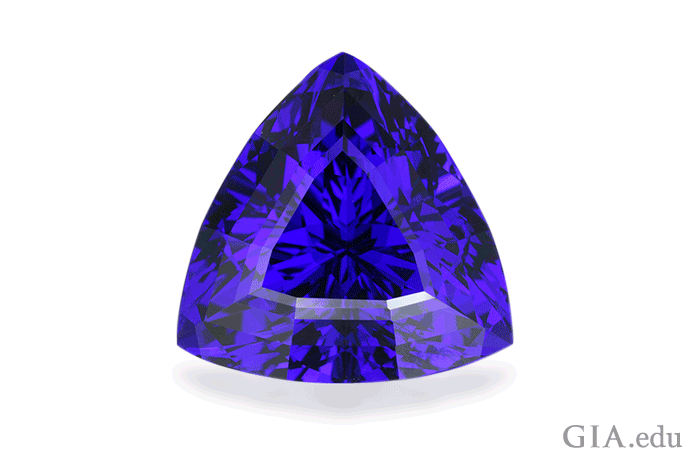
A trilliant cut tanzanite with an exceptional violetish blue color captivates as the December birthstone. Photo: Robert Weldon/GIA

A trilliant cut tanzanite with an exceptional violetish blue color captivates as the December birthstone. Photo: Robert Weldon/GIA

Gemological properties of tanzanite

Tanzanite is the blue to violet to bluish purple variety of the mineral zoisite. This December birthstone is mined commercially in only one area of the world — the Merelani Hills of Tanzania — from where it gets its name.

Tanzanite’s appearance is influenced greatly by its pleochroism – the different colors some gemstones show when viewed from different directions. Tanzanite can be violetish blue or deep blue – similar to a sapphire color – or much more purplish. Often, both the violetish blue and purple are readily visible in a fashioned stone when it is gently rocked and tilted. This December birthstone is rather fragile, ranking 6 to 7 on the Mohs scale of hardness; a diamond is a 10. The scale is exponential, meaning that a diamond is many times harder than tanzanite. Tanzanite’s toughness (the ability of a gem material to resist breaking, chipping or cracking) is fair to poor because it has one direction of cleavage (the tendency of a crystalline mineral to break along atomic planes) and is sensitive to sudden temperature changes.

Gemologists love tanzanite because it shows different colors when viewed from different directions.
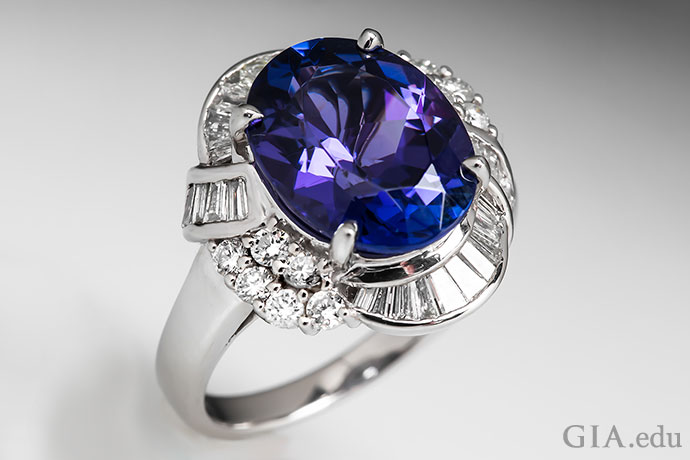
5.59 carat (ct) oval tanzanite contrasted with 28 channel set tapered baguettes and 12 round brilliant cut diamonds.

The vault of the evening sky and a field of stars is conjured by this 5.59 carat (ct) oval tanzanite contrasted with 28 channel set tapered baguettes and 12 round brilliant cut diamonds. Courtesy: EraGem.com

Tanzanite history & lore

Tanzanite may be a relative newcomer to the world of colored stones, but it was one of the most exciting gem discoveries of the 20th century. Blue stones emerging from Tanzania were identified as the mineral zoisite in 1962 by Polish expatriate George Kruchluk. Not until 1967, though, did prospector Manuel D’Souza — with the help of a Masai tribesman — locate the primary source: the Merelani Hills. D’Souza filed four mining claims. Word spread and 90 more claims were quickly registered – even though at the time there was some confusion as to the identity of the gem material.

Tiffany & Co. believed that tanzanite had international appeal and became its main distributor. In 1968, Tiffany launched a major advertising campaign to promote it. With its vivid colors, high clarity and potential for large cut stones, tanzanite quickly became a sensation. Today, it is not only a December birthstone, but it is also the gem for the 24th wedding anniversary.

Where tanzanite comes from

Grass-covered hillsides, scrub brush, rocky soil and an occasional tree form the landscape of the Merelani Hills. In the major mechanized operations there, thousands of workers recover tanzanite from mines dug over a hundred meters deep into the earth. North of the mines tower the snow-covered slopes of Mount Kilimanjaro.
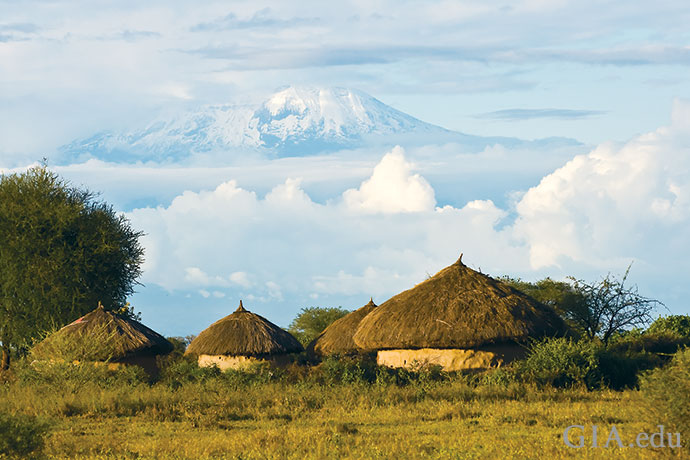
Peeking out from the clouds is the domed summit of Mount Kilimanjaro. Tanzanite is mined in its shadow.

Peeking out from the clouds is the domed summit of Mount Kilimanjaro. Tanzanite is mined in its shadow. Photo: Eric Welch/GIA

Qualities to look for in tanzanite

Color: The most prized color in tanzanite is a pure blue similar to fine sapphire or an intense violet-blue. Tanzanite with a bluish purple body color is also popular, but less valuable. In any hue, pale colors are less prized than saturated ones.
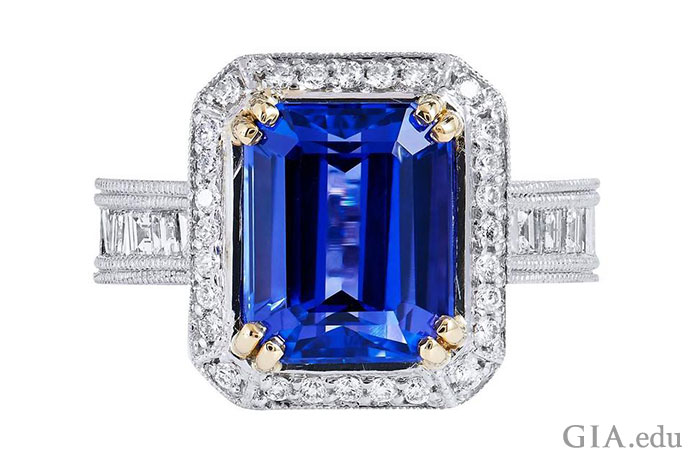
4.91 ct tanzanite, which mimics the deep blue of fine sapphire, and its regal frame of diamonds.

Be mesmerized by the rich color of this 4.91 ct tanzanite, which mimics the deep blue of fine sapphire, and its regal frame of diamonds. Courtesy: 1stdibs.com

Clarity: Tanzanite is usually free of eye-visible inclusions. If any inclusions are present – especially those that pose a durability problem, such as fractures – they typically lower the value.

Cut: Tanzanite is available in a wide range of shapes, but cushion and oval cuts are more common. Because of its pleochroism, cutting direction determines the gem’s overall face-up color. Cutting a tanzanite to emphasize the bluish purple color usually wastes less rough than cutting it to get a pure blue or violetish blue color. The cutter has to make a choice between a smaller top-color gem and a larger bluish purple one.

Carat Weight: Fine tanzanite with a strong, deep color can be found in pieces weighing 5.00 carats or more. Smaller sizes in less saturated colors are commonly seen in mass market jewelry.
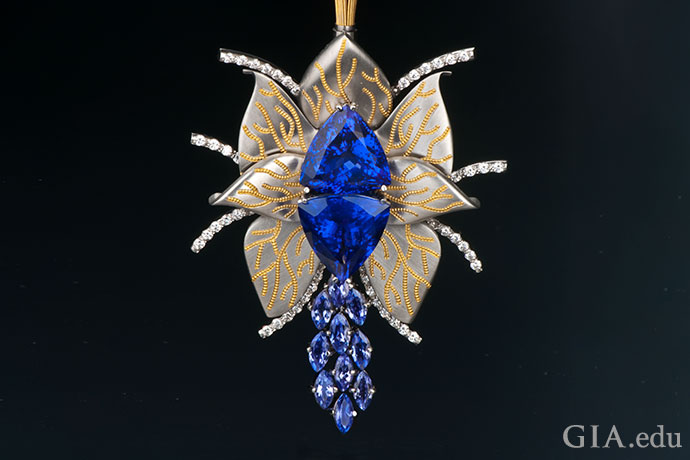
Some 17.67 carats of tanzanite blossom in Sir Zoltan David’s magical "Flowerfly" necklace.

Some 17.67 carats of tanzanite blossom in Sir Zoltan David’s magical “Flowerfly” necklace. The piece won the Tanzanite Foundation’s “Be Born to Tanzanite” Competition in 2007. Photo: Robert Weldon/GIA. Courtesy: Zoltan David

Tanzanite treatments, care & cleaning

Tanzanite is stable under normal wearing conditions, which means it’s resistant to the effects of normal heat, light and common chemicals. Still, the December birthstone may crack if exposed to very high temperatures or sudden temperature changes. It can be attacked by hydrochloric and hydrofluoric acids.

Warm, soapy water is always the best way to clean this December birthstone. Ultrasonic and steam cleaners are never recommended for tanzanite.

Untreated, tanzanite is typically brown. Tanzanite is routinely heat treated to modify its color to a predominantly blue to bluish purple. The treatment is stable with no additional durability concerns.

TURQUOISE: THE HISTORIC DECEMBER BIRTHSTONE

A shoreline of diamonds surround an ocean of turquoise in this captivating ring.

A shoreline of diamonds surround an ocean of turquoise in this captivating ring. Courtesy: Arya Esha

Gemological properties of turquoise

Turquoise is found in only a few places on Earth: dry and barren regions where acidic, copper-rich groundwater seeps downward through deeply altered or broken rocks where it reacts with minerals that contain phosphorus and aluminum. The result of this process is a porous, semitranslucent-to-opaque hydrous phosphate of copper and aluminum.

This December birthstone owes its texture to its structure and composition. Turquoise is an aggregate of microscopic crystals that form a solid mass. If the crystals are packed closely together, the material is less porous, so it has a finer texture. Fine-textured turquoise has an attractive, waxy luster when it’s polished. Turquoise with a less-dense crystal structure has higher porosity and a coarser texture, resulting in a duller luster when it’s polished.

Porosity and texture don’t just affect appearance: They also affect the durability of turquoise. This December birthstone is fairly soft—it ranks 5 to 6 on the Mohs scale of hardness. Turquoise with a coarse texture might have poor toughness, too, so it fractures easily. Samples with finer texture have fair to good toughness.

Gemologists love this December birthstone because turquoise often contains matrix: spiderweb-like veins that provide evidence of the rock in which it formed. They also like how turquoise is colored by copper, which creates some of the most vivid blues and greens in the gem kingdom.
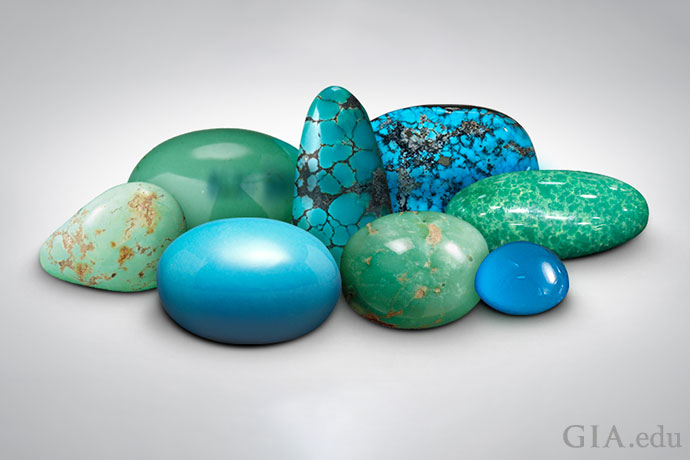
Whether opaque, semitranslucent or checkered with spiderwebs, turquoise enchants

Whether opaque, semitranslucent or checkered with spiderweb-like veins, turquoise enchants. Composite photo: Eric Welch, Robert Weldon, Terri Weimer/GIA, Dr. Edward J. Gübelin collection. Courtesy (far right): Barlow’s

Turquoise history & lore

Turquoise has been cherished for millennia. The pharaohs and other rulers of ancient Egypt adorned themselves with it. Chinese artisans carved it more than 3,000 years ago.

This December birthstone was thought to possess many beneficial powers, like guaranteeing health and good fortune. From the 13th century on, it was believed to protect the wearer from falling (especially off horses), and would break into several pieces at the approach of disaster. Hindu mystics maintained that seeing a turquoise after beholding the new moon ensured fantastic wealth.

Turquoise played an important role in the lives of Native Americans. The Apache thought turquoise could be found by following a rainbow to its end. They also believed that attaching the December birthstone to a bow or firearm made one’s aim more accurate. The Pueblo maintained that turquoise got its color from the sky, while the Hopi thought the gem was produced by lizards scurrying over the earth.
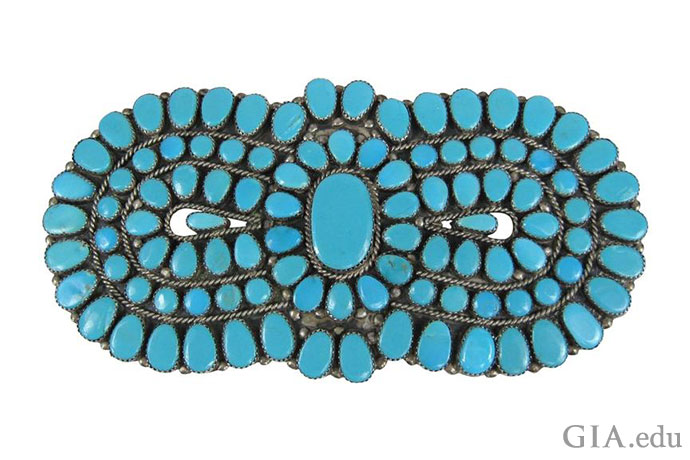
An artisan from the Zuni tribe made this turquoise brooch.

An artisan from the Zuni tribe made this turquoise brooch. Courtesy: 1stdibs.com

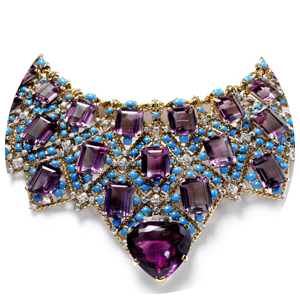
Turquoise adorns the funerary mask of King Tut, who ruled Egypt more than 3,000 years ago. It also appears in jewelry belonging to more modern royalty, such as the Jordan turquoise demi-parure (turquoise, diamond and sapphire necklace and earrings) in the collection of Britain’s Queen Elizabeth II. Wallace Simpson (1896-1986), Duchess of Windsor, wore a famous amethyst and turquoise necklace made by Cartier. Turquoise is also the gem of the 11th wedding anniversary.

A dazzling display of color, Cartier’s bib necklace for the Duchess of Windsor features a sea of turquoise cabochons and faceted amethyst.

A dazzling display of color, Cartier’s bib necklace for the Duchess of Windsor features a sea of turquoise cabochons and faceted amethyst. Courtesy: N. Welsh, Cartier Collection © Cartier

Where turquoise comes from

Turquoise has been mined in the Nishapur district of Iran for more than 1,000 years. The even-colored, intense blue turquoise from this region is dubbed “robin’s egg blue,” “sky blue” and “Persian blue.” Trade professionals now use these terms to describe turquoise of this color – regardless of the source.
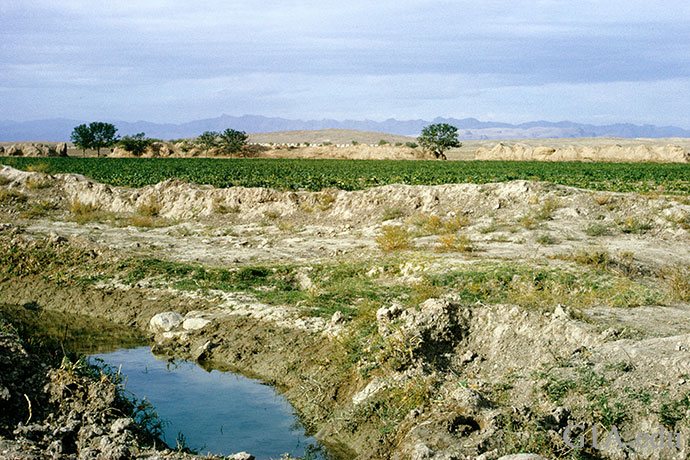
This is the view on the way to Nishapur.

This is the view on the way to Nishapur. Courtesy: Dr. Edward J. Gübelin Collection

Although New Mexico was the largest producer of turquoise in the U.S. until the 1920s, today most of the U.S. production of this December birthstone comes from Arizona and Nevada. Mines have evocative names like Dry Creek, Easter Blue, Emerald Valley and Fox. The Kingman mine in Arizona is a historically important source that is known for producing intense blue turquoise. Now closed to turquoise mining, the Sleeping Beauty mine was a prolific producer for more than four decades.

The intense blue turquoise beads in this necklace came from Arizona’s Sleeping Beauty mine.

The intense blue turquoise beads in this necklace came from Arizona’s Sleeping Beauty mine. Photo: Robert Weldon/GIA. Courtesy: Somewhere In The Rainbow

China is now the world’s largest producer of fine turquoise. Hubei Province, in central China, is the source of most of the gem-quality turquoise currently being mined there.

Qualities to look for in turquoise

Color: The color of turquoise usually ranges from light to medium blue or greenish blue. It’s often mottled, and sometimes it has dark splotches. It might also have veins of matrix running through it.

The most-prized turquoise color is an even, intense, medium blue, with no matrix and the ability to take a good polish. But some consumers prefer a greenish blue, and some contemporary designers seek turquoise referred to as “avocado” and “lime green.”

Clarity: Turquoise can be semitranslucent to opaque. Semitranslucent stones are preferred.

Note the even color in the clusters of turquoise dangling from gold chains in this one-of-a-kind piece.

Note the even color in the clusters of turquoise dangling from gold chains in this one-of-a-kind piece. Courtesy: Denise James

Cut: Turquoise is most often fashioned as cabochons. The smoothly rounded dome shape sets off turquoise’s color, texture and any matrix beautifully. In addition, manufacturers and artisans fashion turquoise rough into round or oblong beads for necklaces, and into small, flat pieces that are popular as jewelry inlays. Other rough material might be tumbled into “nuggets” or polished as free-form shapes that reflect the shape of the original rough. There are also examples of top-color blue turquoise engraved with Persian or Arabic inscriptions that are then inlaid with gold.

Carat Weight: Turquoise is available in a wide range of sizes. All sizes, even very small ones, are used in Native American jewelry, and large pieces have been popular for carvings. For any size, the quality and evenness of the color is the overriding value factor.
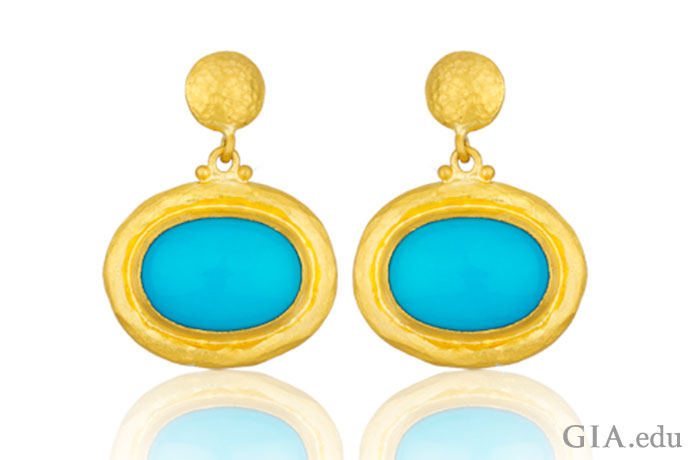
Rich blue turquoise surrounded by 24K gold makes these earrings a mesmerizing sight.

Rich blue turquoise surrounded by 24K gold makes these earrings a mesmerizing sight. Courtesy: Lika Behar

Turquoise treatments, care & cleaning

A colorless wax or polymer is often used to improve the color and luster of turquoise. Other treatments include applying epoxy to thin turquoise slices to strengthen them, applying coatings of lacquer or epoxy, and filling cavities with imitation pyrite inclusions made of metal-filled epoxy.

It’s safe to clean turquoise jewelry with warm, soapy water, but this December birthstone should never be cleaned with steam or ultrasonic cleaners. Heat or solvents can damage the treated surfaces on some turquoise.

Turquoise is generally stable to light, but high heat can cause discoloration and breakage. Turquoise can be damaged by acids, and it can be discolored by certain chemicals, cosmetics and even skin oils or perspiration.

ZIRCON: THE COLORFUL DECEMBER BIRTHSTONE

A 19.76 ct orangy brown zircon is ringed by 0.51 carats of diamonds.

A 19.76 ct orangy brown zircon is ringed by 0.51 carats of diamonds. Courtesy: 1stdibs.com

Gemological properties of zircon

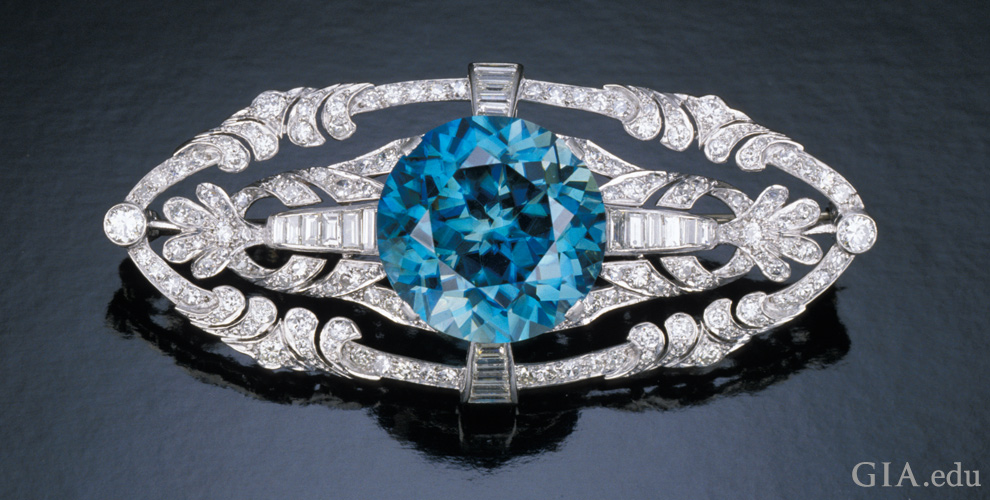
Zircon comes in a wide and varied palette of yellow, green, red, orange, brown and blue hues, making it a favorite among collectors and knowledgeable consumers. This December birthstone is 6 to 7.5 on the Mohs scale of hardness.

The zircons in this colorful array originate from Sri Lanka, Cambodia, Thailand, Tanzania and other locations.

Zircon comes in a wide array of attractive colors. Photo: Robert Weldon/GIA, Dr. Edward J. Gübelin Collection.

Colorless zircon is known for its brilliance and flashes of multicolored light, called fire. These two zircon properties are close enough to the properties of diamond to account for centuries of confusion between the two gems.

This 11.41 ct oval blue zircon with its diamond halo is like a lake that invites the viewer to peer into infinity. The tsavorite garnet side stones are leafy touches to the icy scene.

This 11.41 ct oval blue zircon with its diamond halo is like a lake that invites the viewer to peer into infinity. The tsavorite garnet side stones are leafy touches to the icy scene. Courtesy: Omi Privé

Gemologists love zircon because its radioactive trace elements are a geologic clock that tells us about the early Earth. This December birthstone also has very high luster, high refractive indices (the measure of the extent to which light is bent as it leaves a gemstone at an angle other than perpendicular to the surface) and strong dispersion, which is responsible for the brilliance and rainbow flashes of fire.

Zircon history & lore

The origins of the word zircon have elicited colorful debate. Some scholars believe it comes from the Arabic word zarkun, meaning “cinnabar” or “vermilion.” Others think the source is the Persian word zargun, or “gold colored.” Considering the color range for this December Birthstone, either derivation seems possible.

Zircon comes with pleasing lore. In the Middle Ages, it was thought to lull one into a deep sleep and scare off evil spirits. In the Hindu religion, zircon alternates with hessonite garnet as one of the nine gems of the navaratna. When worn together, the nine gems protect the wearer and bring good health, wealth and wisdom.

Victorians had a fondness for blue zircon. Fine specimens can be found in English estate jewelry from the 1880s.
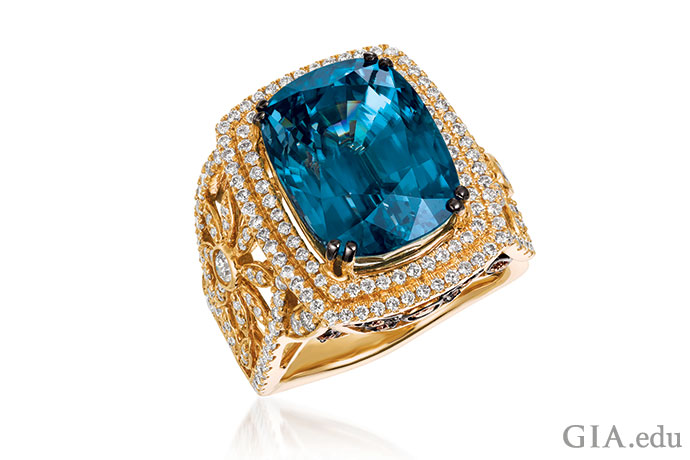
Regal rings like this show why blue zircon is a popular gem

Regal rings like this show why blue zircon is a popular gem. Courtesy: LeVian

Where zircon comes from

Sri Lanka’s wealth of gems is legendary: Sapphire in various colors, ruby, alexandrite, spinel, tourmaline, moonstone and quartz are some of the gem minerals unearthed there. So is zircon. Elahera, a region in central Sri Lanka, is one of the country’s most productive areas. Mountains, jungles and restless streams make for a dramatic landscape.
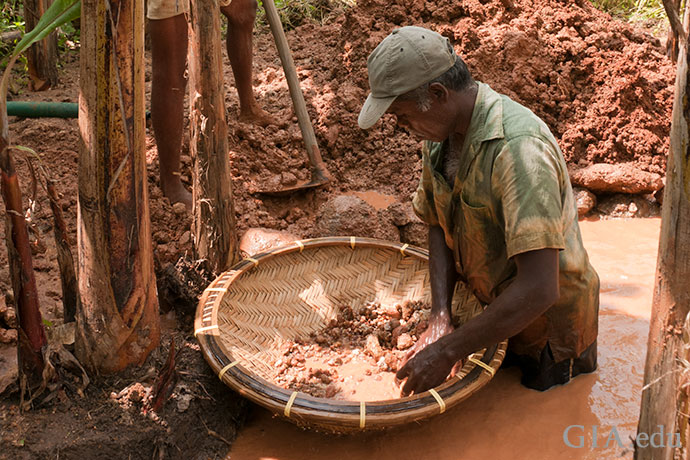
An artisanal miner searches for gems in the Elahera region of Sri Lanka.

An artisanal miner searches for gems in the Elahera region of Sri Lanka. Photo: Vincent Pardieu/GIA

Australia’s Harts Range is known for producing zircons in yellow-brown, orangy brown, pink and purple. Go there and you’ll see open savannahs, dry stream beds and low-lying hills that meet the horizon. Zircon Hill is where the gem is mined. The nearby city of Alice Springs is known for its outback culture, aboriginal art and quirky sporting events like a regatta race held in a dry river bed.

Zircon is often located near sapphire sources. Countries where the two overlap include Sri Lanka, Myanmar, Vietnam, Cambodia and Australia.

Qualities to look for in zircon

Color: Some zircons display warm autumnal earth tones such as yellowish and reddish brown. Red and green zircons have market value as collectors’ stones, and cat’s-eye zircons occasionally appear on the market. There are also colorless zircons.
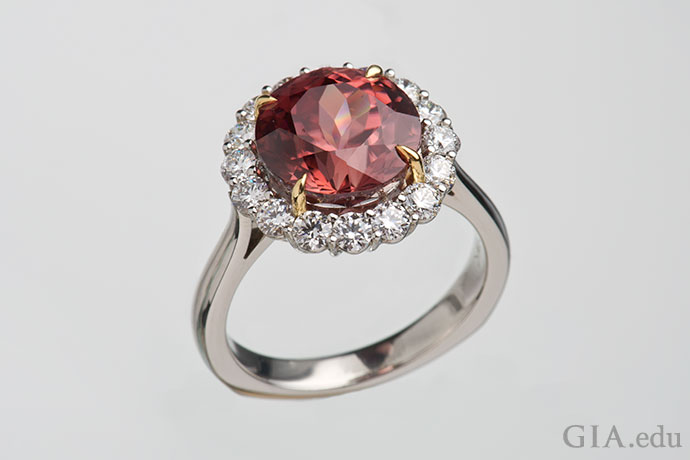
A brisk autumn day, a fireplace and apple cider would be the perfect backdrop for this ring, which features a 7.96 ct zircon.

A brisk autumn day, a fireplace and apple cider would be the perfect backdrop for this ring, which features a 7.96 ct zircon. Photo: Robert Weldon/GIA. Courtesy: Richard Krementz Gemstones

Although collectors clearly love zircon’s variety of colors, consumers seem most enamored of just one hue: blue. Gem dealers report that at least 80 percent of the zircons they sell are blue. Because they’re in greater demand, blue zircons usually command higher prices than any of the other varieties.
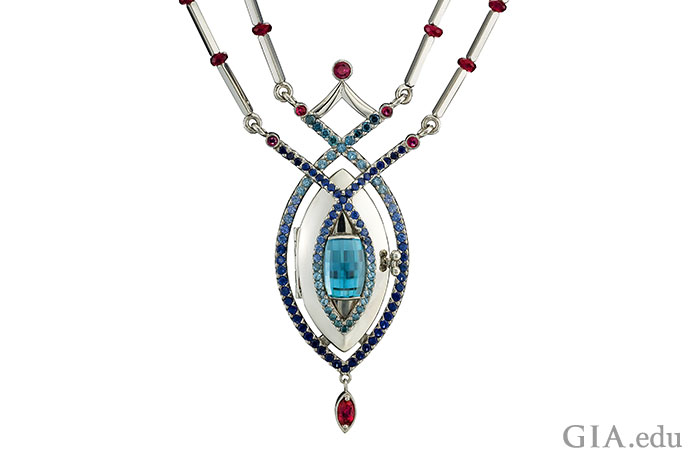
A blue zircon takes center stage in the “Reine de Glace” pendant designed by Lisa Krikawa.

A blue zircon takes center stage in the “Reine de Glace” pendant designed by Lisa Krikawa. Courtesy: Krikawa Jewelry Designs. Blue zircon by John Dyer & Co.

Clarity: Zircons are relatively free of inclusions. But many untreated zircons have a cloudy or smoky appearance that, if extreme, can be a negative factor with buyers. In Victorian times, this smokiness made zircon a popular gem for mourning jewelry. Today, most faceted zircon is free of inclusions that are visible to the unaided eye. Eye-visible inclusions cause a drop in zircon value. Rarely, zircon might contain long, parallel inclusions that create a cat’s-eye effect when the stone is cut as a cabochon.

Cut: It’s a challenge to cut zircon because the gem is brittle. Cutters usually fashion zircon in the brilliant style to take advantage of its brilliance and fire. Zircon can also be found in step cuts, which have rows of parallel facets, and mixed cuts, which are a combination of brilliant and step-cut facets.
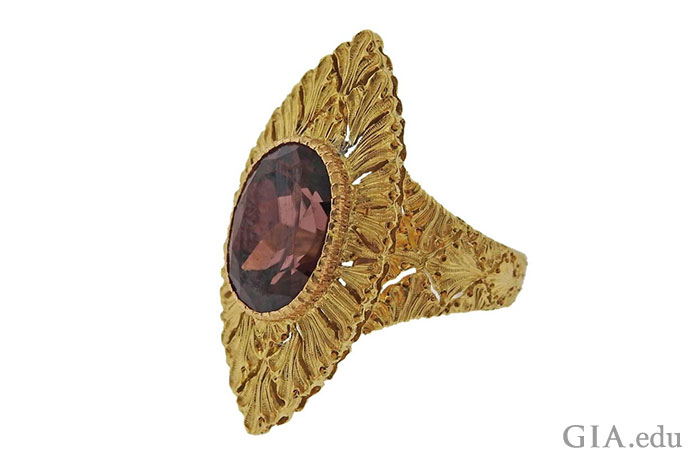
A richly colored 7.23 ct zircon set in an ornate 18K gold ring looks like it belongs on the finger of European royalty.

A richly colored 7.23 ct zircon set in an ornate 18K gold ring looks like it belongs on the finger of European royalty. Courtesy: 1stdibs.com

Carat Weight: The supply of this December birthstone is generally limited, and typical zircon sizes depend on color. Blue or green stones normally range from one carat to 10 carats, with yellows and oranges up to around five carats. Reds and purples are usually smaller.

Zircon treatments, care & cleaning

Warm, soapy water is recommended for cleaning zircon. Ultrasonic and steam cleaners are not recommended for this December birthstone.

Zircon is commonly heat treated to produce blue and colorless varieties, as well as orange, yellow and red. The gem is generally stable when exposed to light, but some heat-treated stones might revert to their original colors (usually light brown) after prolonged exposure to bright light. Exposure to heat can alter the color of some zircon. Zircon is stable when exposed to chemicals.

Because zircon tends to abrade, it is best to avoid wearing it in rough conditions, such as while gardening, playing sports or doing dishes.
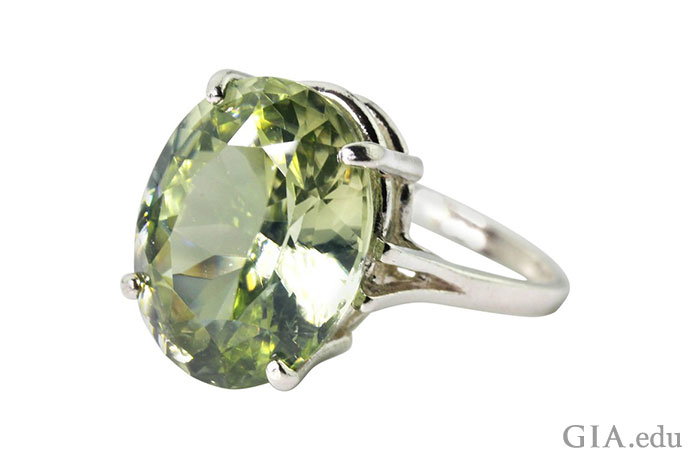
The color of the 14.48 ct zircon in this ring evokes a forest … fields … grassy expanses.

The color of the 14.48 ct zircon in this ring evokes a forest … fields … grassy expanses. Courtesy: 1stdibs.com

Ready to go shopping for the December birthstone?  Be sure to take our Tanzanite Buying Guide and Turquoise Buying Guide with you when you go!
December Birthstones: Where Do Turquoise, Tanzanite and Zircon Come From?

If you were born in December you have a lot to celebrate, including three December birthstones: turquoise, tanzanite and zircon. With a spectrum of colors to choose from, learning about where the sources of these gems will only add to their appeal. (more…)

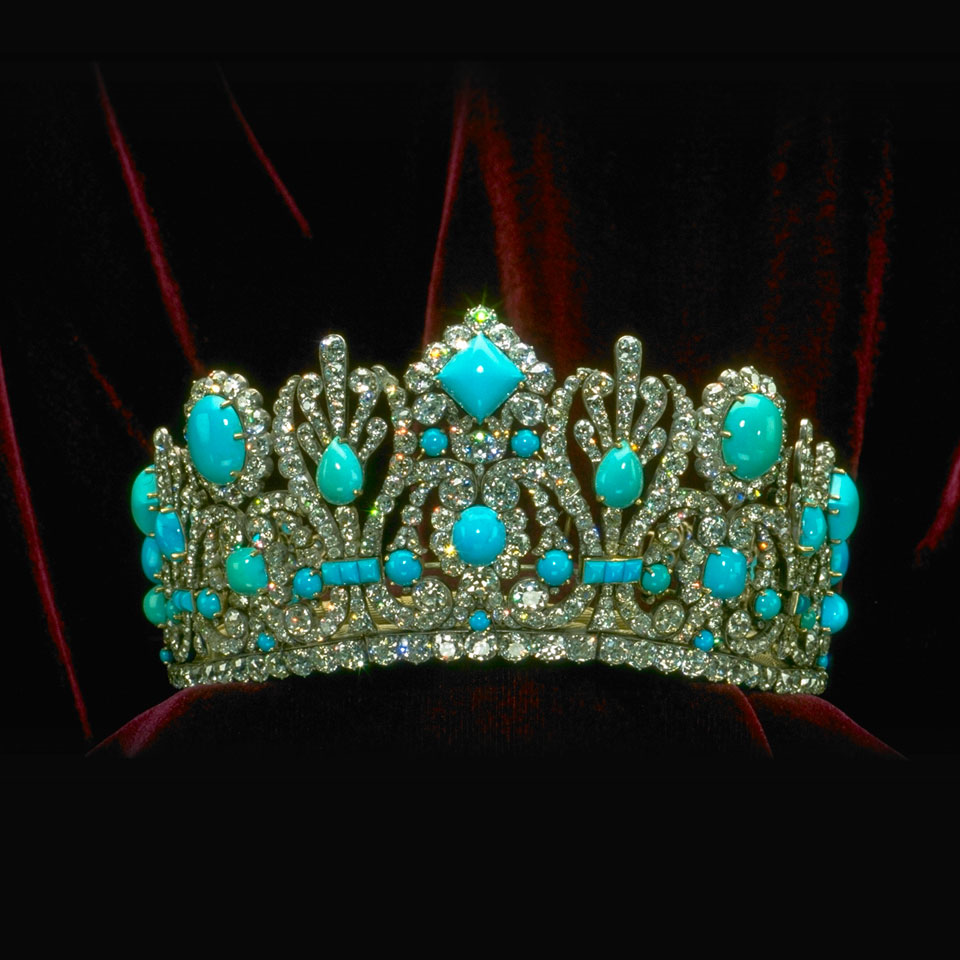
Famous Birthstone: December’s Turquoise Empress Marie-Louise Diadem

When we think of royalty, images of crowns, tiaras, and diadems instantly come to mind. Beautiful head ornaments intricately crafted in gold and encrusted with rare gemstones were once used as symbols of nobility, status, and the right to rule. They dazzled onlookers with their splendor, and even though royal families may have faded in political power, their relics continue to captivate. (more…)

Turquoise: December’s Birthstone, Loved for its Sky Blue Color

Those celebrating December birthdays are fortunate to have a few birthstones to choose from – zircon, tanzanite, blue topaz and lapis lazuli, among them. But one of the best known and most loved December gems is turquoise, a gem that has been mined and used for thousands of years. (more…)

All About Birthstones: Tanzanite in December

Tanzanite, the December alternate to turquoise and zircon, was not discovered until 1967, so it is a relative newcomer to the list of birthstones. It is named for the one country on earth where it is currently found: Tanzania, in eastern Africa.  Although discovered by others, Tiffany & Co. deserves the credit for naming the gem and popularizing it beginning with a big publicity campaign in 1968. (more…)

September Birthstone: What You Need to Know About Sapphire

The September birthstone is sapphire – a gem that’s been cherished for thousands of years. Sapphire is one of the most popular colored stones because of its beautiful blues. It also comes in a rainbow of other colors. Here’s how to pick a stunning one.

In this post, we cover:

Gemological Properties of Sapphire
Sapphire History & Lore
Where Sapphire Comes From
Qualities to Look for in Sapphire
Sapphire Care & Cleaning

Gemological Properties of Sapphire

The colors of sapphire enchant.

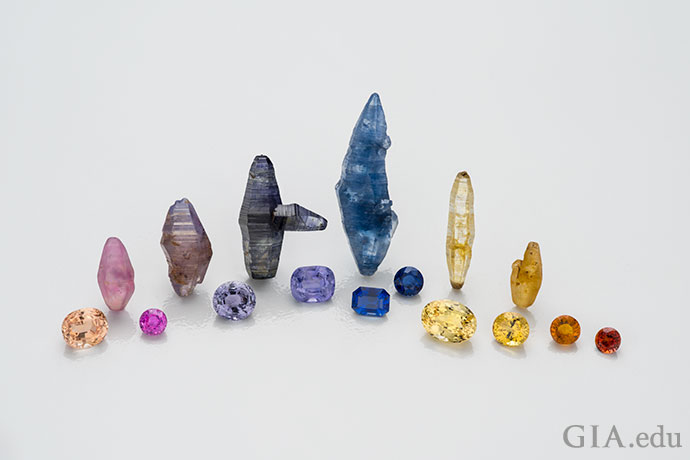
The colors of sapphire enchant. Faceted stones (from left to right): 6.36 carat (ct) pinkish orange “padparadscha,” 1.63 ct pink, 4.76 ct violet, 5.43 ct violet-purple, 3.03 ct blue, 2.12 ct blue, 8.06 ct yellow, 3.46 ct yellow, 2.00 ct orange and 1.01 ct deep orange. Photo: Robert Weldon/GIA. Courtesy: Dr. Edward J. Gübelin Collection and Bill Larson, Pala International

The September birthstone, sapphire, comes in a range of colors in addition to the familiar blue. Called “fancy sapphires,” these are violet, green, yellow, orange, pink, purple, black, brown and intermediate hues. Sapphire can be colorless, too. That’s because the gem belongs to the mineral species corundum, which is composed of aluminum and oxygen. In its purest state, corundum is colorless. However, colorless corundum is rare. Most corundum contains trace amounts of additional elements including iron, titanium, magnesium, vanadium, and chromium that replace aluminum in the corundum structure. The coloration of blue and fancy sapphires involves interactions between these impurity elements—sometimes in combination with imperfections in the gem’s crystal structure—that absorb light and impart color into this otherwise colorless mineral.

Blue in sapphire requires interaction between impurities of iron and titanium, whereas chromium is key to the pink in pink sapphires and the red color of ruby, which also belongs to the corundum mineral species. (Red corundum is the only color not called sapphire – it is called ruby.)

Any color of corundum can show a phenomenon called asterism, or the star effect. This phenomenon usually appears as a six-ray star pattern across a cabochon-cut stone’s curved surface when the gem is examined in direct sunlight or with a single intense light. Asterism is caused by the presence of numerous tiny, needle-like inclusions of rutile or hematite oriented in specific directions.

The star, or asterism, in this 5.43 ct blue sapphire is heavenly.

The star, or asterism, in this 5.43 ct blue sapphire is heavenly. Photo: Robert Weldon/GIA. Courtesy: Fu Gemstone Import, Seattle, WA.

Another interesting variety is color-change sapphire. These fascinating stones appear to be a different color under different lighting conditions, most often going from violetish blue in daylight or fluorescent lighting to deep reddish purple in incandescent light. Their presence adds a special dimension to the options available for the amazing September birthstone.

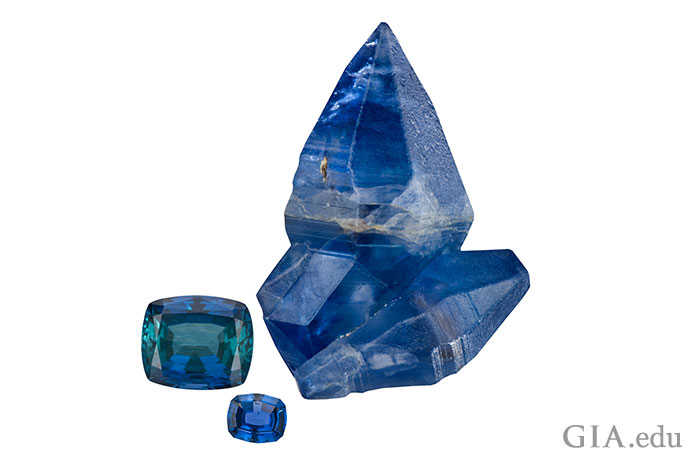
A cluster of sapphire crystals from Myanmar, a faceted blue-green sapphire from Kenya and a faceted blue sapphire from Montana.

Pictured here are a cluster of sapphire crystals from Myanmar, a faceted blue-green sapphire from Kenya and a faceted blue sapphire from Montana. Photo: Robert Weldon/GIA. Courtesy: (Rough) Bill Larson, Pala International; (Left) Columbia Gem House; (Bottom) Dr. Edward J. Gübelin collection.

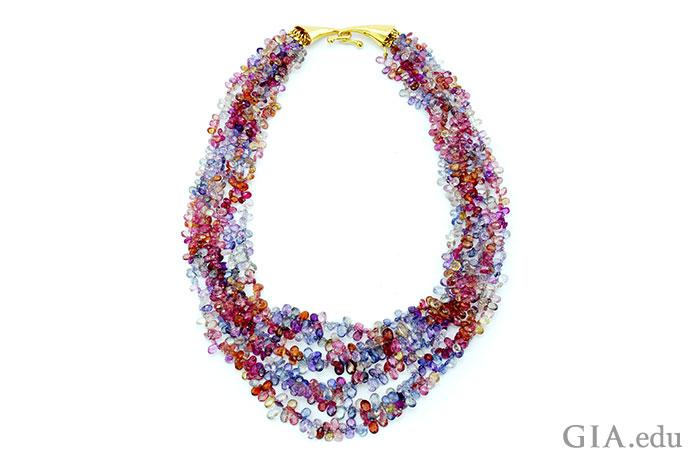
Some of the many colors of sapphire are on display in “Dawn” – a one-of-a-kind necklace that features 450 carats of sapphire beads.

Some of the many colors of sapphire are on display in “Dawn” – a one-of-a-kind necklace that features 450 carats of sapphire beads. Courtesy: Denise James

Sapphire History & Lore

The September birthstone has traditionally symbolized sincerity, truth, faithfulness and nobility. For countless centuries, sapphire has adorned royalty and the robes of the clergy. The elite of ancient Greece and Rome believed that blue sapphires protected their owners from harm and envy. The clergy of the Middle Ages wore sapphires because they symbolized Heaven.

The September birthstone was also reputed to have healing powers. Medieval Europeans believed that sapphire cured plague boils and diseases of the eye. It also was thought to be an antidote to poison.

A dragonfly brooch studded with a 38.82 carats of pink, green, blue and yellow fancy sapphires and 5.74 carats total weight of diamonds.

A dragonfly brooch studded with a 38.82 carats of pink, green, blue and yellow fancy sapphires and 5.74 carats total weight of diamonds might make you believe in the magical powers of the gem. Photo: Robert Weldon/GIA. Courtesy: Pioneer Gems

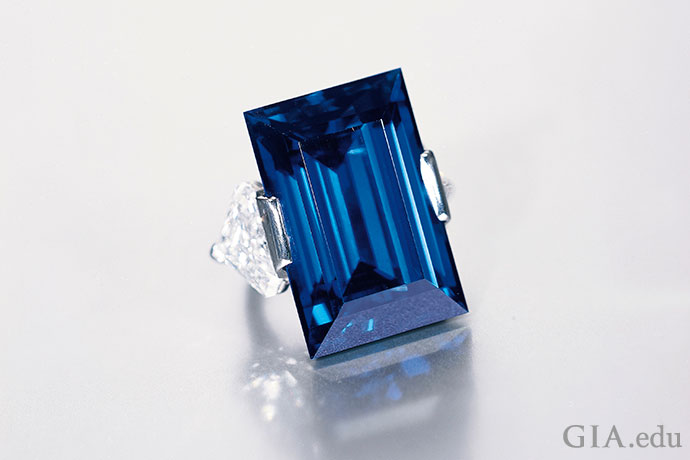
Famous sapphires include the Rockefeller Sapphire, a 62.02 ct rectangular step cut stone that was unearthed in Myanmar (Burma). Acquired in 1934 by financier and philanthropist John D. Rockefeller, Jr. (1874–1960) from an Indian maharaja, the gem was recut and remounted over the years. The sapphire was first set as a brooch and later as a ring featuring two triangular brilliant cut diamond side stones.

The Rockefeller Sapphire is a 62.02 ct rectangular step-cut sapphire weighing 62.02 ct.

The Rockefeller Sapphire is a 62.02 ct rectangular step-cut sapphire weighing 62.02 ct. Here it is flanked by cut-cornered triangular cut diamonds, mounted in a platinum ring signed Tiffany & Co. Courtesy: Christie’s Images Ltd., 2015

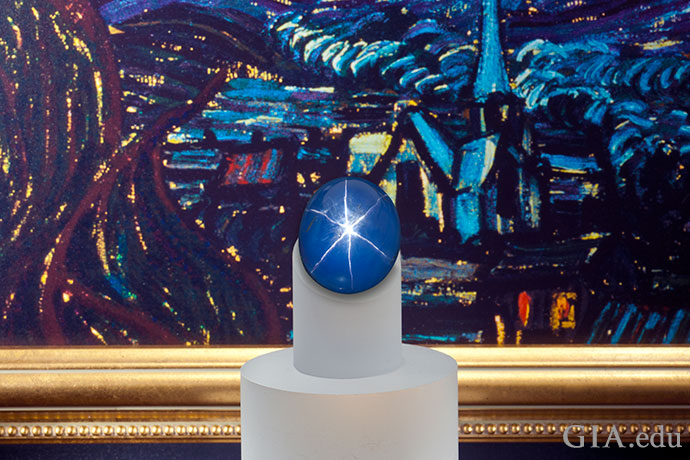
The Starry Night Sapphire is another famous gem. Also originating from Myanmar, the Starry Night Sapphire is a 111.96 ct cabochon-cut gem whose magnificent six-rayed star is a fine example of asterism.

The Starry Night Sapphire comes from Myanmar, one of the most important sources of the gem.

The Starry Night Sapphire comes from Myanmar, one of the most important sources of the gem. The gemological phenomenon asterism is responsible for creating the six-rayed star. Photo: Robert Weldon/GIA. Courtesy: Benjamin Zucker

In addition to being the September birthstone, sapphire is also the gem commemorating the 5th and 45th wedding anniversaries.

Where Sapphire Comes From

Kashmir, Myanmar and Sri Lanka are three historically important sources for sapphire. Significant quantities of the September birthstone have also been found in Australia, Thailand, Cambodia, Madagascar and the United States (Montana), among other countries in Asia and Africa.
Sapphires were discovered in Kashmir around 1881, when a landslide high in the Himalayas exposed a large pocket of velvety “cornflower” blue crystals. As the spectacular sapphires began to appear farther south, the Maharaja of Kashmir—and his army—took control of the new locality. From 1882 to 1887, thousands of large, beautiful crystals were recovered. In this short season of six years rests Kashmir sapphire’s reputation as one of the world’s most coveted gems. Production has been sporadic since then, but auction houses occasionally sell fine pieces of Kashmir sapphire.

A magical pool … a drop of the sky … a slice of eternity. This 3.08 ct cushion cut Kashmir sapphire conjures such visions.

A magical pool … a drop of the sky … a slice of eternity. This 3.08 ct cushion cut Kashmir sapphire conjures such visions. Photo: Robert Weldon/GIA. Courtesy: Edward Boehm, RareSource

The Himalaya Mountains are the source of Kashmir’s beautiful blue sapphires.

The Himalaya Mountains are the source of Kashmir’s beautiful blue sapphires. Photo: Robert C. Kammerling/GIA

The Mogok area of Myanmar is another locale famed for producing the September birthstone. Jungle-clad hills hemmed by mountains make a dramatic landscape. Sapphire typically occurs alongside ruby deposits, but in much lower quantities than its red counterpart. ”Burmese” sapphire, as it is still called by many, can possess a rich, intense blue hue, which has made it particularly prized.  Myanmar is also a noted source of jadeite jade, spinel, zircon, amethyst, peridot and other fine gem materials.

A scenic view near Mogok rivals the beauty of the sapphires hidden underground.

A scenic view near Mogok rivals the beauty of the sapphires hidden underground. Photo: James E. Shigley/GIA

For more than 2,000 years, Sri Lanka has been a source of fine sapphire. The blue stones mined from the alluvial gravels of this “jewel box of the Indian Ocean” can display remarkable brilliance and saturation. In addition, the island’s milky white “geuda” sapphires can be heat treated to a rich blue color.

Sri Lanka is one of the few sources for padparadscha (from the words for “lotus color” in Sinhalese) sapphires. Poetic descriptions for this light to medium pinkish orange to orange-pink sapphire include “salmon,” “sunset” and ”ripe guava.” Padparadschas are quite coveted and have a very high per-carat value.

This gem-rich island is also home to ruby, spinel, garnet, tourmaline, topaz and many more gems.

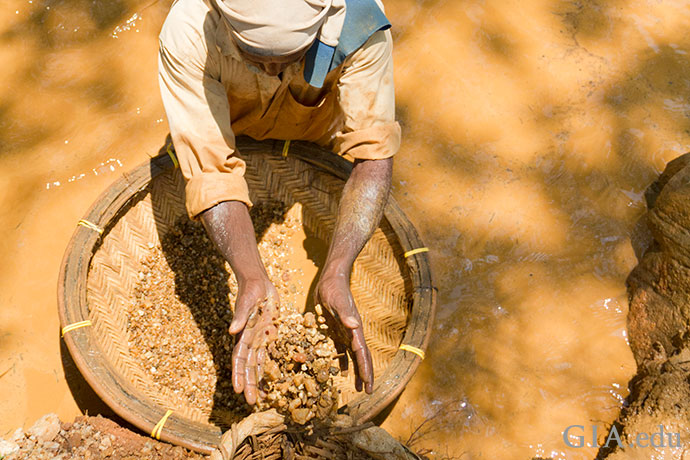
Using the same rudimentary washing techniques as generations before them in Sri Lanka, miners search for sapphire among the gravels in a local stream.

Using the same rudimentary washing techniques as generations before them in Sri Lanka, miners search for sapphire among the gravels in a local stream. Courtesy: Afsaneh Tazari

The spellbinding beauty of this 6.66 ct gem from Sri Lanka shows why padparadscha sapphires are so prized.

The spellbinding beauty of this 6.66 ct gem from Sri Lanka shows why padparadscha sapphires are so prized. Photo: Robert Weldon/GIA, Dr. Edward J. Gübelin Collection

Thailand is a source of sapphire and a major cutting and treatment center. In dense jungle crossed by dirt roads, miners dig for sapphire in Chanthaburi Province. Sapphires from Myanmar and Cambodia often end up in Chanthaburi for cutting and treatment, and are also sent to Bangkok, an important gem hub.

In the distance, a mining pit dots the tropical terrain of Chanthaburi, Thailand.

In the distance, a mining pit dots the tropical terrain of Chanthaburi, Thailand. Photo: Vincent Pardieu/GIA

Sapphire Qualities to Look For

Here are some tips for picking a stunning sapphire.

  • Color: The value of most sapphires—both blue and fancy color is based on a combination of hue, tone and saturation. Hue is your first impression of a gem’s basic color. Tone is the darkness or lightness of a color. Saturation is a color’s strength or intensity.
Each sapphire color has its own quality variations. In general, though, the more intense the color and the fewer zones of unattractive color, the more valuable the stone. The most highly valued blue sapphires are velvety blue to violetish blue, in medium to medium-dark tones. The saturation should be as strong as possible without darkening the tone and compromising brilliance. Blue sapphires with these qualities command the highest price per carat.
Zoning in sapphires of all colors is common and, especially when apparent in the stone viewed face up, reduces the value of the sapphire. It is important to examine a stone from all angles to determine the presence or degree of zoning before making a purchasing decision.
Other factors that help determine the value of a sapphire are clarity, cut, proportions, rarity and market demand.
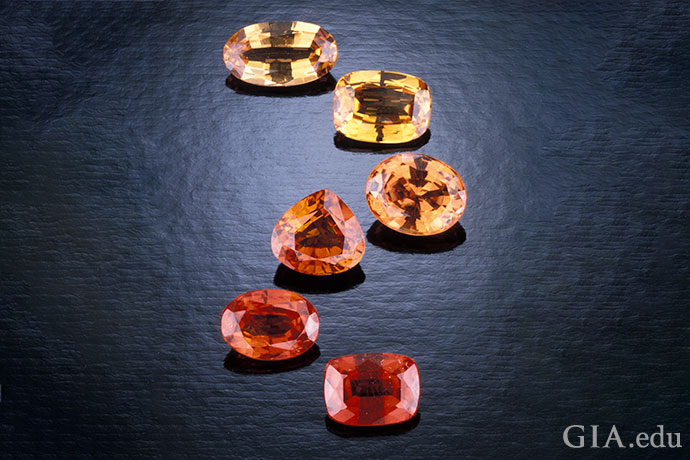
These fancy sapphires range from yellow to highly saturated reddish orange.

For those who prefer warm-colored gems, the September birthstone does not disappoint. These fancy sapphires range from yellow to highly saturated reddish orange. Photo: GIA & Tino Hammid. Courtesy: Varujan Arslanyan

  • Cut: Fashioned sapphires appear most commonly in cushion and oval shapes with brilliant-cut crowns and step-cut pavilions. Blue sapphire cut into trilliant (triangular), emerald, pear and marquise shapes are also available.
The cushion cut is particularly popular for sapphires, like this 4.47 ct blue stone.

The cushion cut is particularly popular for sapphires, like this 4.47 ct blue stone. Photo: Robert Weldon/GIA. Courtesy: Bear Essentials

Asterism in a sapphire will only be revealed if the stone is cut as a cabochon. A finished stone’s attractiveness depends on the star’s orientation and the cabochon’s symmetry, proportions and finish.

Look for a cabochon with a symmetrical outline and a star that’s centered when the gem rests on its base. The dome of the cabochon should be fairly high—about two-thirds of the stone’s width—to focus the star sharply. If it’s too high, the phenomenon loses its graceful motion when the stone is tilted. Excessive height also makes the stone difficult to mount.

  • Clarity: Sapphires typically have some inclusions. As a general rule, inclusions make a stone less valuable, and the price can drop significantly if they threaten the stone’s durability. Sapphires with extremely high clarity are rare and very valuable.
  • Carat Weight: Sapphires can range in size from a few points to hundreds of carats. Large blue sapphires are more readily available than large rubies. However, most commercial-quality blue sapphire weighs less than 5 carats. Large padparadscha or color-change sapphires are exceedingly rare.
Sapphires are the stars in these earrings. They were especially popular during the Art Deco era of the 1920s and ‘30s, a look that you can get in an engagement ring.

Sapphires are the stars in these earrings. They were especially popular during the Art Deco era of the 1920s and ‘30s, a look that you can get in an engagement ring. Courtesy: Genevive

  • Treatments: As you shop, be aware that sapphires are often treated in some way to improve their color and other aspects of their appearance. Heating is one common treatment, particularly for blue sapphires. The results are stable and durable, and heat-treated blue sapphires typically retain their enhanced effects permanently. Because of this, the practice is commonly accepted in the colored stone market.
Lattice diffusion is another common treatment that can improve color. This involves packing a sapphire into a crucible with coloring agents such as titanium or beryllium, and then heating them almost to a melting point. This allows the elements to enter the stone and alter its color. For example, pink sapphires may turn orange or pinkish orange (padparadscha) with beryllium diffusion. While this treatment is also considered permanent, in some cases (such as titanium-diffused blue sapphire) the added color is so shallow it could be removed if the stone was chipped or had to be recut.
A less stable, and relatively less common, treatment is the filling of surface-reaching fractures with oil, epoxy, resin or a high-lead-content glass. In some cases, a colored filler is used.
Sapphires treated with a filler require special care. The filler can be damaged through contact with a variety of chemicals or high heat. Even relatively mild substances like lemon juice can cause alteration of high-lead-content glass.
Be sure to ask if your sapphire has been treated before you buy. A GIA Colored Stone Identification Report  will tell you if a stone is natural or synthetic and whether it has been treated in any fashion.

Sapphire Care & Cleaning

The September birthstone is relatively hard, ranking 9 on the Mohs scale. It has excellent toughness and no cleavage, which is a tendency to break when struck. This makes it a great choice for rings and other mountings subject to daily wear.

Corundum is stable under normal wearing conditions, which means it’s resistant to the effects of heat, light and common chemicals. Boric acid powder will etch the surface of even untreated stones. Fracture-filled, cavity-filled and dyed stones can be damaged by even mild acids like lemon juice.

Warm, soapy water is always a safe choice for cleaning the September birthstone. Ultrasonic and steam cleaners are usually safe for untreated, heat-treated and lattice-diffusion-treated stones. Fracture-filled, cavity-filled or dyed material should only be cleaned with a damp cloth.

Now that you know all about sapphire, you’re probably in the mood to buy a beautiful one. Our Sapphire Buying Guide can help you make a great choice.

July Birthstone: What You Need to Know About Rubies

Ruby is the July birthstone – and it’s one of the most coveted of gems. Called the “king of gems” in ancient India, today it can command the highest per-carat price of any colored stone. Here’s what you need to know about this beautiful gem.

In this post, we cover:
Gemological Properties of Ruby
Ruby History & Lore
Where Ruby Comes From
Qualities to Look for in Rubies
Ruby Treatments, Care & Cleaning


July Birthstone: Gemological Properties of Ruby

Ruby, the July birthstone, is a variety of the mineral corundum that contains trace amounts of the element chromium, which causes its color. The more chromium present, the stronger the color red. Chromium can also cause red fluorescence, which adds to the intensity of the color. Fluorescence is visible light temporarily emitted by some gem materials when they are exposed to high-energy sources such as ultraviolet light (as in sunlight), X-rays or lasers.

Some rubies form in marble, when heat and pressure act on minerals in limestone. These rubies tend to be highly prized, as they have a higher concentration of chromium and little iron, which is an ideal recipe for a bright red color. They also tend to be highly fluorescent.

Other rubies are found in basalt, which forms when molten lava cools and solidifies. Basalt-hosted rubies typically have significantly more iron than marble-hosted rubies and thus are darker. A higher iron content can also mask the fluorescence, eliminating that extra glow of red color.
Still other rubies form in an amphibole-bearing gneiss (a coarse-grained metamorphic rock). These rubies tend to have good color, though they have more iron than the marble-hosted stones and less than those from basalt.

Gemologists love the July birthstone because synthetic ruby was used to create the first laser in 1960. They also consider chromium to be the “rock star” of trace elements.
Consumers love ruby for its intense red color and because it’s a 9 on the Mohs scale of hardness, just below diamond. As such, it is a very durable stone that holds up well to daily wear in rings and other jewelry.

A look at these earrings featuring 8.16 carats of ruby, 1.78 carats of marquise diamonds, and 1.69 carats of round diamonds shows why we are enchanted by the gem. Courtesy: Omi Privé


July Birthstone: Ruby History & Lore

A prized gem like ruby naturally comes with many attributes. Because it resembles the color of blood, ancients believed it could stop hemorrhaging. The July birthstone was also thought to cure inflammatory diseases and soothe anger. Burmese warriors believed it made them invincible in battle. Medieval Europeans maintained that rubies bestowed health, wisdom, wealth and success in love.

In addition to being the July birthstone, ruby is traditionally given for the 15th and 40th wedding anniversaries.

The Harry Winston Ruby Slippers are a famous example of the July birthstone in a spectacular setting. To commemorate the 50th anniversary of the movie “The Wizard of Oz,” the House of Harry Winston fashioned a pair of red slippers featuring 4,600 rubies weighing an estimated 1,350 carats. When they were created in 1989, they were valued at $3 million.

4,600 rubies weighing an estimated 1,350 carats glitter in the slippers; another 50 carats of diamonds accent the unique creation.

Harry Winston’s famed ruby slippers were exhibited at GIA in December 1997. Some 4,600 rubies weighing an estimated 1,350 carats glitter in the slippers; another 50 carats of diamonds accent the unique creation. Courtesy: Harry Winston


July Birthstone: Where Ruby Comes From

Our search for the July birthstone starts in Myanmar (formerly known as Burma). For more than five centuries, the Mogok area in Myanmar has produced some of the finest rubies – vibrant red beauties softened by light-scattering inclusions and a glowing red fluorescence. The region is a place of weathered marble and ancient Buddhist temples.

Golden spires of a monastery near Mogok are flashes of color along the mountainside.

Golden spires of a monastery near Mogok are flashes of color along the mountainside. Photo: Robert C. Kammerling/GIA

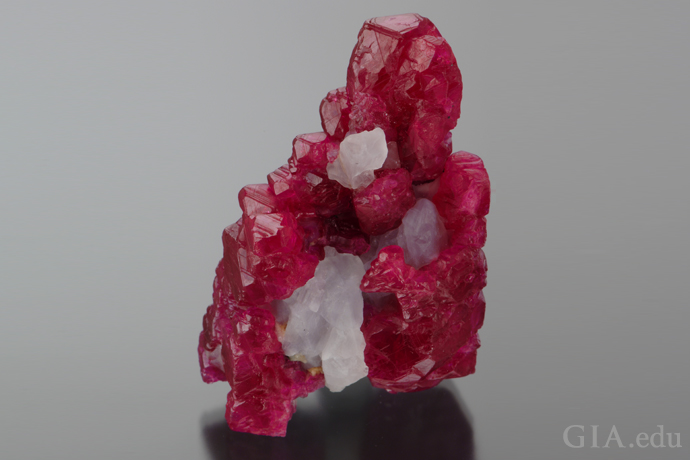
Ruby crystals intertwined with their matrix rival the beauty of finished gems from Mogok.

These ruby crystals intertwined with their matrix rival the beauty of finished gems from Mogok. Photo: Robert Weldon/GIA. Courtesy: Bill and Jeanne Larson

Vietnam is another important source for marble-hosted rubies. The Luc Yen region, where rainforest-clad mountains rise over broad paddy fields, produces rubies of red to purplish red color. Today, artisanal miners work the soil in hopes of finding a gem that will change their fortunes.

Small village sits at the base of the mountains in the ruby-bearing Luc Yen region.

A small village sits at the base of the mountains in the ruby-bearing Luc Yen region. Photo: Vincent Pardieu/GIA

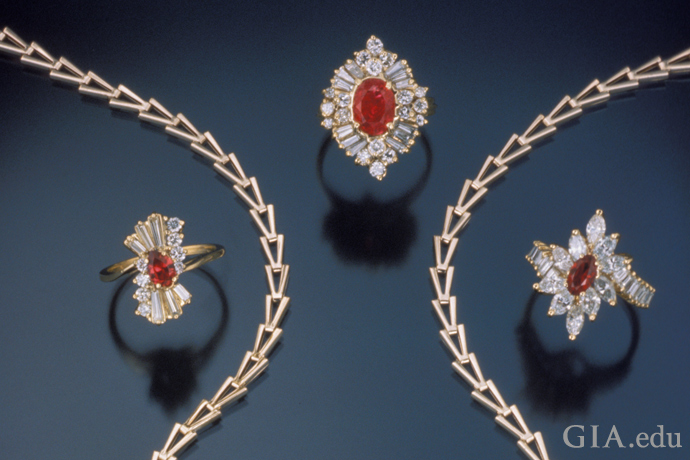
Rubies from Luc Yen and other locales in Vietnam star in these four rings and necklace.

Rubies from Luc Yen and other locales in Vietnam star in these four rings and necklace. Photo: Shane McClure/GIA

4.04 carat (ct) ruby came from Mozambique, the pre-eminent source of commercial and fine rubies.

This fine 4.04 carat (ct) ruby came from Mozambique, the pre-eminent source of commercial and fine rubies. Photo: Robert Weldon/GIA. Courtesy: Evan Caplan, GemFields

Mozambique is an important new, amphibole-related source for the July birthstone. This African nation is home to the prolific mines at Montepuez. Rubies found there have been compared to the famed gems of Mogok.

For many years in the late 1900s, the basalt-related ruby deposits along the border between Thailand and Cambodia were the major source of rubies in the marketplace. Other important producers include Sri Lanka, Tanzania and Madagascar.

Rubies from Madagascar are a bright, slightly orangy red.

Rubies from Madagascar are a bright, slightly orangy red. Photo: Robert Weldon/GIA. Courtesy: Allerton Cushman & Co., Sun Valley, Idaho


July Birthstone: Qualities to Look for in Rubies

  • Color: Color is the most important quality factor for the July birthstone. The finest rubies have a pure, vibrant red to slightly purplish red color. A color that’s too orangy or too purplish is considered less desirable. The highest-quality rubies have vivid color saturation that is not too dark.
  • Clarity: People in the trade expect rubies to have at least some inclusions, because inclusion-free rubies are rare. The impact of inclusions on the value of a stone depends on their visibility. Obvious inclusions or inclusions that reduce transparency or brightness can lower a ruby’s value.
  • Cut: A ruby’s crystal shape dictates its suitability for certain cuts. Ruby crystals often have a flat tabular hexagonal shape, but crystals from some sources may be elongate.
  • Carat weight: Rubies are available in a wide range of sizes, but fine-quality rubies over a carat are rare and, not surprisingly, very expensive.
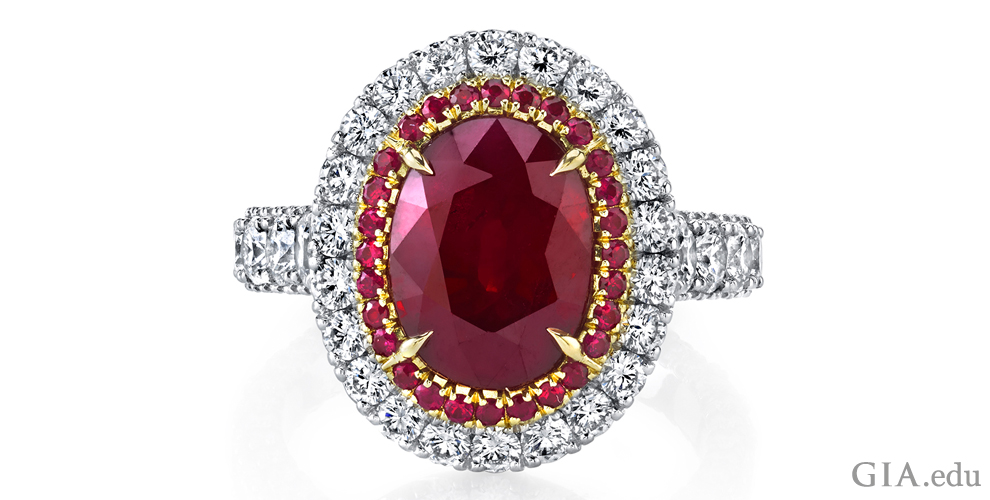
5.00 ct oval ruby is all the more radiant set in 18K rose gold and encircled by 2.53 carats of round diamonds in the halo and band.

This 5.00 ct oval ruby is all the more radiant set in 18K rose gold and encircled by 2.53 carats of round diamonds in the halo and band. Courtesy: Omi Privé


July Birthstone: Ruby Treatments, Care & Cleaning

Using warm soapy water is a safe option to clean ruby, the July birthstone. Ultrasonic and steam cleaners are usually safe for untreated, heat-treated and lattice diffusion–treated stones. Fracture-filled, cavity-filled or dyed stones should only be cleaned with a damp cloth.

Rubies are often heat treated to remove purplish coloration, leaving a purer red. The process can also remove “silk” (minute needle-like inclusions) that can cause a gem to appear lighter in tone and be more opaque. The trade typically accepts heat treatment to enhance color, as the treatment is stable to normal conditions of wear and care.

Lattice diffusion is a technique whereby heat and chemicals are used to diffuse a specific element into a gem to change its color. This treatment, too, is typically stable to normal wear and care.

Fracture filling is when a substance is introduced into surface-reaching fissures to make them less visible and thus improve the gem’s appearance. Common fillers include glass and glass-like substances, polymers and resins, and oils.

A high-lead-content glass is often used to fill fractures in rubies and thus improve their apparent clarity. There are many of these glass-filled rubies in the market, and in some cases the glass literally holds together a highly fractured gem. The glass can be damaged through contact with a variety of chemicals. Even relatively mild substances like concentrated lemon juice can etch the filler.

Dyeing with colored oils and filling small surface fissures with epoxies are other treatments. However, they are not permanent. These treatments need special care.

Always ask if your ruby has been treated before you buy. The Federal Trade Commission requires disclosure of treatments that affect a gemstone’s perceived value. A GIA Identification Report is important in identifying if a stone is natural or synthetic and whether it has been treated in any fashion.

Diamond and ruby bracelet shimmers with 20.56 carats of cabochon-cut rubies from Tanzania.

Reminiscent of the geometric shapes used in Art Deco–era jewelry, this diamond and ruby bracelet shimmers with 20.56 carats of cabochon-cut rubies from Tanzania. Photo: Kevin Schumacher/GIA

Whether or not you have a July birthstone, owning a beautiful ruby is a rare and precious thing. And if you love red gems in general, check out our Red Gemstone Buying Guide – Part 1 and Red Gemstone Buying Guide – Part 2 for some striking alternatives to ruby.

June Birthstone: Where Do Pearls Come From?

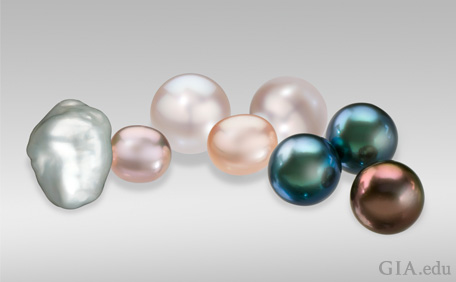
Warm waters… clear skies… dramatic scenery – it sounds like a dream beach vacation, don’t you think? It’s also an accurate description of where you’ll find pearls. While you’ll likely need to go to remote destinations to find the June birthstone, our ancestors believed otherwise. (more…)

April Birthstone: Where Do Diamonds Come From?

The timeless charm of diamond was cherished long before it became the April birthstone. And the places where diamond comes from are as fascinating as the lore that surrounds the gem. So let’s travel the globe to visit some famous diamond localities, past and present, in search of this April birthstone. (more…)

Famous Birthstone: Pearl – La Peregrina

Many of us share a timeless attraction to pearls— it’s a deep admiration that extends across cultures and continents. Maybe it’s because pearls are associated with water, a fundamental element of life. Or maybe it’s because this June birthstone comes from a living thing. Natural pearls are highly sought after due to their rarity. For those who prefer cultured pearls, you’re in luck: cultured freshwater and saltwater pearls are widely available, and in so many colors and shapes that there are pearls to suit a variety of tastes. (more…)

Famous Birthstones: Diamond

What makes a diamond famous? It may be its rarity or even its size. But more often than not, a diamond’s fame comes from its association with a person of historical influence. Learn about the world’s most famed diamonds, including those owned by the luminary Elizabeth Taylor, the British Royal Family, and the renowned Napoleon Bonaparte. With jewels such as these, April babies are honored to have the most beloved and sought after birthstone: the diamond. (more…)

Famous Birthstones: Amethyst – the Duchess of Windsor’s Necklace

GIA presents February’s famous birthstone: amethyst as featured in the Duchess of Windsor’s amethyst necklace by Cartier. While the Duke and Duchess of Windsor commissioned many jewels, this stunning amethyst piece has both a love story and historic resonance behind it. (more…)